


The classes are 6:30 to 8:30 p.m. in Room 201, on the second floor of Leon Levine Hall of Medical Sciences on the Health Sciences Campus, 4350 U.S. 421 S. in Lillington. Class space is limited, and spots will be filled on a first-come, first-served basis. People should reserve a spot by Friday, March 6 at RSVP for MMS 2026
The cost is $25 per person, and attendees receive a binder with a syllabus the first night of class. Undergrad pre-med students will be admitted free of charge. Those who sign up are asked to commit to at least four of the sessions.
A graduation ceremony is set for May 7.
The Campbell Mini Medical School is an interactive medical school experience, allowing people in the community to experience a sampling of what full-time medical students see and do in class each day.
“We are excited about the upcoming Mini Medical School spring sessions,” says Kristin Johnson, administrative director of Community and Global Health.
The program, she says, is held every spring to help introduce CUSOM to the community by providing community members an opportunity to have a better understanding of the medical school experience. It also will give attendees a chance to learn more about CUSOM’s role and its presence in Harnett County and beyond, Johnson says.
“This is a great way for the Campbell University family to have an up close and personal glimpse into what it is like to be a medical student at CUSOM.”
Attendees will learn why and how Campbell was created and the vision driving the school’s development. Community members will also have a chance to learn about and understand the importance of primary care in the U.S. healthcare system, how the medical curriculum is structured and how CUSOM plans to improve the distribution of primary care providers in North Carolina and the state’s Southeastern region, especially in rural and underserved areas.
Presented by Campbell medical faculty, other aspects of the program include information about the importance of good health habits and wellness methods, management of obesity and diabetes, as well as an understanding of osteopathic manipulative medicine as a special tool of osteopathic physicians.
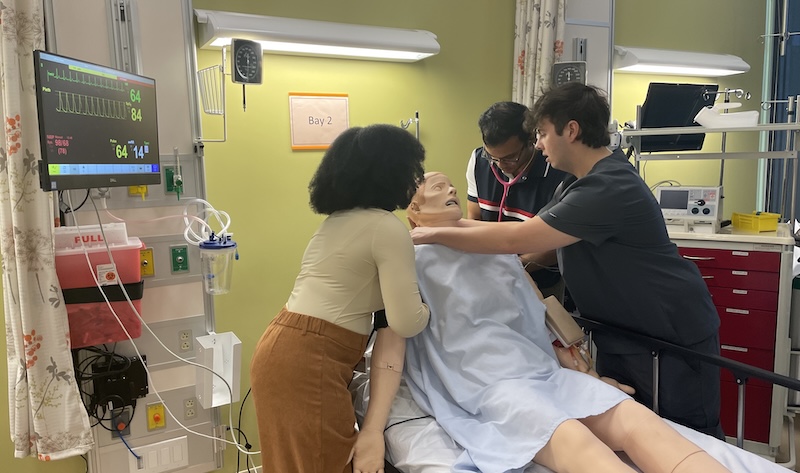
Mini medical school students will experience the SIM (lab) Center by taking part in simulated exercises with the high technology manikins that can replicate a chaotic emergency room environment or ICU crisis or even a normal delivery.
The course will also include a glimpse into human anatomy, such as kidneys, the nervous system and circulatory system, and the role of microbiology in health and disease, as well as courses on the promotion of health and the role of the Community Care Clinic and medication management.
For more information, contact Kristin Johnson at kljohnson@campbell.edu.