

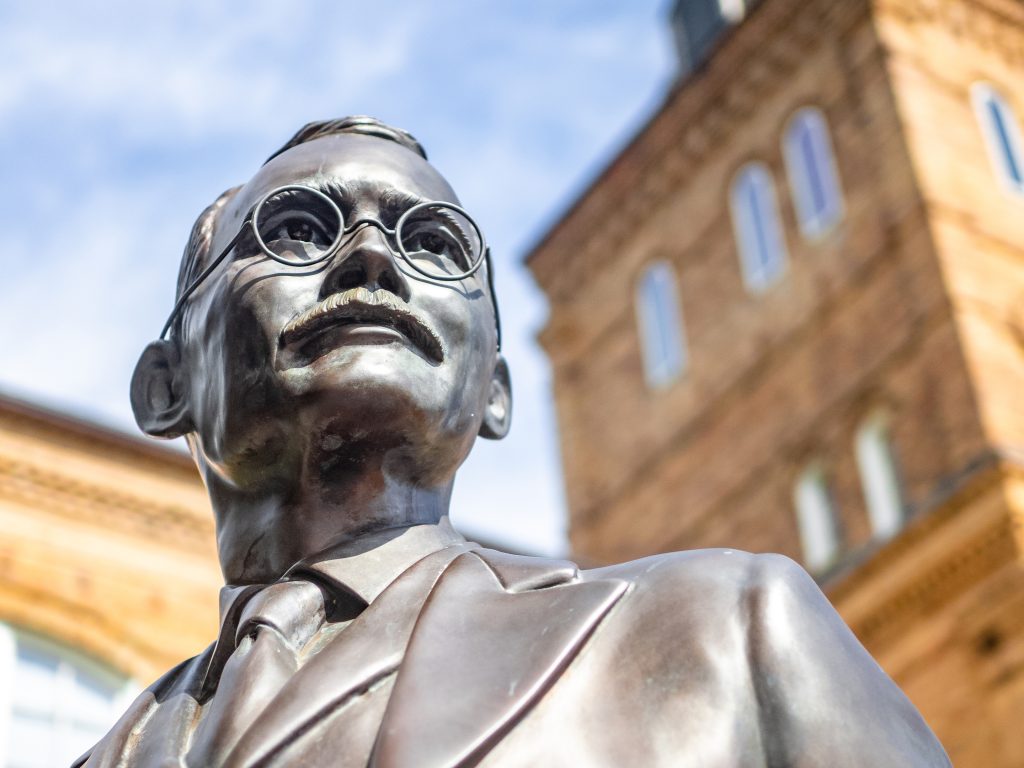

Today’s ceremony honoring Dr. William M. Downs is only the fifth inauguration in Campbell’s 139-years as an institution
Stream today’s Investiture Ceremony at 2 p.m.
The school that would one day become Campbell University didn’t hold its first presidential inauguration ceremony until its 47th year of existence. In 1935, less than a year after the death of founder J.A. Campbell, the then junior college celebrated the transition of leadership to his son, Leslie Campbell, who would serve for an additional 33 years.
Today’s investiture of Dr. William M. Downs will be only the fifth time in Campbell’s 139-year history that the school has had an opportunity to celebrate a new president. The ceremony, scheduled for 2 p.m. in the Pope Convocation Center, will mark the formal installation of the University’s sixth president, who officially took office on July 1, 2025. As is tradition with inauguration ceremonies at the university level, today’s event will provide a platform for Downs to share his vision for Campbell, looking to the future on a day when the school also honors its past.
“I fully appreciate the historical significance of the place I am about to take in Campbell’s rich and storied history, and I come in with great clarity about the responsibilities I inherit,” Downs said on the eve of his coronation. “The weight of the week, though, has been anything but a burden. Instead, the more I learn about our history and about the towering figures who helped lead us to the present, the more emboldened I am to follow in their sizable footsteps.
“Rather than holding us back, our history propels us forward … for me, that’s a source of real inspiration.”
On this historic day, we look back at the four previous presidential inauguration ceremonies and provide a preview of today’s ceremony.
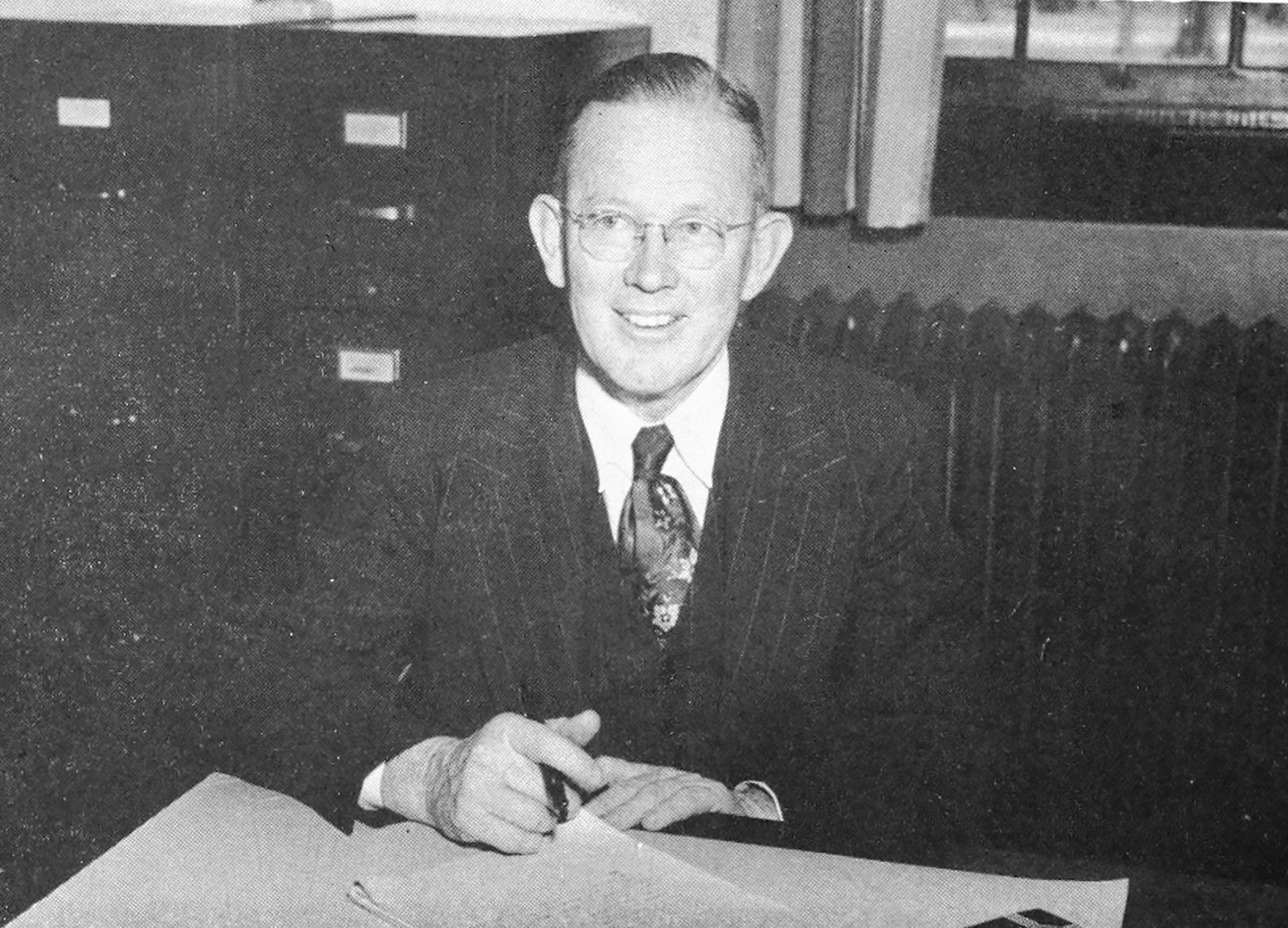
President Leslie H. Campbell
Jan. 31, 1935
Thirty-three years after his own inauguration, while Leslie Campbell attended the ceremony of his successor Norman Adrian Wiggins, he reminisced on his much more subdued event held during the Great Depression.
“Things have changed a great deal since 1935,” Campbell said in 1968. “At one time, there was a trend toward doing away with inaugurations. There was no big to-do at my inauguration. Of course, at that time, we were only a fledgling junior college.”
Campbell’s inauguration was a one-day event that coincided with the school’s first Founders Day after the death of J.A. Campbell. The day began with a meeting of the Board of Trustees, followed by a church service in the afternoon and the formal banquet at 6 p.m., which included Leslie Campbell’s formal message.
That evening, he began by paying tribute to his father: “This occasion is truly a tribute to the sainted founder of this institution and others — like Rich, Day, Duke, Treat and Kivett — who have here a monument more lasting than bronze. The events of this hour constitute only a link between a past set with marvelous achievement and a future calling for our wholehearted endeavor.
“This is no coronation day. Rather, it witnesses the solemn dedication and surrender of all there is in us to a holy cause.”
In his speech, Campbell said the school must better allow students to determine their course of study rather than forcing them to abide by their own strict, rigid course. “The needs of those preparing for advanced standing in institutions of higher learning must be met,” he said. “Many lack the inclination or chance to complete a four-year course. Many others perhaps ought not to go at all. For those students, junior college offers maximum opportunities.”
He also maintained that Campbell should remain a “humble place of service” and a Christian institution.
“The ruling passion in the mind of the founder of this college was to make it Christian to the core,” he said. “This statement of policy is made with no apology to those who may consider it an abridgement of academic freedom. No teacher ever enunciated more clearly the principle of a free conscience and did more to establish individual liberty than the Man of Galilee.”
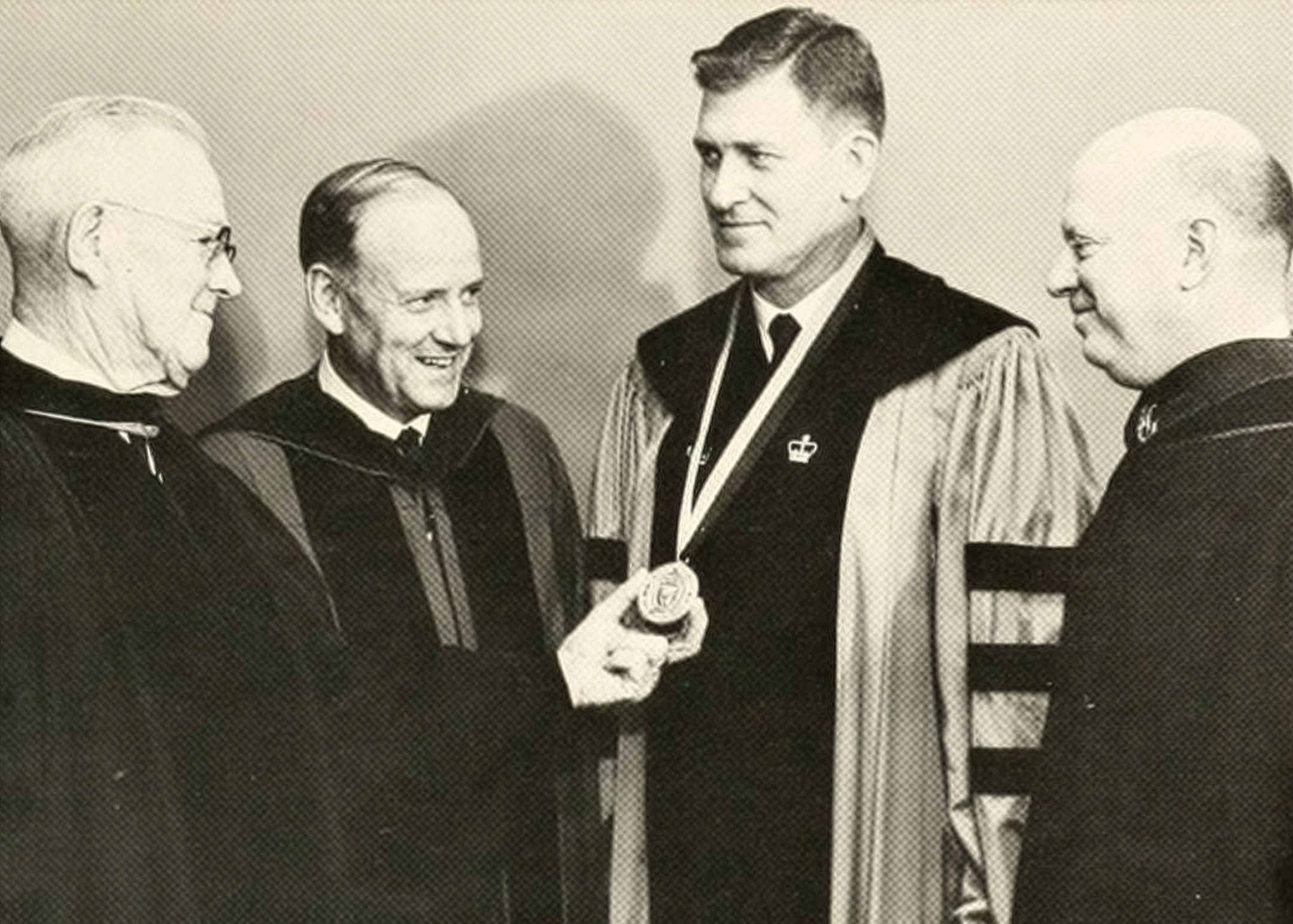
President Norman A. Wiggins
April 6, 1968
Held in Turner Auditorium in D. Rich — now the Hobson Performance Center — the inauguration of Campbell’s third president, Norman A. Wiggins, was a much larger celebration, according to a Creek Pebbles article from the following day: “The weekend was one of many colorful events including a concert by the combined choirs and band, art exhibits, pictorial exhibits of Campbell’s history, numerous teas and dinners, and many special guests. The purpose of it all – to extend greetings and officially welcome our new president.”
Wiggins, who was a 1948 graduate of Campbell Junior College, was presented with the Campbell medallion by Leslie Campbell prior to addressing the crowd of students, faculty and friends who were on hand.
“As I accept the formal symbols of office, I do so with feelings of gratitude, humility and a strong sense of dedication,” he said. “I am humbled by the achievements, dedication and stature of those who came before me.”
In his speech, Wiggins talked of immediate expansion of the school’s existing programs and called for Campbell to step up and meet the needs of the non-traditional, adult learner “whose usefulness is threatened by technological change.”
As president, Wiggins would go on to see the opening of schools of law, pharmacy, education, business and divinity. The Norman Adrian School of Law would become the first law school opened in North Carolina in 35 years, and the pharmacy school was the first school of pharmacy opened in the United States in 40 years, putting Campbell University on the map.
Wiggins continued to be a friend of Campbell until his death in 2007.
“If within the Christian commitment, we can carry on a program that will lead our students to dedicate their lives to building rather than tearing down, we will indeed be serving mankind and thereby capturing the great promise that ‘whoever would be first among you shall be servant to all,’” he said on his Inauguration Day.
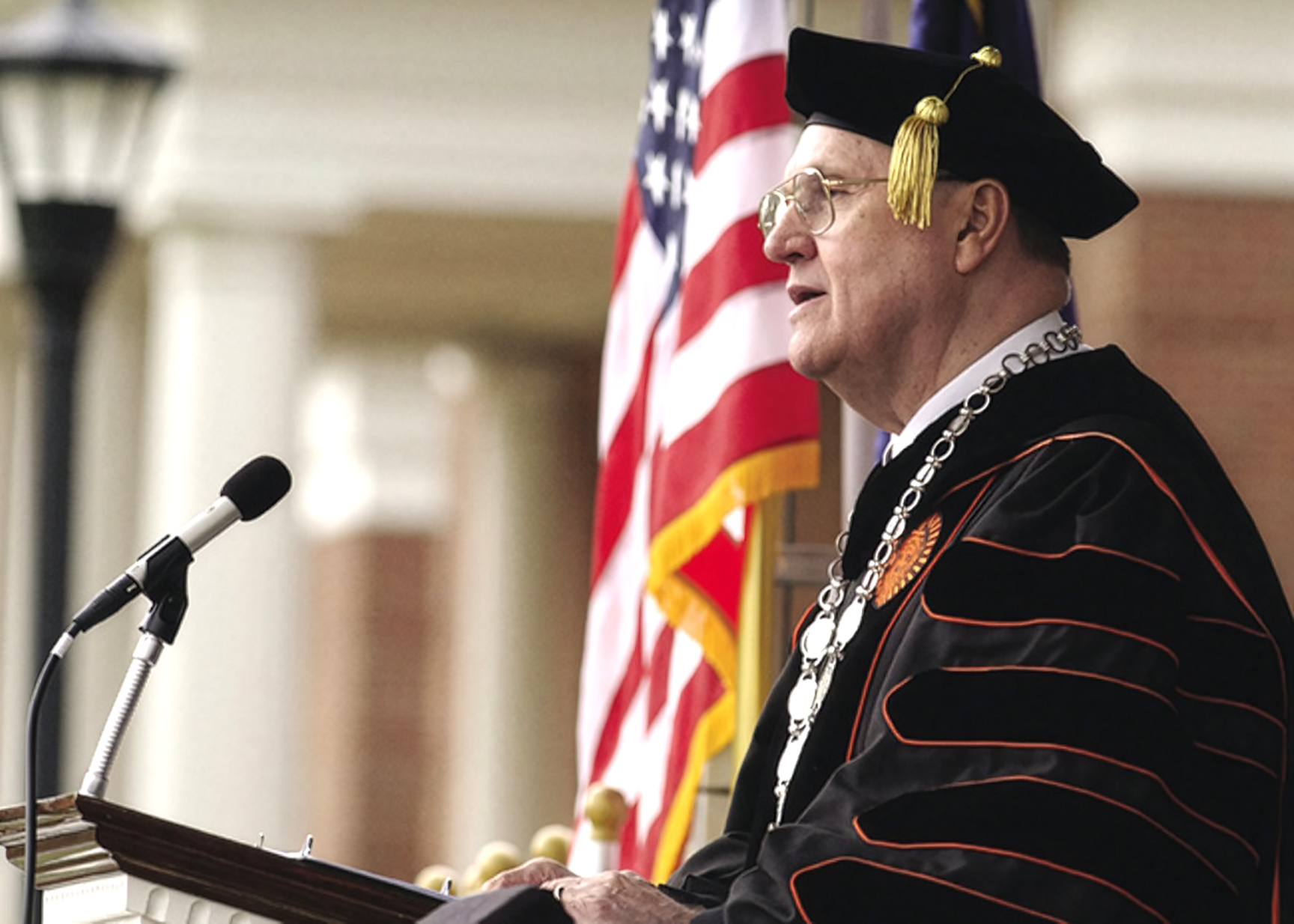
President Jerry M. Wallace
May 29, 2003
Held outside of the Lundy-Fetterman School of Business on a beautiful late spring day, Jerry M. Wallace became Campbell’s fourth president during his 34th year at the school.
His ceremony was attended by former Sen. Jesse Helms and Dr. Jim Royson, executive director of the Baptist State Convention, and he was introduced by Campbell alumna and current North Carolina Secretary of State Elaine Marshall (who will also help introduce Dr. William Downs today).
Wallace’s ceremony was attended by his predecessor and close friend, Norman Wiggins, who in introducing his close friend and colleague said, “The passage of power from one president to another is just an incident. The university is everlasting. But it is a very important incident. We will hold you in our prayers and in our hearts.”
In his inauguration speech, Wallace said Campbell would respond to the existing and developing needs of the state, region and nation by providing new undergraduate, graduate and professional programs that “complement and extend Campbell’s mission.”
In his 11-plus years as president, Wallace followed through on his promise. He expanded Campbell’s health programs to complement its pharmacy school and to address the shortage of health professionals in North Carolina by establishing the Jerry M. Wallace School of Osteopathic Medicine in 2013 (it would be North Carolina’s first new medical school in 35 years). Other health programs launched during Wallace’s presidency include the physician assistant, public health, physical therapy and nursing programs.
Wallace laid the foundation of an ambitious master plan during his inauguration speech, which noted the need for new academic programs and improvements to campus infrastructure. His “Time is Now” fundraising campaign was launched in 2005 with a goal of $57 million over eight years to fund a new convocation center, residence halls and a chapel. By 2008, that goal tagged $30 million more for a football stadium and the law school’s move to Raleigh.
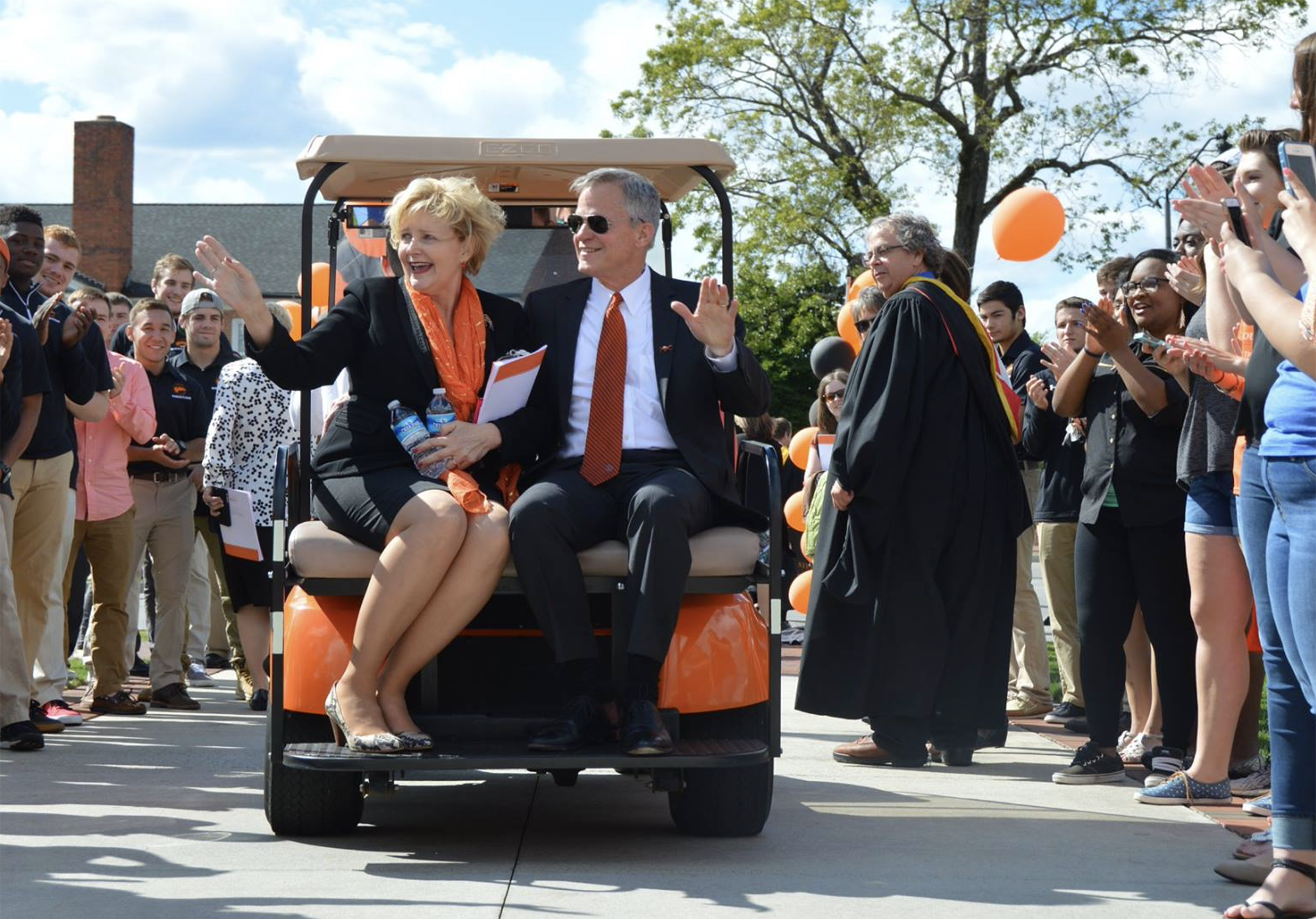
President J. Bradley Creed
April 8, 2016
Bradley Creed celebrated Campbell University as a “Place of Opportunities” during his inauguration ceremony held inside the Pope Convocation Center.
“Campbell gives us the opportunity to make a living, to make a life — more importantly to make a difference through service to others,” Creed said in his inaugural address before a crowd of students, faculty, staff, alumni, friends and delegates from other schools. “Service is at the heart of our mission as a Christian university. Your major, your profession, your discipline, your life can contribute to the common good of society. We have the opportunity to change the world — one course, one program, one project, one student at a time.”
Creed’s speech focused heavily on Campbell students, and in turn, Campbell students played a big part in his inauguration event. A student-led wind ensemble and symphony performed, and several videos were played that featured success stories of current and former students. Students wore shirts to the ceremony indicative of their Campbell experience, including white lab coats, Greek letters, orientation leader T-shirts, business suits and athletic jerseys.
“There is one reason and only one reason for Campbell University — and it is you,” Creed told the students during his speech. “Before there were presidential installations, there were students and there were teachers — two essential elements for learning to take place.”
During his decade at Campbell’s helm, Creed navigated the school through the disruptions of COVID-19, guiding it through the challenges of remote learning and the transition back to on-campus instruction. He also oversaw a successful $105 million capital campaign to support the funding of the Oscar N. Harris Student Union.
“Through Campbell, we all have an opportunity to make a difference. And we make a difference by following a sense of calling to serve others,” Creed said. “All of our university programs yield intellectual resources and professional skills for service to humanity. Through our various programs, we engage some of the most pressing issues of society.
“A Campbell education is not a transaction,” he added. “It is a transformational learning experience that changes lives.”
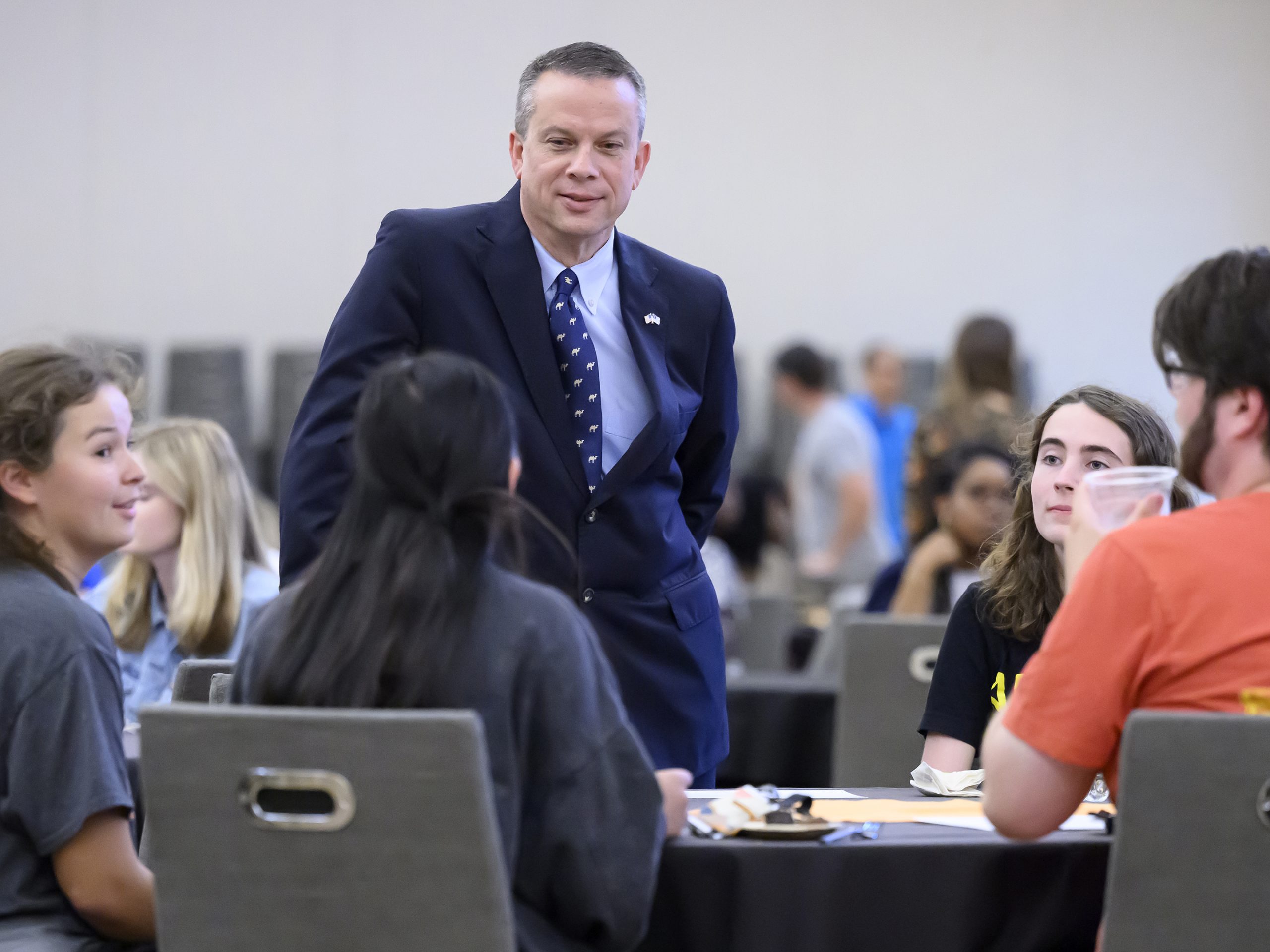
President William M. Downs
March 27, 2026
A weeklong inauguration celebration that has included a worship service, academic lecture, student research symposium, a tree dedication ceremony and a day of service in the community will culminate with today’s investiture of President William M. Downs.
The 2 p.m. ceremony will be held in the John W. Pope Jr. Convocation Center and will be followed by a reception in the Oscar N. Harris Student Union.
Downs was elected president in February and took office on July 1. An accomplished academic leader and political science scholar with more than 30 years of experience in higher education, Downs previously served as president of Gardner-Webb University and was dean of East Carolina University’s Thomas Harriot College of Arts and Sciences. A Raleigh native, Downs earned his Bachelor of Arts degree in political science from North Carolina State University. He also holds his master’s degree and Ph.D. in political science from Emory University in Atlanta.
Downs’ investiture will be held roughly nine months after his first official day as president. He has said his goal from Day 1 has been to bring “eager ears, fresh eyes and a jolt of energy, optimism and positivity” to his role as president, as well as a willingness to search and ask for the resources that are needed.
True to his word, the first nine months of Downs’ tenure in Buies Creek have been productive. A six-city speaking tour from the Queen City to the coast. Three town hall meetings dedicated to laying the groundwork of a five-year strategic plan. Meetings and guided tours with every dean and nearly every program on campus. Immediate improvements to the student experience on campus. A new staff appreciation awards program. New admissions initiatives for both undergraduate and graduate programs. A record-breaking Giving Day.
In February, Downs fulfilled his Day 1 promise with the public release of the University’s strategic plan, a document he hopes will “clearly and succinctly map out a set of institutional priorities that will guide us into a bright future.”
Campbell University 2026-2031: A Strategic Plan for Renewal, Growth and Recognition was unanimously approved by the Board of Trustees on Jan. 28. The plan is the work of a 12-person committee to chart a pathway to “more fully and faithfully realize our existing institutional mission,” Downs said in a letter to the Campbell community on Feb. 4.
“The challenges and opportunities we face require our immediate attention, and it was imperative to set our vision to paper so that we could then get busy fixing, building and growing,” Downs said. “I have preached ‘controlled urgency’ since my first day at Campbell, and that has been our approach to completing this major strategic task.”
Downs said today’s service will formally cap off a week of celebration of not only his presidency, but of Campbell’s storied history. He said each day of Inauguration Week has been special and has held profound importance to him.
“It was not by mere coincidence that we began by praying together,” he said. “And it was likewise by clear and intentional design that we spotlighted the discipline of political science, that we showcased student research and creative activities, that we honored our institutional past by dedicating a Founder’s Oak and planting a Legacy Tree, that we joined together for a day of community service, and that we made time for fellowship and fun at a campus picnic.
“Taking the Oath during Friday’s Covenant of Installation will be the fitting culmination of a wonderful week spent celebrating Campbell’s past, present and bright future.”