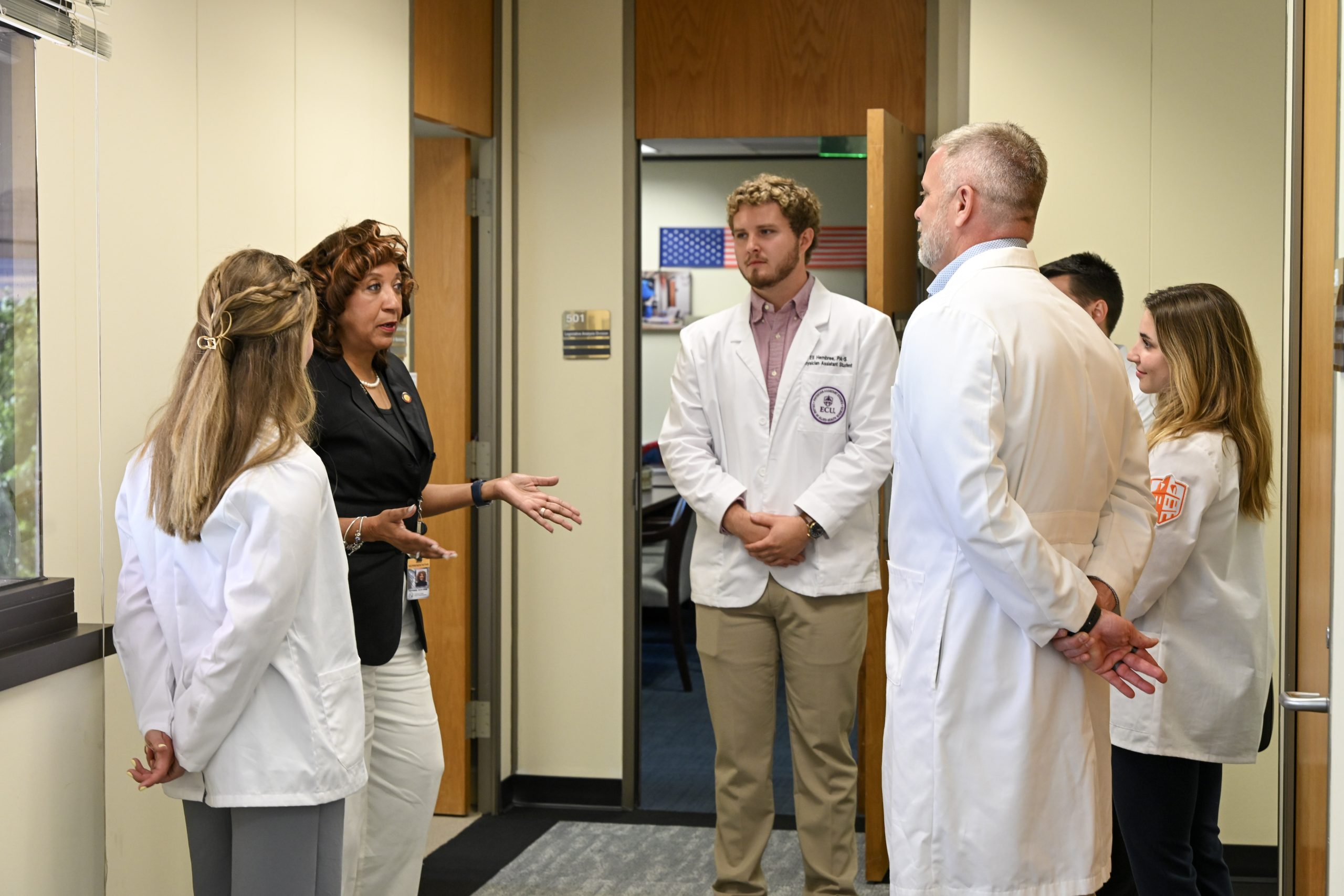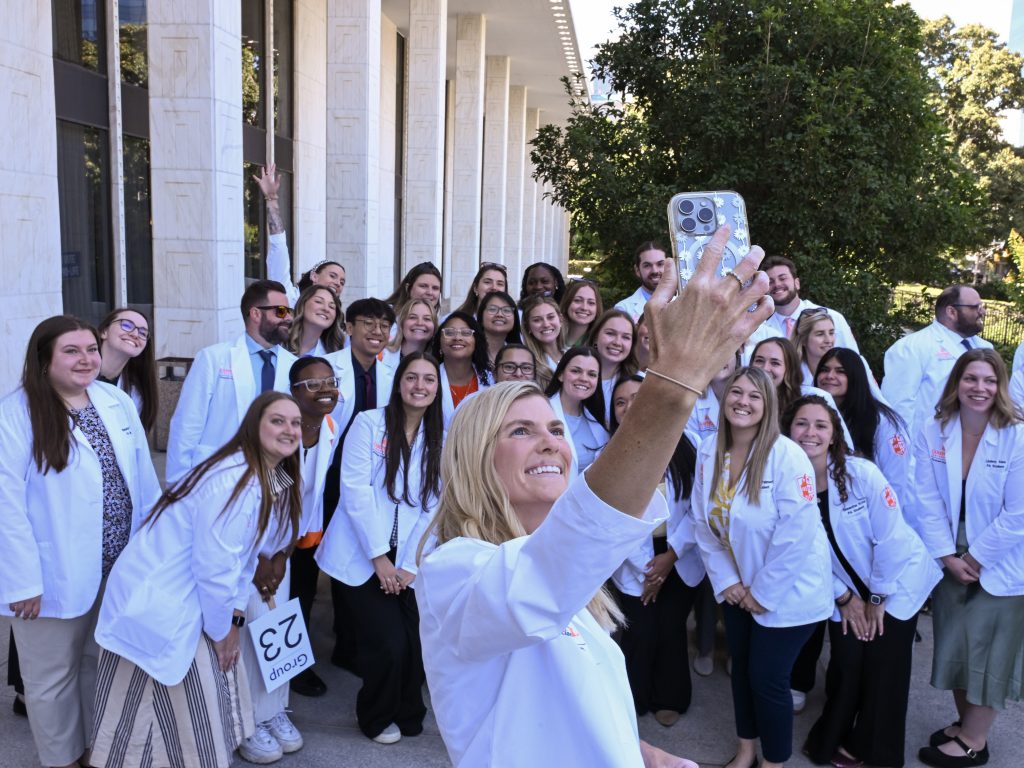

Students, faculty and alumni from Campbell University’s Physician Assistant program joined physician assistants/associates and PA students from across North Carolina on June 3 for the North Carolina Academy of Physician Associates’ annual PA Day at the General Assembly in Raleigh. The event brings together PA advocates from across the state to meet with legislators, share information about the profession and discuss issues affecting healthcare access and patient care.
Representing Campbell at the event, attendees had the opportunity to engage directly with state leaders and discuss the vital role physician assistants play in addressing healthcare needs throughout North Carolina.
Among those they met was North Carolina Sen. Jim Burgin, who represents District 12 and includes the area surrounding Campbell University’s main campus. Students and faculty shared perspectives on the PA profession, healthcare workforce needs and the importance of ensuring patients have access to high quality care across the state.
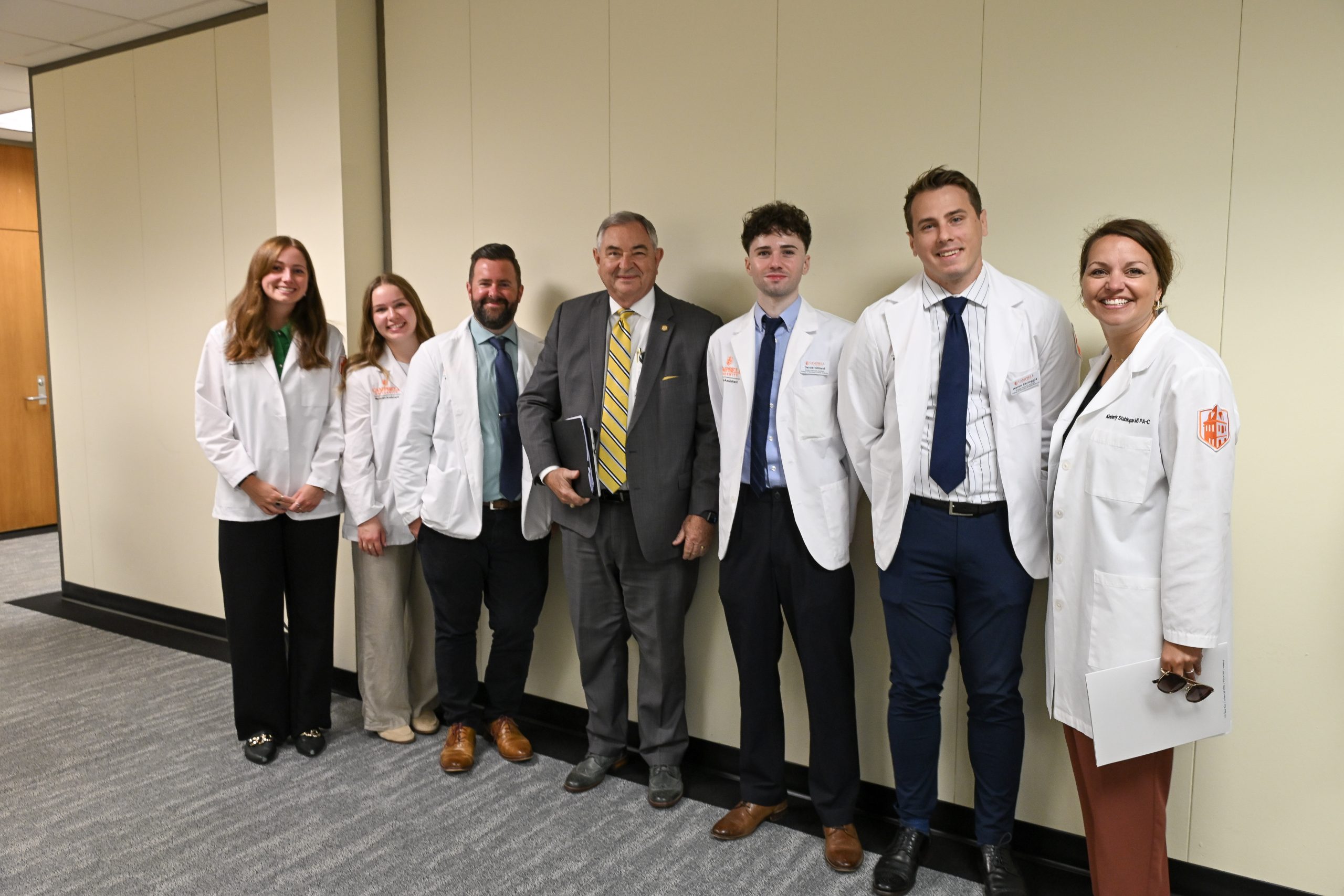
PA Day at the Legislature serves as an important opportunity for future healthcare providers to see firsthand how advocacy and public policy influence healthcare delivery. Through meetings with lawmakers and policy leaders, students gain valuable experience communicating the needs of patients and the profession while developing skills that will help them become effective healthcare advocates throughout their careers.
The event aligns with Campbell’s commitment to preparing graduates who not only provide exceptional patient care but also serve as leaders and advocates for their communities. By participating in statewide advocacy efforts, Campbell PA students continue to demonstrate the program’s dedication to advancing the profession and improving healthcare access for all North Carolinians.
Founded by the North Carolina Academy of Physician Associates, PA Day at the Legislature is an annual advocacy event that brings practicing PAs, PA students and supporters to the North Carolina General Assembly to meet with legislators and discuss issues affecting the profession and the patients they serve.