

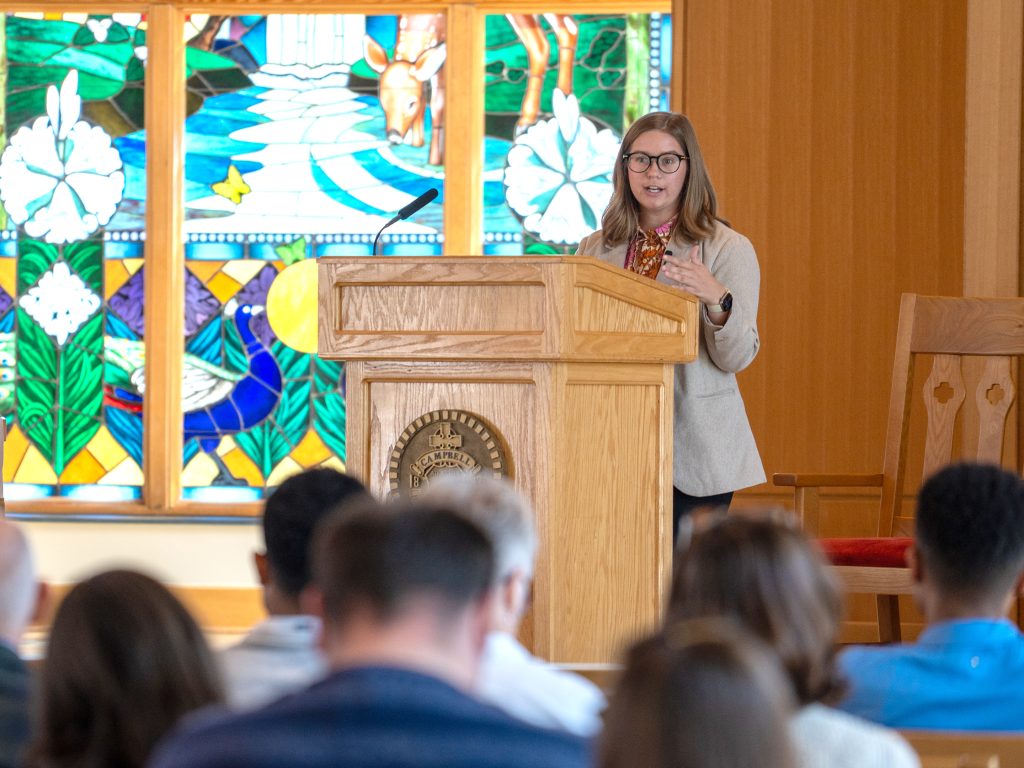

Hospitality is a spiritual practice, and it’s hugely important for churches and spiritual programs to meet the needs of its congregations and guests — from the food offered at a retreat to the amount of free space available for children during a worship service.
The subject was the theme of a lecture delivered Tuesday by Azizi Culpepper, administrative assistant for Campbell University’s Empowering Families for Spiritual Formation program; Taylor Long, a Master of Divinity student and graduate assistant for the program; and the Rev. Dr. Sarah Boberg, assistant professor for Christian Education for the Divinity school and the Empowering Families program director. The presentation was part of the Divinity School’s L. B. and Mabel Reavis Lecture Series, a monthly program that focuses on ministry and academics throughout the fall.
Culpepper, Long and Boberg shared their experience hosting roughly 30 families for retreats — the first in 2025 and the most recent last March — at Camp Caraway, located outside of Asheboro. The retreats were made possible by an Empowering Families for Spiritual Formation grant from the Lilly Endowment in 2023.
The Campbell team was intentional about showing high levels of genuine hospitality at both events, and Tuesday morning’s lecture focused on their preparation, knowing their congregations and “the importance of place.”
Culpepper shared the extensive preparation that went into planning the retreats, which included the listening sessions, and how the team spent months traveling to nine partner churches around the state to host listening sessions on what families and churches need to “nurture regular, substantive, holistic, family-centered spiritual formation.”
“We combed through all of that data to help guide us along the way — we watched for common themes and issues that stood out, and we used this information to plan our breakout sessions and determine which speakers we needed for our events,” Culpepper said. “This information was vital to all of our work. We couldn’t plan a retreat, create resources or serve the needs of our churches without being able to know them better. And honestly, they needed to get to know us.”
The questions didn’t stop with the first retreat. Guests were given surveys to express what worked and what didn’t. One of the more important questions on the survey — “Do you or anyone in your family require accommodations to fully participate in this event?” Something seemingly little — like a child who only ate french fries not having french fries — was taken seriously by the team, and “Don’t forget the fries” was a mantra for the second event.
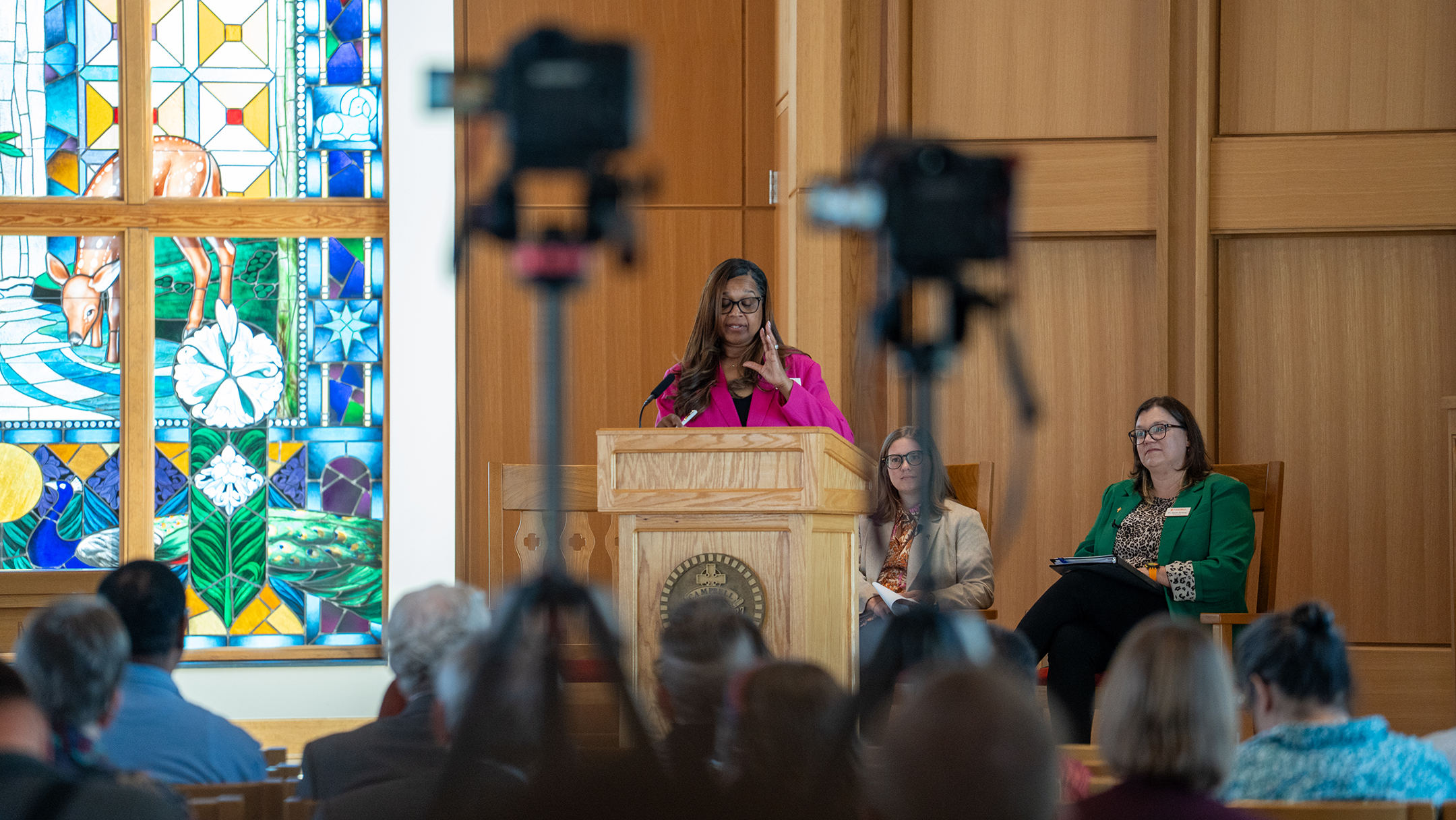
“What do your families need to make them feel comfortable? And when you ask them what they need, are you able to provide that? Are you checking, double-checking, confirming?” Culpepper said. “Are you doing your due diligence? And if you can’t provide what they need, how can you work towards the goals of the communities, children and families you want to serve?”
In speaking on “knowing your people,” Long talked about worship style, and how the environment for worship mattered to those who wanted a weekend to not only get closer to God, but to leave the worries of their everyday lives behind as well. But the team also understood that even if all or most of the families were Baptist, there are different “levels” of Baptist, and thus, different worship styles.
“It was important for us to have a diverse representation of leadership,” Long said. “We knew churches from a wide variety of backgrounds would be represented, and each church has a different way of doing things. You can know this going in and choose to do nothing, or you can know this and choose to plan intentionally. So we kept diversity in mind — from planning and staffing to preparing for worship. Race diversity, gender diversity, age diversity … we wanted the people sitting there to see themselves in us as well.”
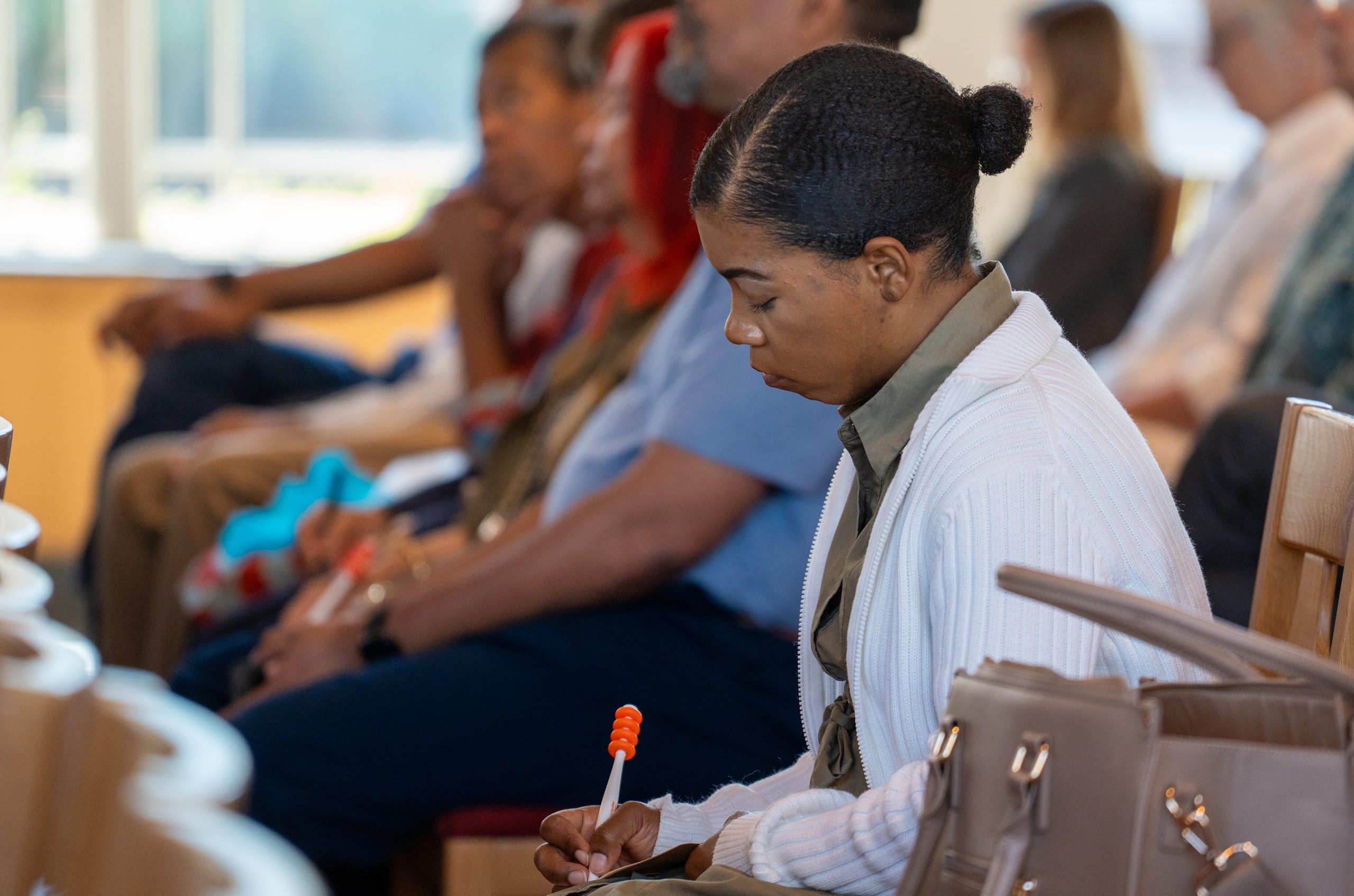
Boberg called it “an honor” and a big responsibility to care for people at an event like a spiritual family retreat. She spoke on “the importance of place,” and reiterated that families chose to come to their retreat to be refreshed and renewed, and the space needed to be comforting and meet the needs of those seeking a comfortable experience.
“We needed to be accessible, and we needed it to be easy for them to show up and fully participate,” Boberg said. “True hospitality leads to transformation of self. Transformation of others. Our God is a god of transformation and a god of hospitality. Intentional effort into preparation, people and place can help create a welcome space for all.”
Tuesday’s afternoon lecture dealt with “Engaging Faith Formation for All Ages.” The Prevatte Biblical Studies Lectures will return on Oct. 27 with the Rev. Dr. Poe Hays, who will speak on her recently published book, “Reading Resilience in teh Psalms: Trauma, Healing and the Strength to Survive.” The Nov. 13-14 will focus on “Thriving Children: Neurodivergence & Our Churches.”