

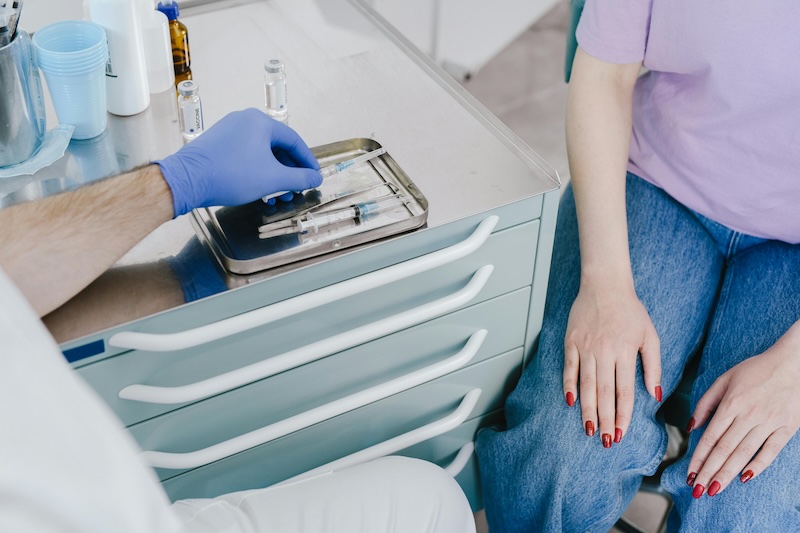

The N.C. state health department and medical professionals throughout the country are urging people to get vaccinated, as cases of the flu and other infections, including measles, are on the rise.
.
Dr. Lori Langdon, clinical chair of Pediatrics at Campbell’s med school, has spent her medical career as a pediatrician, largely in rural areas. Also medical director of the Campbell University Health Center, Langdon is a staunch advocate of vaccines and a regular expert contributor to local news outlets. She has a strong presence on YouTube and social media.
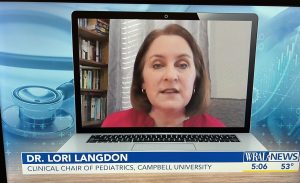 Langdon says parents should be “very concerned” if their children aren’t immunized against a plethora of infections, including the flu and measles, which are currently getting a lot of media attention.
Vaccines, the health department says, are the best way to prevent serious illness, hospitalization and death from flu and other viral respiratory infections, such as COVID-19 and RSV.
Flu vaccinations are especially important for children who are at higher risk of developing severe disease or complications, including those younger than 5, especially under 2, or those with chronic health conditions such as asthma, diabetes or a weakened immune system.
During the past flu season, 2024-25, some 300 children died of the flu, Langdon says. The state health department late last year reported the first pediatric flu-related death for the 2025-26 flu season. A child in the western region of the state recently died due to complications of influenza.
“The flu vaccine, even though not a perfect match this season, is still protective against hospitalization and death. We urge everyone, even now in January, to get the flu vaccine this year if they have not already received it,” she says.
“This is a tragic reminder that flu infections can be serious or even deadly,” said State Epidemiologist Dr. Zack Moore. “If you or your loved ones have not received the flu vaccine this season, I hope you will consider doing so to help protect yourself and your community.”
As for measles, the N.C. Department of Health and Human Services recommends all unvaccinated people ages 1 year and older receive vaccines to protect themselves and those around them. Doctors recommend two doses of the MMR vaccine as the best way to protect against measles, mumps and rubella, according to the Centers for Disease Control and Prevention.
“Given a standard elementary school classroom, we need for 95 percent of those children to have those pre-formed antibodies against measles from safe and effective vaccines so that outbreaks don’t happen,” Langdon recently told WRAL in Raleigh.
Those hesitant to receive vaccines should trust they are safe, effective and critical to overall health, Langdon says.
“With the risk of measles exposure increasing, vaccination remains our strongest and most effective defense,” Moore said. “Measles is highly contagious, but it is also preventable. We urge anyone who is not fully vaccinated to take action now to protect themselves, their families and our community.”
In 2025, the U.S. Centers for Disease Control and Prevention reported 2,144 confirmed measles cases in the United States for the year across 45 states, with 25 cases involving international travelers, the health department says.
In addition, the CDC reported 49 outbreaks in 2025, with 88 percent of confirmed cases (1,884 of 2,144) associated with an outbreak. Ninety-three percent of these cases were unvaccinated.
“This is the highest number of measles cases reported in the U.S. since the second dose of MMR vaccine became widely used in the early 1990s,” the state health department says.
“Our immune systems have a memory, until measles comes along and wipes out that memory,” Langdon told WRAL. “It’s the immune amnesia that increases the risk for these secondary and sometimes life-threatening bacterial infections.”