
Campbell medical school alumna Dr. Brooke Williams (’17), along with her best friend and business partner, saw the lack of minorities entering medicine.
They saw the lack of diversity, the need to bolster recruitment efforts toward attracting people of color. The need to advocate for minorities who want to enter a career in medicine. To reach out to communities and develop programs toward that goal.
To promote mentorship, and to cultivate mentors.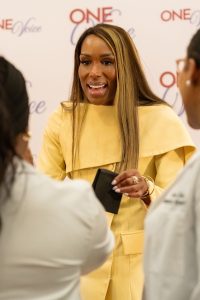
In 2018, Williams, a second-year resident at Franciscan Health in Chicago, and her business partner, Dr. Desiree Leach, who was doing post-doctoral work at Northwestern University in Chicago, got to work on starting a nonprofit.
They met every weekend they could, at coffee and sandwich shops. They didn’t have a lot of money, but they developed a business plan and began unraveling the bureaucratic red tape to establish that nonprofit, Color of Medicine.
Since then, Color of Medicine™ has grown and flourished, now including one-on-one mentoring, STEM labs, shadowing opportunities and myriad services to prepare students to pursue a career in medicine.
Color of Medicine™, the website says, exists to break down barriers and open doors to education, mentorship, and career opportunities.
“We believe early exposure, culturally competent guidance, and visible representation can transform the paths of students, families, and communities — helping them envision and achieve futures once thought out of reach,” the site says.
Said Williams, “Obviously we want it to be even bigger and better, but we’re very proud of what we’ve accomplished thus far.
Williams is a double board-certified physician — internal and obesity medicine — for Novant Health in the Triad and an adjunct clinical professor at the Jerry M. Wallace School of Osteopathic Medicine, where she was founding class president of the Student National Medical Association.
She knows the value of mentors. That student doctors — almost anyone, really — should pursue mentors who will lead and guide them. Throughout their careers.
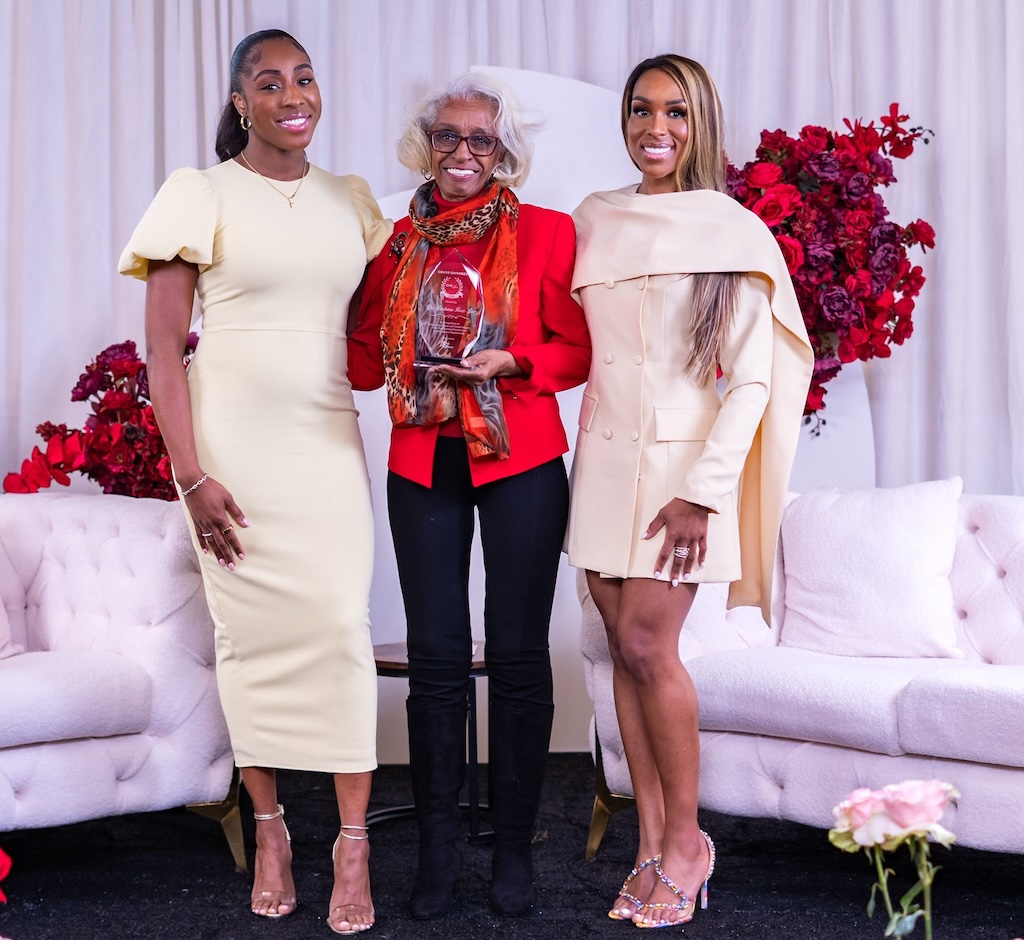
“I’ve always felt like mentorship was a … part of my core existence,” Williams said. “I know it’s cliche, but if I can make it, you can make it. When you see that coming to fruition, it’s a great feeling.”
The mentoring process is ongoing. Continuing throughout medical school, residency and long careers. Sometimes, people forget that, Williams said.
“Even when you graduate to the next level you still need that mentor … and to maintain that relationship is a two-way street.”
Find a leader whom you admire, she says. Let them know you want them as your mentor. Be persistent.
“My hustle was 10 times bigger, because … this is really what I wanted. If I had that opportunity, that shot, I wasn’t going to rest until I got to the next level. And it’s just that sense of urgency. I do get some people who say they want me to be their mentor, but they’ll reach out and then kind of lose touch.”
As in any relationship, “you’ve got to put forth that effort and maintain that,” Williams said. “I’ve had the same mentors from the beginning, and of course, I’ve obtained more, but the same ones that I had back in high school are still my mentors.”
Williams now has many roles, including medical director of Modern Aesthetics Medical Spa in Charlotte, providing physician leadership and clinical oversight to ensure the delivery of safe, ethical and evidence-based care across medical aesthetic and wellness services, according to LinkedIn profile. She is also a Member of Medical Review Board for Prevention and Good Housekeeping Magazine and, of course, co-founder of Color of Medicine.
Born in Winston-Salem, she attended N.C. State for her bachelor’s degree and Hampton University in Virginia for a master’s degree in medical science, in addition to a summer enrichment program at the University of North Carolina.
As far as medical school, she says, it was always Campbell, even though she first visited with people from the med school before Levine Hall was even built.
“I knew God was speaking to me. .. I can’t explain it, but I knew I was going to Campbell … I just knew.”
She remembers the acceptance call. Remembers withdrawing applications from other med schools.
“Everybody has different experiences at institutions, but to this day I advocate for Campbell, just as much as they advocate for me,” Williams says. “I say it’s a great institution. I still feel like I’m a student there, like they’re protective of me … you can’t ask for that, because sometimes you feel like you’re just a number. I’m still part of that family, that I will always be a Camel, which is important, because we have a sense of belonging. … I feel like I am indebted to pour back into that institution to give to their students.
“I definitely credit where I’m at today to Campbell.”
Leach, her friend and business partner, is a biomedical scientist and an expert in cardiology, neurology, infectious disease and endocrinology, her bio says. She serves as an adjunct biology professor at Truman College, City Colleges of Chicago.
Leach and Williams also have a podcast, and they use social media to spread their message of encouragement and empowerment. The healthcare system is replete with challenges, she says, and overcoming biases is chief among them.
The podcast and website, and, inherently, Color of Medicine™, addresses the problems. More importantly, it offers hope and the support to help young healthcare professionals persevere. To lead, teach, motivate and inspire.
Continue to lean on your mentors, as leaders and role models, Williams tells her mentees.
“We’ve got to look to you to change the way things are going, and we’ve got to remain hopeful. We can’t throw in the towel … we’ve got to make sure that we’re spreading this message.”
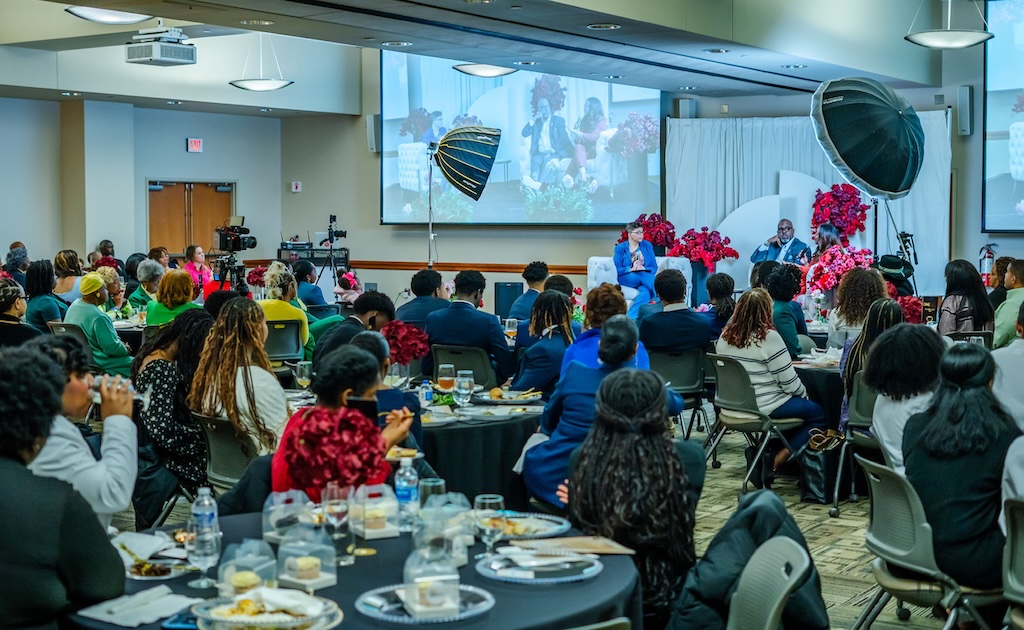
One Voice, a speaker forum held in February in Winston Salem, is testament to that. Money from the fundraising event, featuring a panel of physicians and healthcare executives, will help Color of Medicine™ continue to sponsor things such as hands-on lab events, community STEM events, as well as scholarship and mentorship opportunities.
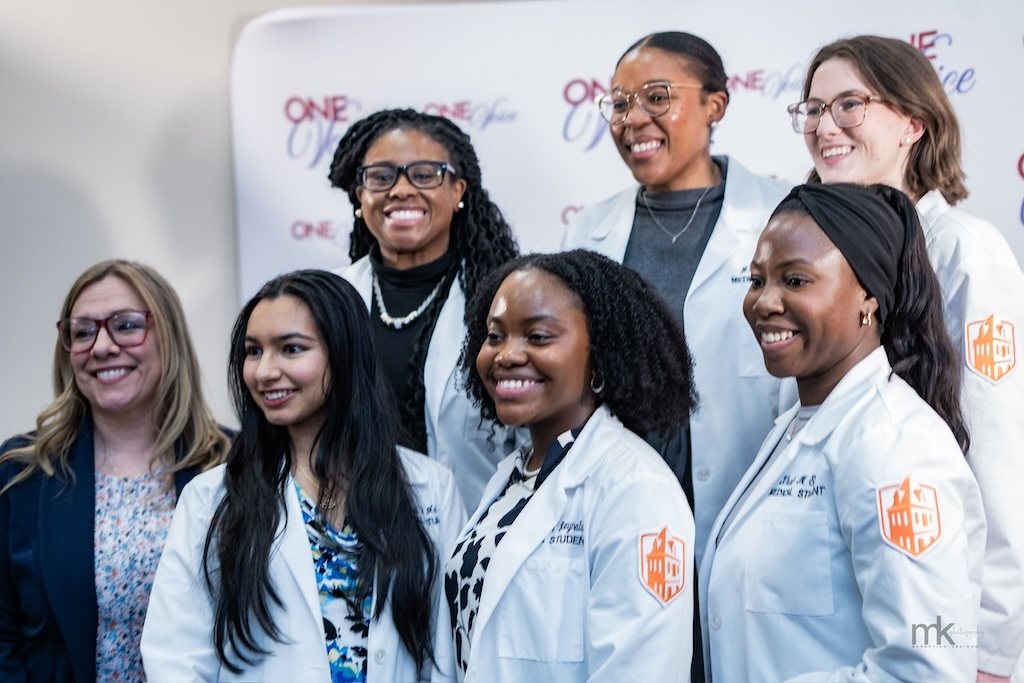
Faculty, staff and students from Campbell attended One Voice. They found the presentation thoughtful and inspiring. Offering a sense of renewal and hope.
Student Dr. Asia-La’Rae M. Walker, who will graduate from the Campbell med school this year, was among those in attendance. She is a student member, Society of Teachers of Family Medicine Board of Directors and a National Health Service Corps Scholar.
“As a soon-to-be osteopathic physician, it was truly inspiring to hear Dr. Barbara Ross-Lee speak and to be in the presence of a trailblazer who help lay the foundation for me,” Walker said. “Dr. Brooke Williams and her team did an amazing job curating such a meaningful and impactful experience.”
One Voice speaker series was such an amazing opportunity for our students,” said Brianne Holmes, director of Professional Development and assistant Professor for Professional Development at Campbell.
“Dr. Ross‑Lee and the rest of the panel’s reflections on the challenges historically faced by healthcare students and physicians of color, and the resilience required to overcome them, left a lasting impression on every person in the room.”
Holmes said she was honored to attend the event with students who care so much about their community, their work and future patients.
“Experiences like this help shape how our learners understand themselves, their roles, responsibilities, and professional identities as future osteopathic physicians. Also, we were thrilled to be invited by our alumna, Dr. Williams. The way she shows up for the next generation speaks volumes about the kind of community we’re building at CUSOM, one where people genuinely invest in each other. We are all just so so proud of her.”
The mission of Color of Medicine™ is simple, Leach said.
“(It’s) to support, empower and create pathways for minorities, not only to enter, but to excel in fields within STEM and medicine.”
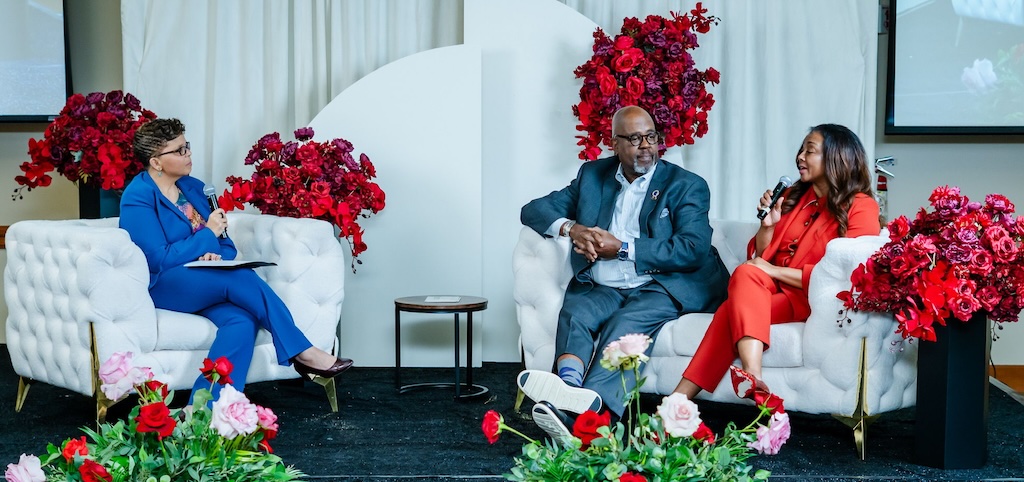
One Voice panelists talked about what inspires young people to pursue a career in medicine. Their inspirations and motivation and how they can benefit from support and encouragement throughout the journey. They discussed ways to encourage minorities to enter healthcare fields, and the importance of and connecting with patients and mentors.
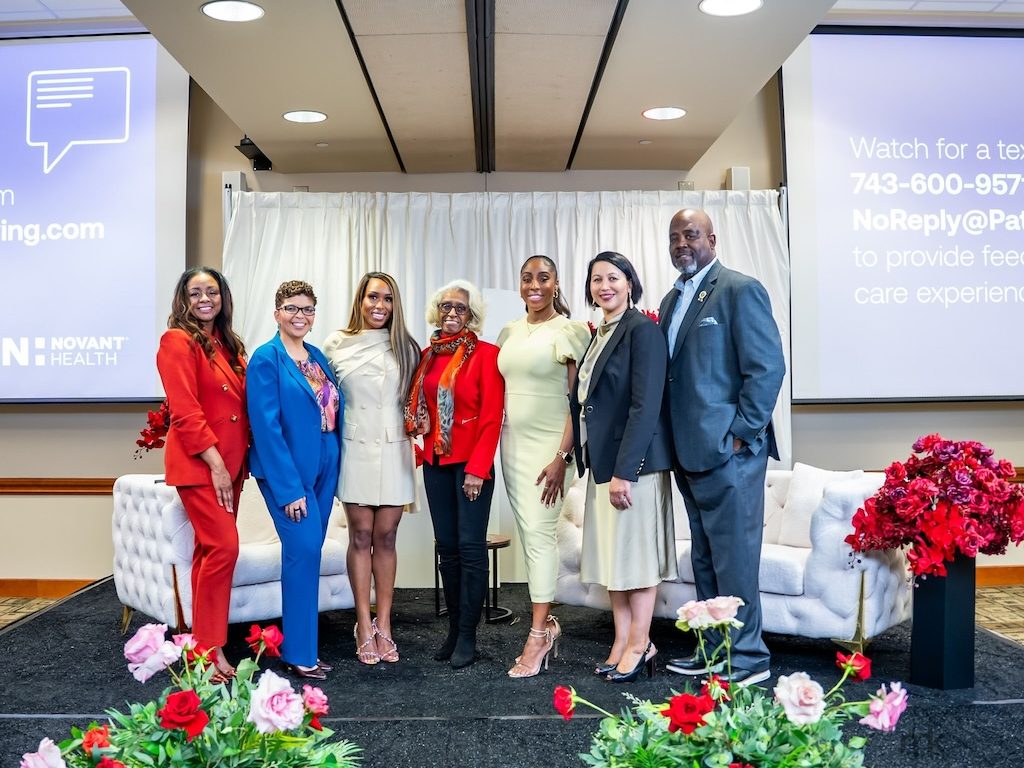
The panelists included Dr. Nicole B. Burwell, founding director, Physician Assistant A Program at N.C. A&T University; and Dr. Cedric M. Bright, a professor of Medicine and former president, National Medical Associations. Dr. Chere Gregory, senior vice president and chief Health Equity officer for Novant Health, served as the moderator.
A highlight of the event was its keynote speaker, Dr. Barbara Ross-Lee, the first Black woman dean of a medical school in the United States. She became dean of Ohio University Heritage College of Osteopathic Medicine in 1993 and has earned national recognition for her leadership in medical education, health equity and population health, according to her bio on the website of the American Osteopathic Foundation.
She remained dean at the Heritage College of Osteopathic Medicine until 2001, going on to serve in similar roles in universities and medical groups throughout the country. Ross-Lee’s list of accomplishments and accolades includes her induction into the Ohio Women’s Hall of Fame and earning a spot on the American Osteopathic Foundation’s list of the 40 Great Pioneers of Osteopathic Medicine.
Dr. Pamela Oliver, executive vice president and CMO of Novant Health, who served as moderator for Ross-Lee, called her a “trailblazer” who has truly “broken barriers.”
Ross-Lee’s career began in the 1960s, a decade of turmoil yet also of hope. Of possibility. Ross-Lee says she didn’t have a specific dream.
She was determined, however, to make a difference.
In 10 years around that decade, she said, America saw the Civil Rights Movement, an effort toward promoting the rights of women. A push for voting equality and the inception of Medicaid and Medicare.
“There hasn’t been a decade like it, and I had the honor of being there watching it happen.”
A decade of promise. Of Black voices becoming one.
“You realize you can do anything you want to do,” Ross-Lee said. “It showed that the impossible was possible.”
The oldest of six children — one of her siblings, her “little sister,” she says, is “Queen of Motown” Diana Ross — Ross-Lee’s parents valued education. She grew up, she says, in “the projects,” but they formed her community. A place where she found peace and safety.
She talked about her leadership style, particularly as a Black woman.
“I wasn’t just the first,” she says of her role as dean of Ohio University Heritage College of Osteopathic Medicine. “I was alone … in a system and a society that did not value, and underestimated, minorities and women.”
Never be reactive, she says. “When you’re reactive, you give away your power.”
Never be predictable. “Predictability resides in biases and stereotypes.”
Never be defensive. “When you’re defensive all you do is communicate your insecurities.”
Today she talks a lot about the downfall of DEI and the idea of health equity, which she calls “human health equity.” About our struggling system of healthcare, a system, she says, that’s geared toward treating disease.
“The way the system functions can not deliver health. It can only deliver disease care.”
A healthy population should be the goal. Find the “high ground,” she says.
“We are sick, folks. Our people are dying for no reason. We’re working with a system that is not about health, it’s about disease, and we can’t expect it to solve health issues. That’s what you all will do for us,” she told the audience of healthcare professionals.
The success we’re looking for, she says, is a healthy population. That entails holding providers and hospitals for the health of the people they serve, she said.
“Let’s clean up a zip code, and then let’s go one to the next one. There’s a way to do it. You need commitment to be able to do it.
She looked into the crowd, including many new physicians and providers.
“If not you, who?” she asked, echoing the mission and goals of Color of Medicine™.
“And now’s the time. You are the future and that’s important. You have to understand how valued you are. I’ve worked over 50 years to create an environment that, now, you can walk in and take the next step.
“Don’t let me down .. please don’t let me down. That’s your charge.”
See a video of the event here.