
Hairstyles often reflect individuals. Their heritage, their family, their culture and, many times, their identities. A hairstyle can influence how one is perceived, professionally and personally.
Black women, in particular, face unique challenges and struggles caring for their hair. Hours spent in salons, sometimes because it was a personal choice and others because of societal pressures or expectations. Because of history and family experiences. Because of parental guidance and advice.
Yet those struggles have become collective triumphs. Hair becomes a source of joy, a source of celebration.
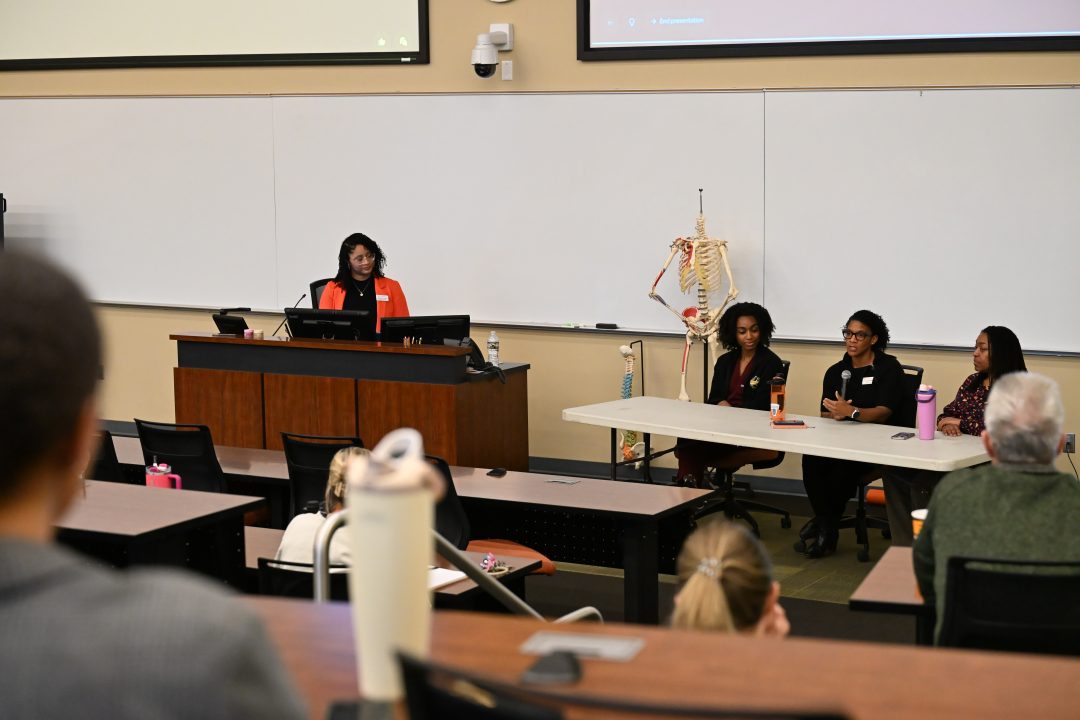
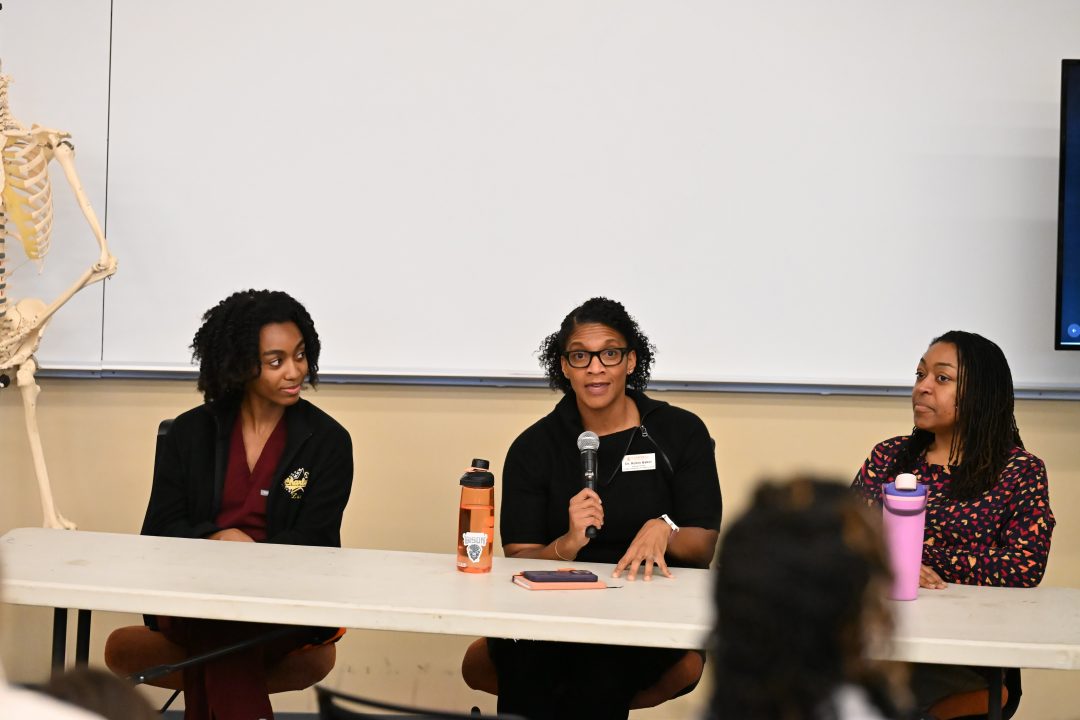
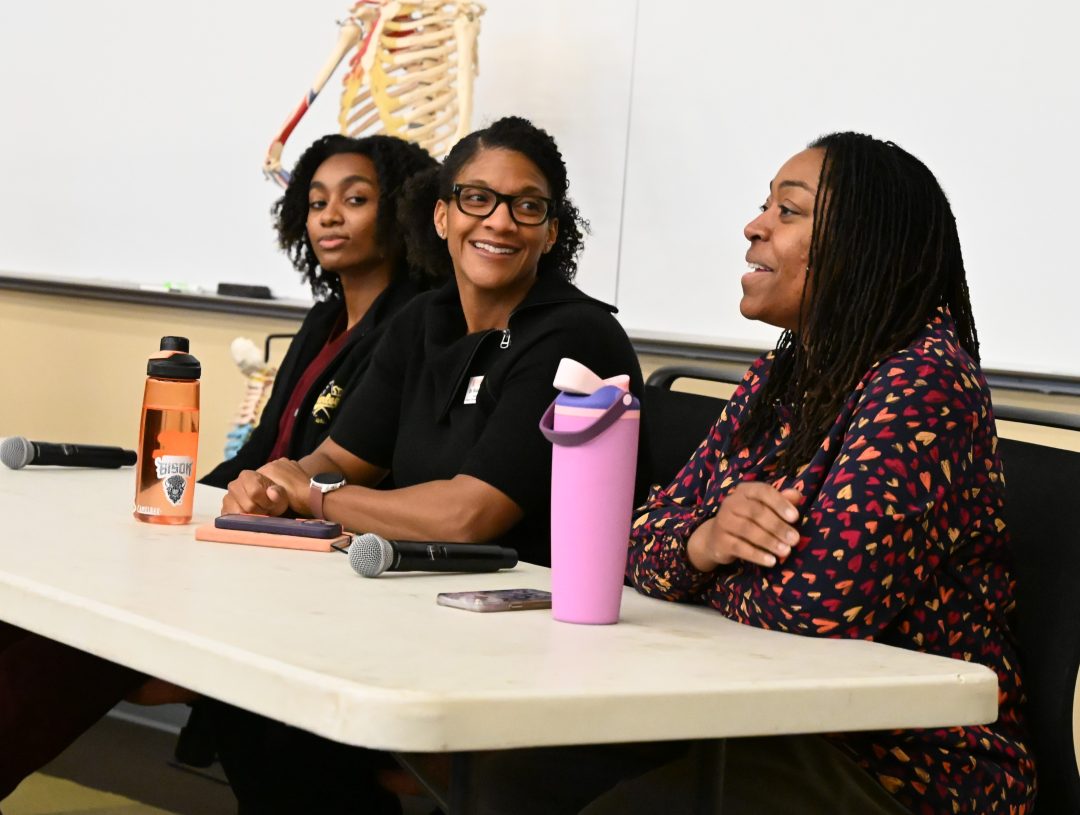
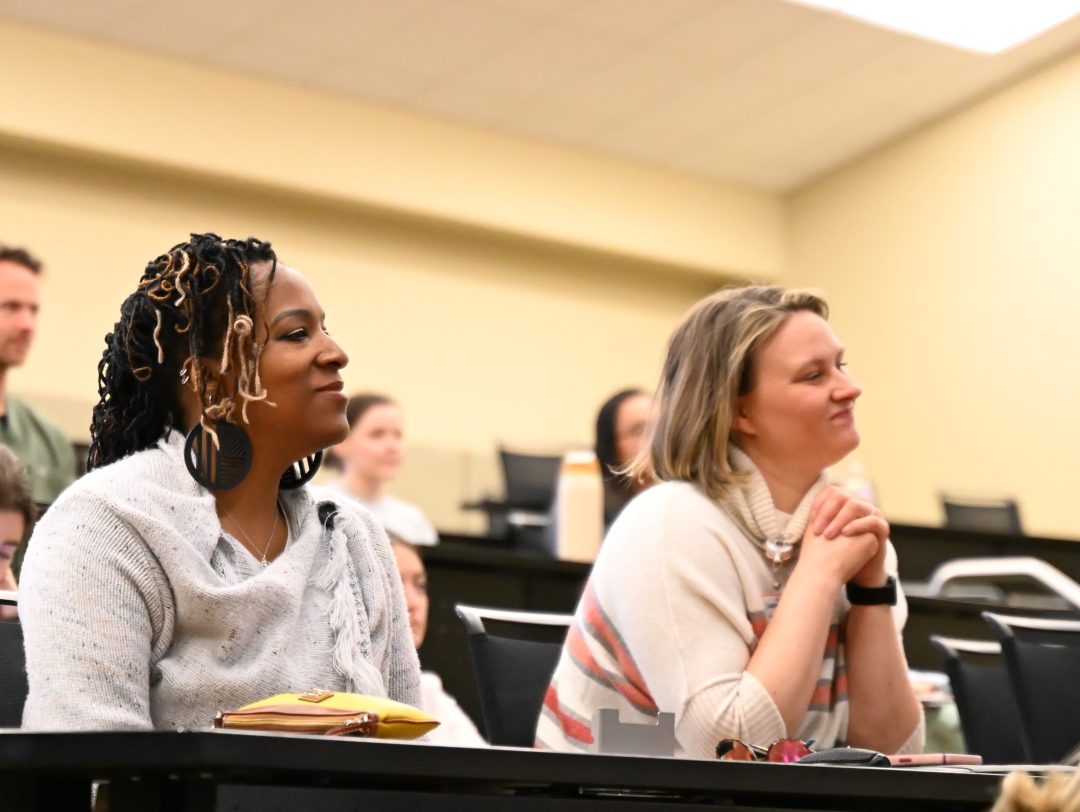
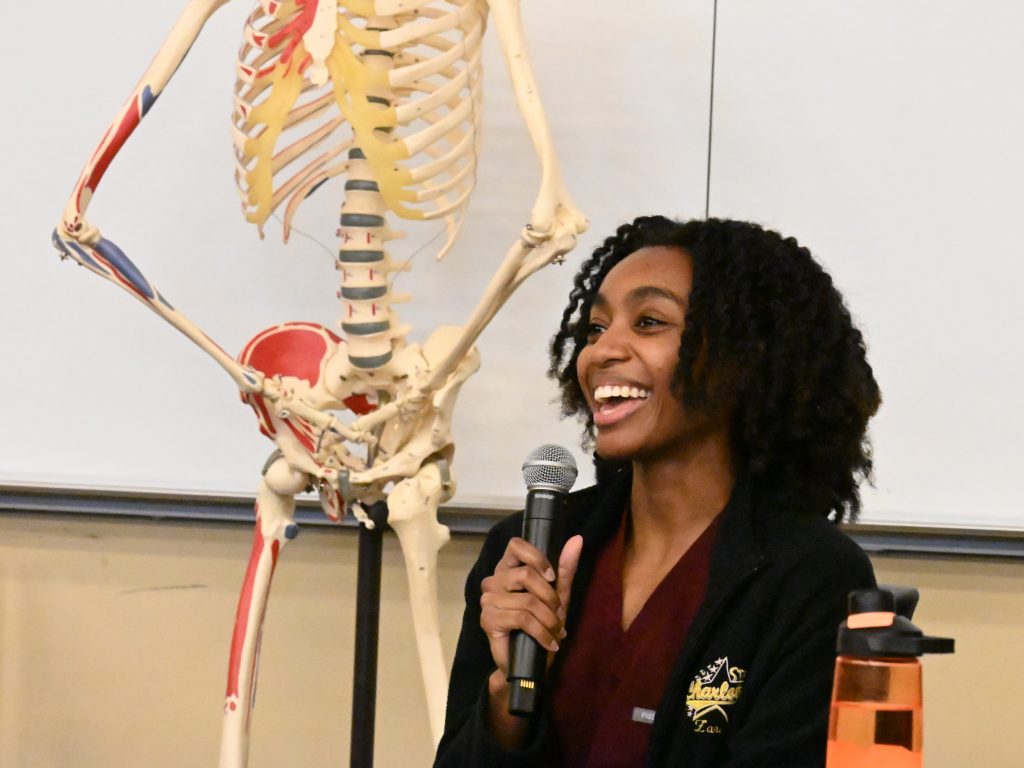
A panel discussion led by a group of women, students and professors in the College of Pharmacy and Health Sciences focused on the history, experiences and cultural importance of Black hair in society and in today’s healthcare community.
The panel met Feb. 25 in Campbell University’s Leon Levine Hall of Medical Sciences.
Panel members also talked about the cultural significance of the natural hair movements in the 1960s and 2000s, as well as the relevance of the “Big Chop.”
The discussion, “Black Hair in Healthcare,” included Dr. Robin M. Baker, an assistant professor of Physical Therapy; Zaria Dunlap, a student in the Physician Assistant program; and Dr. Catherine Wente, an assistant professor of Pharmacy.
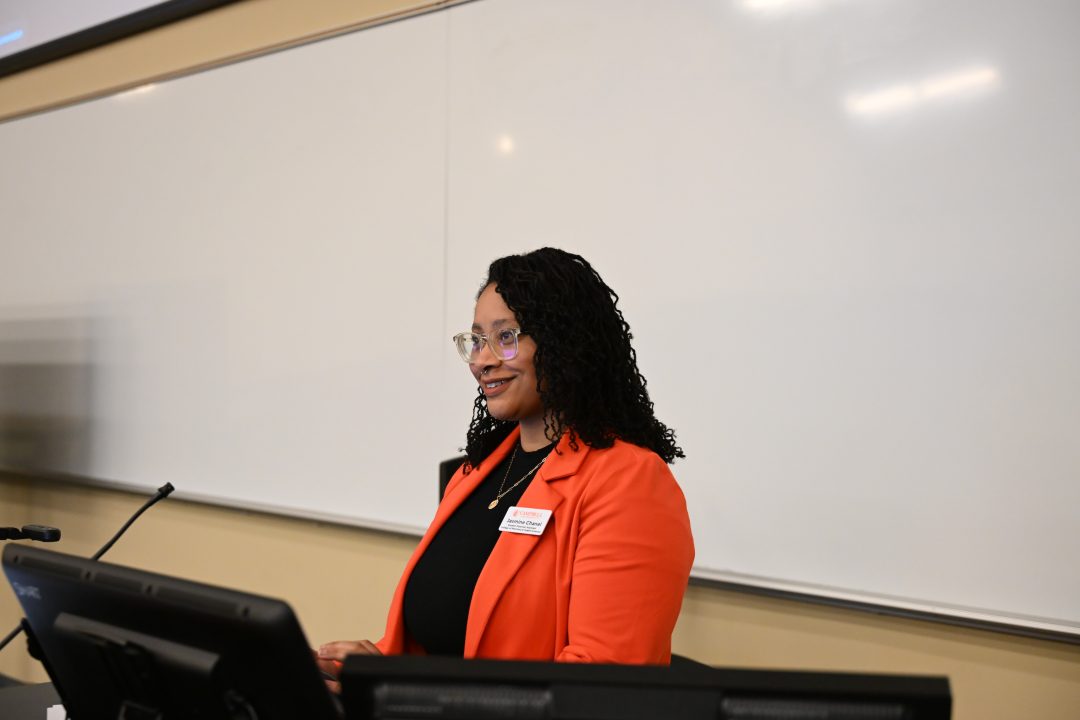
Jasmine Chanel moderated the discussion. She’s a dual degree candidate at Campbell studying for Master Master of Science in Public Health and Master of Science in Physician Assistant Practice.
Dunlap talked about using relaxers — chemicals designed to straighten curly hair — which left women waiting to “feel the burn.”
“I think it is important to discuss what it felt like, even at a young age, as many of us have the same experience,” Chanel said.
Dunlap was about 5 when she experienced her first relaxer treatment. Chanel says she was about 4. “The history behind that is long and complicated, but, essentially, our parents did it in order to, one, help us fit into a society that … that is what we needed to do, and also to help us manage it,” Chanel said. “But then when we transition (to natural hair) … learning how to take care of our natural hair.”
Wente talked about how, when she was young, her mother put her hair in braids. She remembers a time during her third year as a pharmacy student. Remembering how she had worn the braids too long of a time.
“The roots had knotted,” Wente said. “They had locked up. I spent an entire day in the shower trying to untangle my hair.”
Trying everything she could think of to untangle it. Using conditioner, olive oil. Mayonnaise.
Wente says she went to Walmart, under the cover of darkness and wearing a hat. She bought enough fabric to fashion a wrap, which she wore to work in a pharmacy. Until she could fix things.
“So, I cut it down with the “Big Chop,’” she says. “I got cut down on probably two, two and a half months worth of hair.
“But, in pharmacy school, I changed my hair a lot,” Wente said. “Sometimes I’d have a relaxer, sometimes I would have braids. … One of my best friends in pharmacy school, he would always ask me, ‘So, is this a chemical change or a physical change?’
“If my hair looks straighter, it was a chemical change. I had gotten a relaxer. If I had braids, it was a physical change.”
Black hair, says Dunlap, is inherently diverse.
“It’s not monolithic.”
She transitioned to natural hair around 2010, at one point, on her mother’s advice, “cutting it all off.”
“I’ve gotten to the point where, you know, it does what it does,” Dunlap said. “I like it.”
Baker says she got the “Big Chop” and cried.
“Now what?” she thought.
How will people perceive me? A constant thought, she says. During interviews, while giving lectures. In other cities, countries.
“It’s always a thought; how should I wear it?”
Wente’s mother persuaded her to relax her hair. To look professional. She last used a relaxer in 2017.
“I’ve had natural hair ever since, but I distinctly remember that struggle,” Wente said. “Letting my mom tell me that I needed to relax my hair because I was going on rotations, and me listening to her, it just perpetuated that process.
“Now my hair is doing what it always wanted to do.”
Don’t let your hair become a barrier, Baker says. In a professional or healthcare setting, in exercise or in sports. As a physical therapist, Baker is happy to offer advice.
“Because, if (your hair is) keeping you from doing what you need to do to move your body and stay moving, then I’m not really doing my job as your physical therapist by not trying to give you some suggestions,” Baker says.
Use your intuition, says Baker. Think. But, most certainly, ask questions, Wente says. But ask them with sensitivity, with a sense of understanding — of culture, of the respective relationship.
“I’m an open book. So, when someone asks me a question about my hair, I don’t want to discourage them, because I might be the person they feel comfortable (talking to).”
Caring for black hair can be expensive. It can be a lengthy, arduous process. A joyful process, too
“It’s celebrated,” Baker says. “It’s something that we do, and it resonates across cultures.”
Said Dunlap, “I think of how I wear it now is just a testament of how my hair is, I think all of us can can say when we were younger, we were trying to be someone we weren’t, and trying to figure ourselves out so, and then you realize, it’s just me, and I love me.”