
A recent presentation in Coats by a group of Campbell healthcare students highlighted the university’s ongoing efforts and mission to reach out to the community and to serve, teach and care for those residents, including people living in rural and underserved areas.
The gathering precedes a caregivers expo at the Campbell University Jerry M. Wallace School of Osteopathic Medicine (CUSOM), set for April 10 in Levine Hall, 8:30 a.m. to 3 p.m. The free expo, funded by a grant, will include myriad booths, workshops and presentations that focus on helping and educating caregivers of older adults and their families.
As part of the CUSOM and Harnett Department of Aging Caregivers Expo, attendees can meet healthcare and dementia-care experts, connect with fellow caregivers, browse exhibits and discover resources and tools “to make your caregiving journey easier,” a promotional flier for the event says.
Campbell Law School, for instance, will address advanced-care planning, and representatives from the Physician Assistant program will conduct assessments on fall risk. A specialist on dementia will speak on the topic, and representatives from the Pharmacy School will be on hand to talk about things such as managing medicines.
“I am very proud of our students who have taken this on as a community service event and would love to praise them for their hard work,” said Dr. Christine Khandelwal, a professor of Family Medicine and director of Geriatrics and Palliative Medicine at the med school.
On that Friday in the senior center, three Campbell students, two studying osteopathic medicine and one studying nursing, stood in front of a few dozen older adults who gathered for the presentation. The students are part of an inter-professional health group developing and facilitating community service projects to help older adults. Doing things such as delivering special lessons and activities. Helping older people remain active and teaching them things that help them meet their needs.
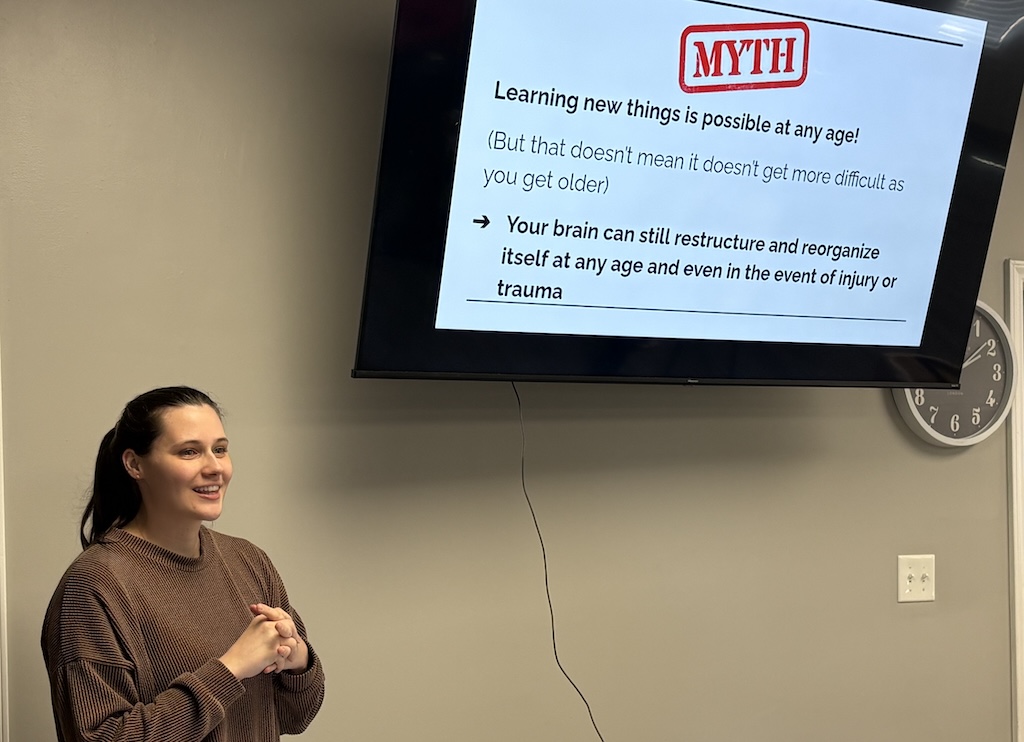
Student Dr. Franchesca Dalugdug welcomed the crowd. She had their full attention.
“So, you’ve done surveys throughout the past few weeks about what life is like for you all, and we want to give back something that will help you … and bring some goodness to your life,” Dalugdug said.
The session focused on the connections between our brains and our bodies, how the body is connected to both physical and cognitive health. It included an interactive lesson, group exercises, time for questions and answers, as well as fellowship.
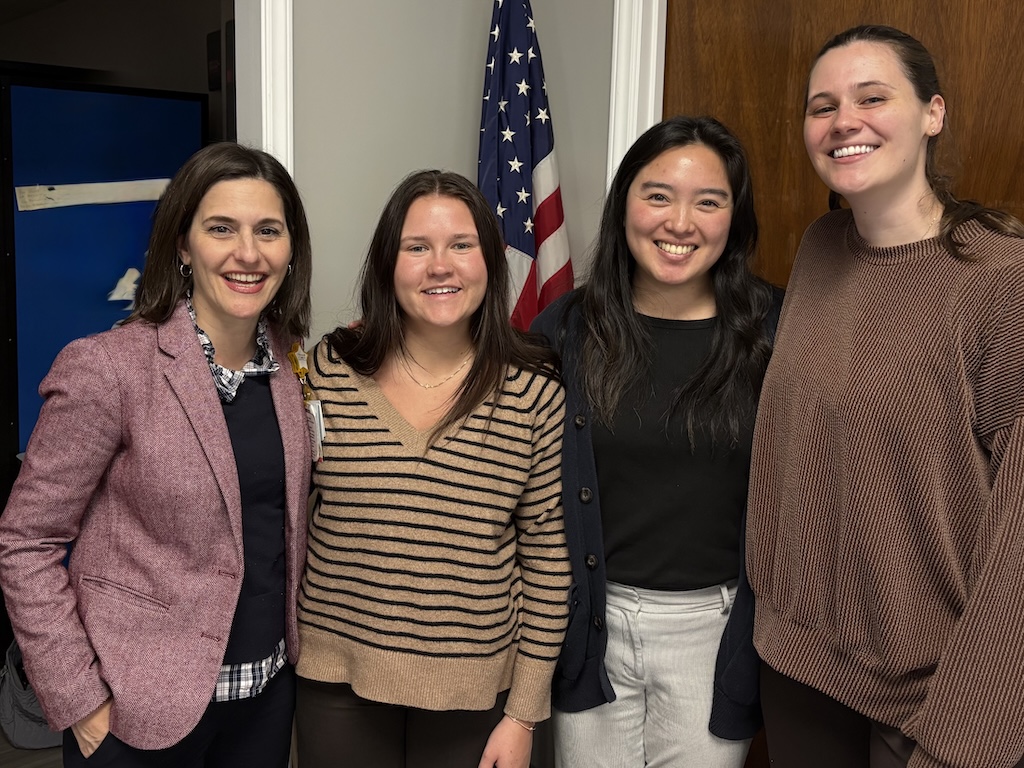
Dalugdug, student Dr. Katie Satterthwaite and Mariah Gilchrest, a student in the Registered Nursing program, led the discussion. Other members of the group of Campbell students involved in the project include student Dr. Pavitra Sriram; Physician Assistant student Erika White; Lilly Britt, who is studying to be a registered nurse; and Simone Claude, who is studying for a career in Social Work.
Khandelwal, a national leader in geriatric and palliative care, leads the group, which is about empowering older people to stay active and healthy, helping them to recognize normal signs of aging versus issues that might necessitate a call to their health provider.
Satterthwaite and the team passed out red and green cards, which attendees used to signal whether a particular statement is fact or myth. She posed a series of questions, or “Mythbusters,” and the crowd presented the appropriate color.
She asked, for example, whether significant memory loss is a normal, unavoidable part of aging. It’s a myth, but people should pay attention to signs of deeper issues, such as incessantly repeating a question or failing to take care of daily needs such as cooking and bathing.
Satterthwaite emphasized the importance of safe exercise among older adults, and that the amount of physical activity when people are younger has little effect on one’s risk for dementia. But, physical activity in middle or late life reduces the risk for dementia by 41 percent and 45 percent, respectively.
”It’s very, very important to, as far as you’re capable, and with any intensity that works for you, to get your body up and moving,” she said.
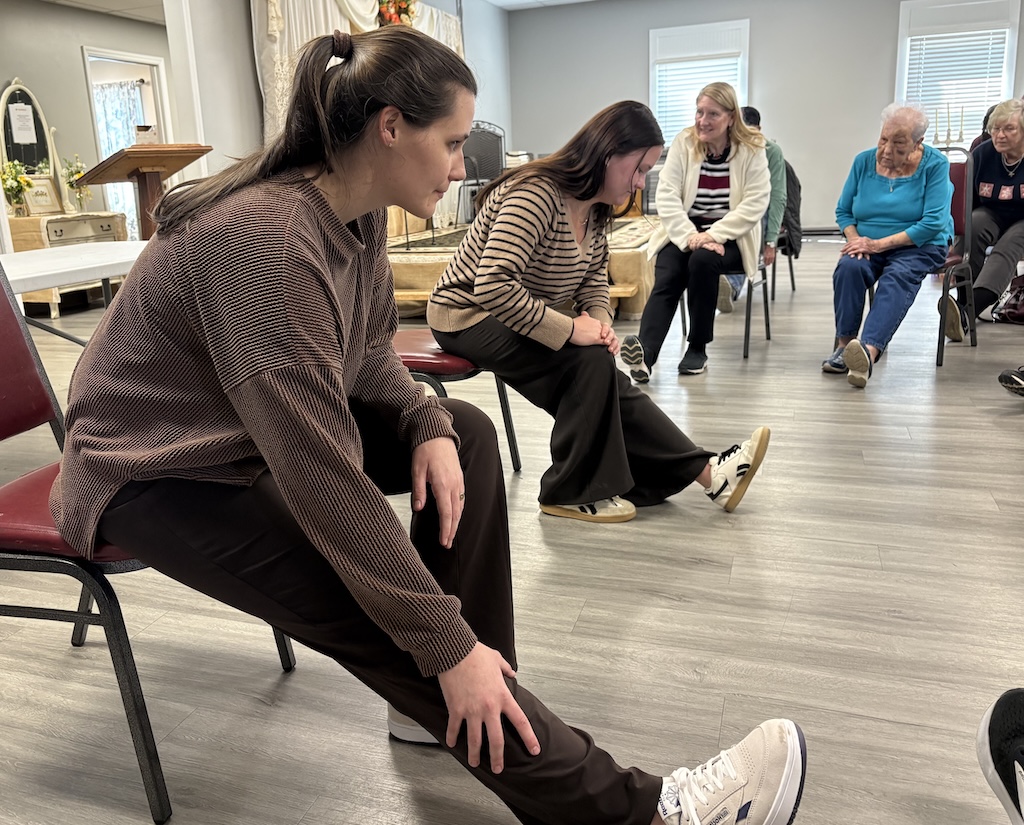
Toward that end, the students led a group exercise sessions featuring Otago, an exercise regimen that began at University of Otago in New Zealand, and, said Dalugdug, is one of the best fall-prevention exercise programs available, focusing on functional movements and parts of the body such as hips, ankles and knees.
Khandelwal said the students involved with the project, made possible through the same grant, are interested in helping and caring for an aging population, and she hopes to spark interest in other healthcare students, who could help enhance and build that respective workforce.
The Coats event was, indeed, a teaching experience for the older adults. But for the Campbell students, too.
Gilchrest said those who gathered in the senior center were excited to learn and to work together, to talk with the students about the importance of staying in motion.
“A lot of what we focused on was moving,” Gilchrest said. “How you can keep (your) body moving.”
Said Satterthwaite, “The point of our presentation was to try to expel some of these myths that a lot of older adults, and I think a lot of our participants, knew were myths, but there was a good amount who kind of believed (some) myths were true.”
The seniors who attended are active people, Dalugdug said.
“They really want to be involved in taking care of their own health,” she said. “From our surveys over the past month, a lot of them live alone. A lot of them have to carry on more social responsibilities … and they need to keep up with that, and they’re really determined to fight for that. So that’s why we cater this program to help them with those functional movements.”