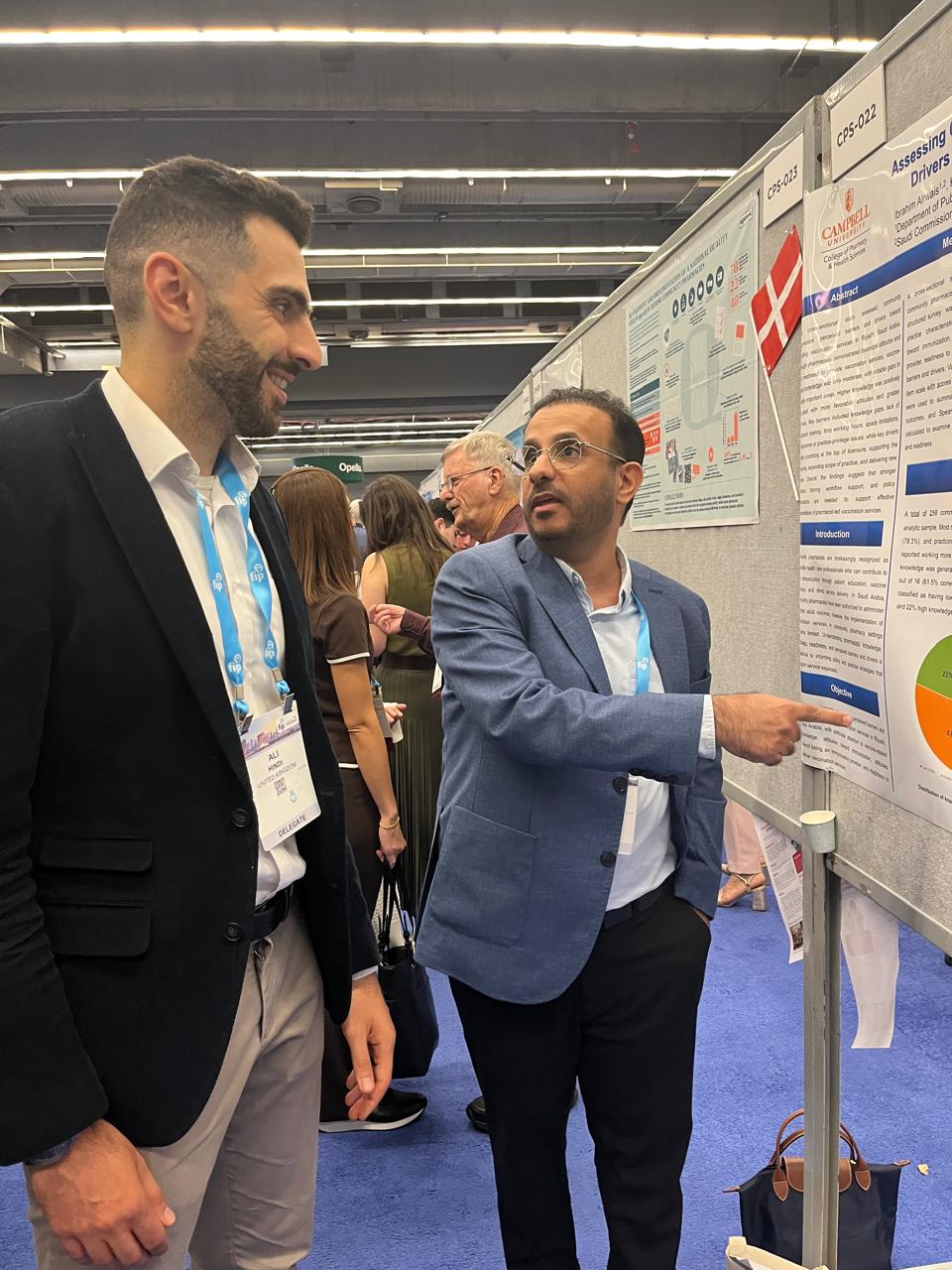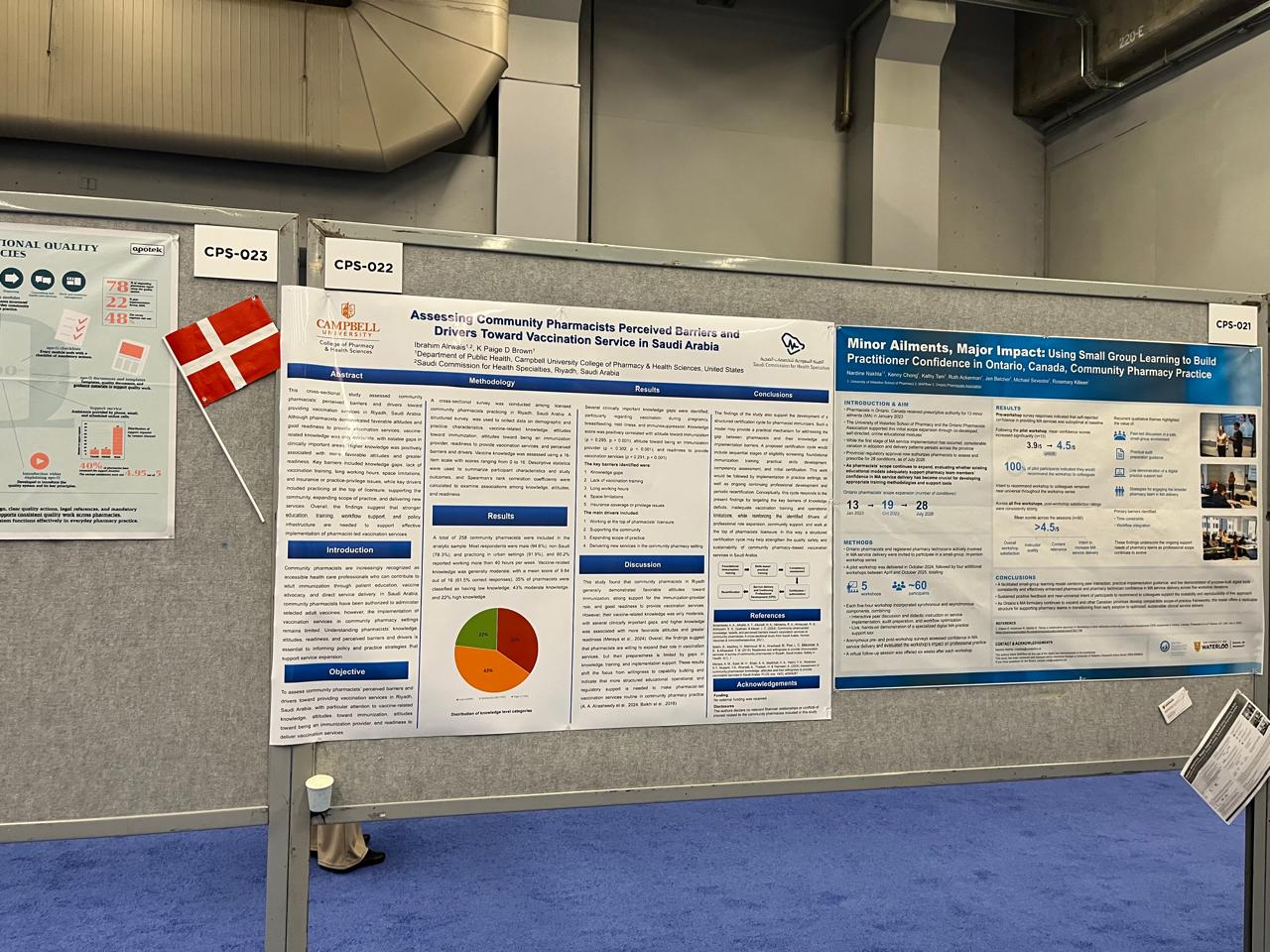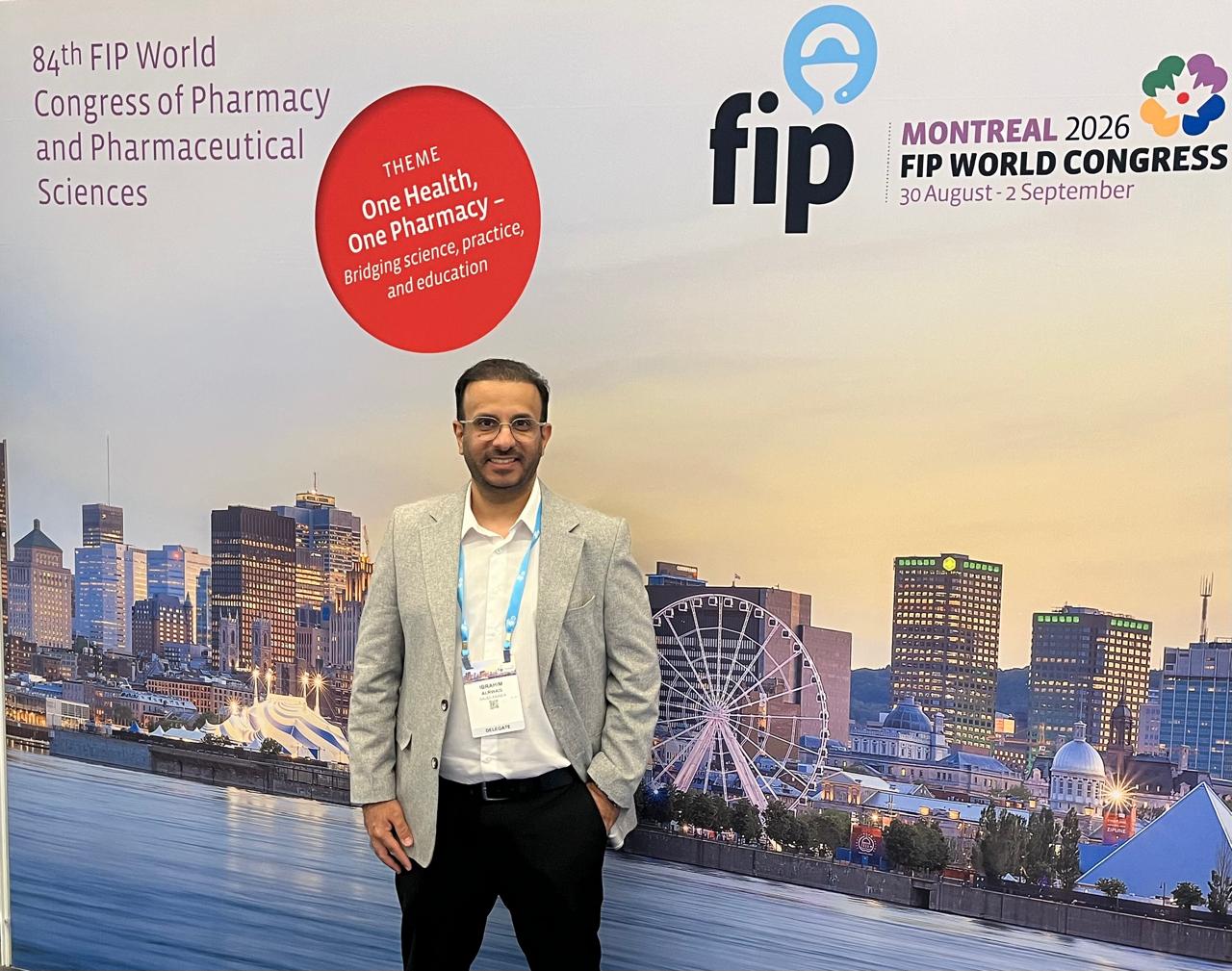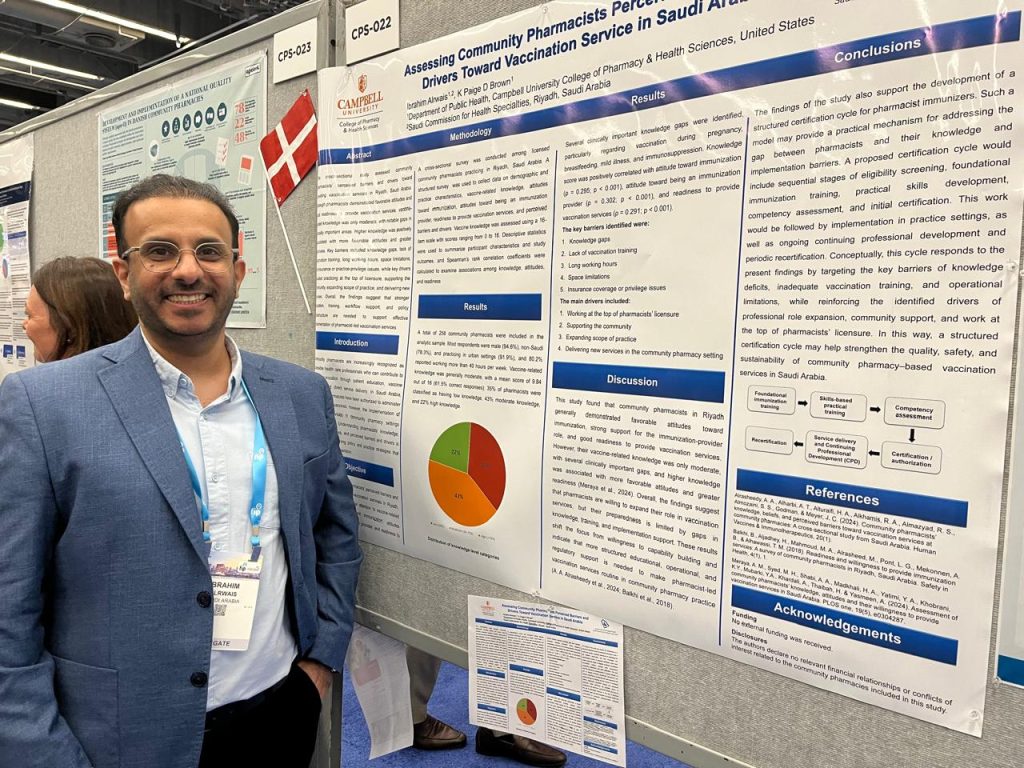

Campbell University Doctor of Health Sciences student Ibrahim Alrwais presented his research on an international stage at the 84th FIP World Congress of Pharmacy and Pharmaceutical Sciences in Montreal, Canada.
Held Aug. 30–Sept. 2, the congress brought together pharmacy professionals, researchers and health leaders from around the world to exchange knowledge and explore developments shaping pharmacy practice and pharmaceutical sciences.
Alrwais presented his research, “Assessing Community Pharmacists’ Perceived Barriers and Drivers Toward Vaccination Service in Saudi Arabia.” His work examines factors that may encourage or hinder community pharmacists’ participation in vaccination services, offering insights that could help expand access to preventive care and strengthen pharmacists’ contributions to public health.
The international presentation marked another significant milestone for Alrwais, who has completed Campbell’s Doctor of Health Sciences program and will graduate in December 2026.
Earlier this year, Alrwais joined 26 fellow DHSc students in presenting their capstone research and celebrating the culmination of their doctoral studies. During the event, he received the program’s Outstanding Graduate Award.
The award recognized Alrwais for his outstanding contributions to coursework and discussions, demonstrated leadership qualities and potential to make a meaningful impact on the future of the community he serves. Through his research, international presentation and academic achievements, Alrwais exemplifies the program’s commitment to developing healthcare leaders who use scholarship to make a meaningful difference.
About the DHSc Program
Campbell’s Doctor of Health Sciences program is the first program of its kind in North Carolina. The 54-credit-hour interdisciplinary doctorate is offered 100% online, with courses presented in convenient, accelerated eight-week terms designed to meet the needs of working health professionals. The program can be completed in three years.
Students build a broad foundation in modern healthcare, population health, organizational improvement and research before selecting one of three concentrations: Health Administration, Interprofessional Education or Rural Health. Students also complete a faculty-guided capstone research project based on their professional interests and chosen concentration.
The program prepares health professionals to serve as leaders, educators and researchers who can address complex healthcare challenges and help improve organizations and communities. Graduates are equipped to provide leadership, planning, innovation and organizational improvement in settings that include colleges and universities, clinics, hospitals, government agencies, nonprofit organizations and private industry.