


Isaac Johnson was 10 years old when he first saw a cavalry of Yankees come through Lillington toward the end of the Civil War in 1865. A slave his entire life to that point — his parents and grandparents were slaves as well — Johnson recalled seeing other men of color in uniform during an interview for the Library of Congress’ Federal Writer’s Project nearly 70 years later.
“They wore blue and had brass buttons on them,” he said before recalling the soldiers wiping out the “meat, chicken and stock” from the family that owned him.
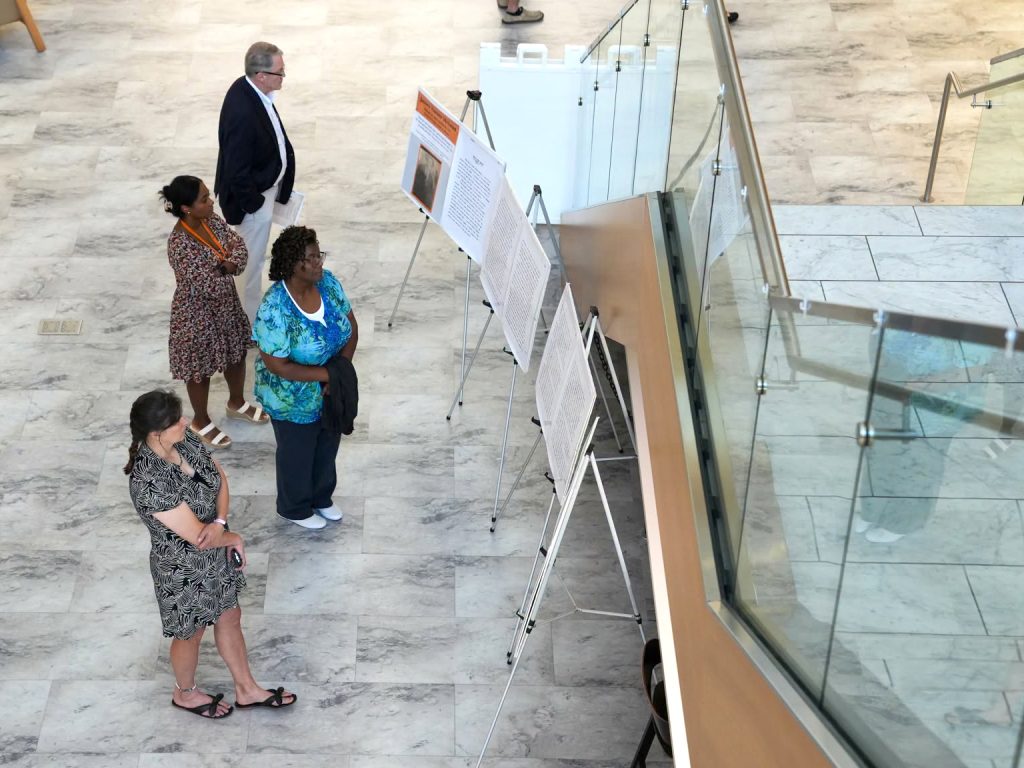
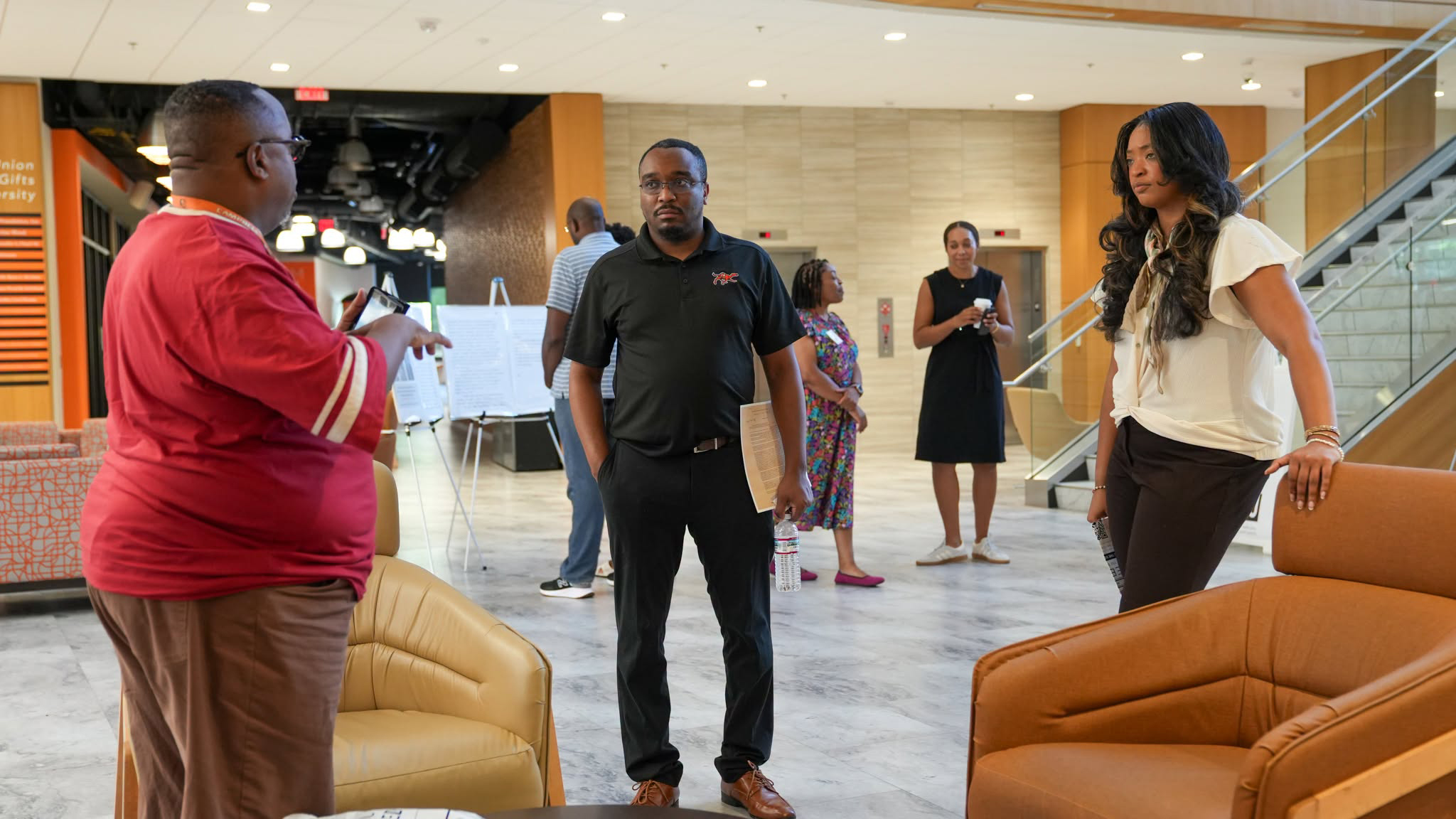
Johnson’s interview was one of several on display during a gathering on Wednesday celebrating Juneteenth — the federal holiday commemorating the emancipation of enslaved people in the United States (more specifically, the day 250,000 men and women learned they were free in Galveston, Texas, two years after Abraham Lincoln signed the Emancipation Proclamation). The interviews and other materials on African American history were on display in the Grand Hall of the Oscar N. Harris Student Union. Campbell University held its first Juneteenth gathering in 2023, a collaboration of the Multicultural Council and Wiggins Memorial Library.
Also on display again was the story of Nellie Smith, born on a plantation in Harnett County in 1856 near current day Linden. She was 9 when she learned she was free. She also remembered the day the Yankees marched through her town.
“Yes, I remember the Yankees,” she said. “They went to our house one Sunday morning. They fought on the other side of the river … the Battle of Averasboro. [Our plantation] was a hospital. My sister Irene was the house girl. The Yankees put their pistols to her head and said, ‘You better tell me where everything is hidden. Tell us where the money and silver is hidden.’ She did not tell.”
James Turner McLean lived on a plantation between what is now Buies Creek and the Cape Fear River. He was 5 years old and with the plantation owner at the post office on the day he learned the news of Lincoln’s proclamation. When he ran to tell his mother and grandmother, both women thought he was lying and threatened to put a “hickory to him” if he lied again.
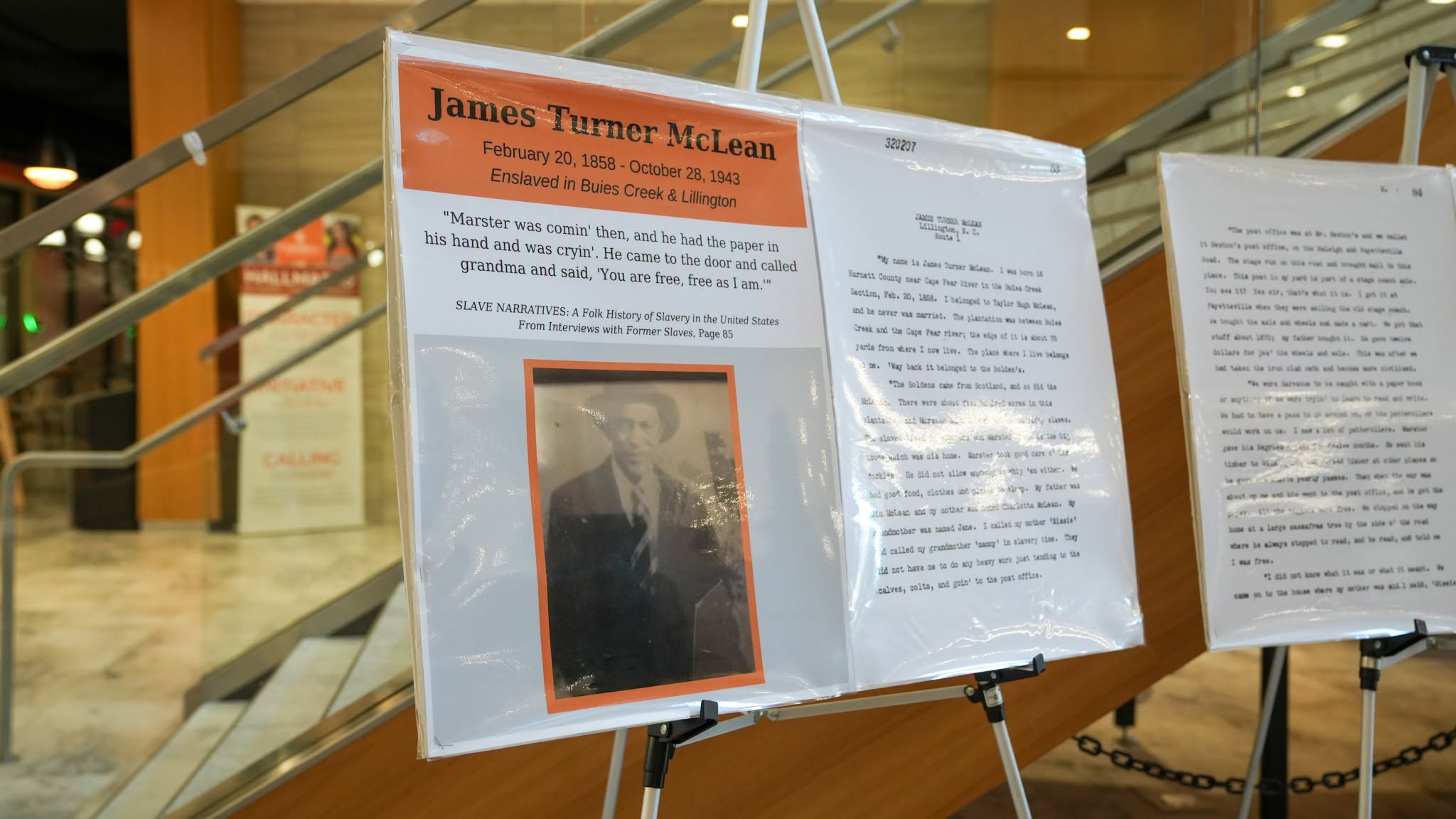
McLean says he remembers his mother — when she finally believed the news — blew a ram’s horn that could be heard a mile out to call the few dozen other enslaved men and women to the house to deliver the news. The plantation owner, he said, gave them wood to build homes and offered free housing and a paycheck if they chose to stay and work the farm. According to McLean, many would stay for another 15 or so years.
“We ought to think a lot of Abraham Lincoln and other great men such as Booker T. Washington. Lincoln set us free,” McLean said in his interview 60-plus years later. “Slavery was a bad thing and unjust.”