

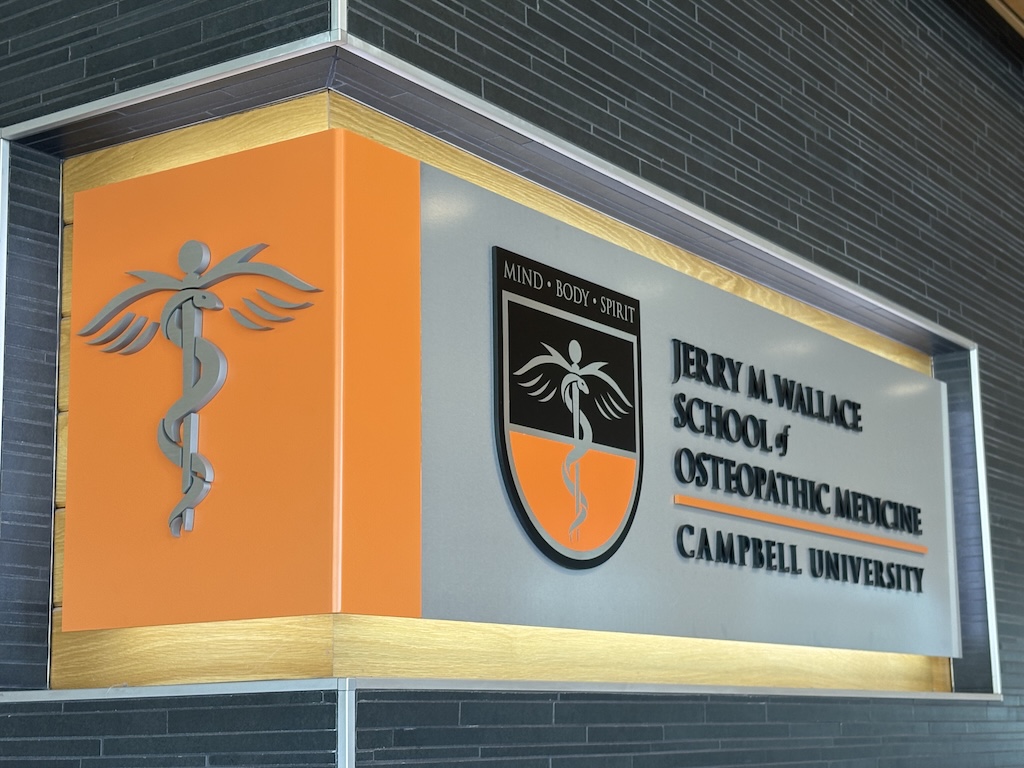

Student peer learning partners at the Jerry M. Wallace School of Osteopathic Medicine (CUSOM) are helping undergraduate students in innovative and creative ways.
Dr. Amy Hinkelman, executive director of Academic Support and Assessment, manages the Peer Learning Partner (PLP) program, which offers academic support from student peers in the form of one-on-one tutoring, weekly drop-in sessions and workshops.
The student Peer Learning Partners, in addition to having a passion for supporting their peers, must meet rigorous academic criteria and complete a mandatory training program, Hinkelman says.
“Their services have a significant and meaningful impact on the academic success of their peers and enhance the overall supportive learning environment at CUSOM.”
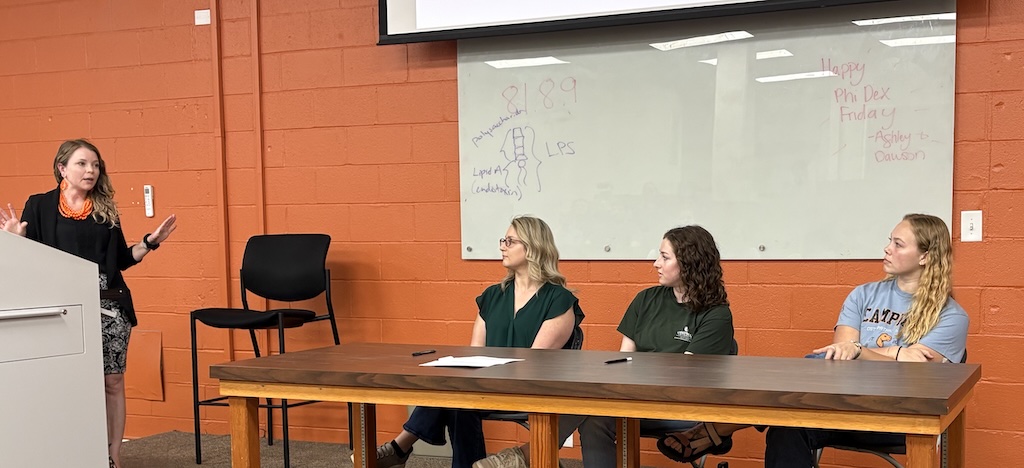
Together, Hinkelman and a group of learning partners, all second-year student doctors, this semester helped facilitate an undergraduate session, “Thinking Like a Future Clinician: Study Strategies & Skills You Can Start Using Now.”
The session offered tips on using effective study habits and worked to help students navigate studying and learning as they progress through their undergraduate courses. A video presented during the class talked about effective, and ineffective, study habits. They discussed strategies commonly used but often do not work, such as using flashcards for recognition but not recall. Or, applying them to the bigger picture, for example, or highlighting passages in a textbook or, worst of all, staying up late into the night “cramming” for a test the next, or same, day.
It’s the first time Hinkelman has utilized peer learning partners for the pre-med/pre-health group or as a resource for undergraduate students looking to advance toward a degree in a number of healthcare professional programs such as medicine, pharmacy, or physical therapy.
Some of the learning partners sat at a table near Hinkelman at the front of the class, while all took part in small breakout sessions and helped to facilitate interactive learning experiences.
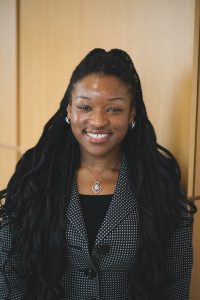
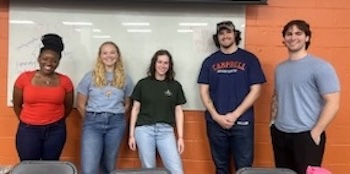
Among the learning partners were Abby Heims, Ainsley Forest, Rachel Morgan-Armbruster, Timothy Hardman and Theodore Hutt. Trinity Whitaker, incoming president of the Pre-Med/Allied Health Honors Society at Campbell, played an integral role in the learning session.
“I’ve enjoyed being a PLP because of the ability it gives me to both review older content to keep it fresh in my mind, and also to exercise the areas of my brain that figure out different ways of explaining concepts so that they make sense to other people,” Heims says.
“This will be a very helpful skill in the future when I am explaining medical things to patients with different levels of knowledge on the subject at hand. And it’s always really fun to foster relationships with the first-year class of medical students and pass along both knowledge and helpful soft skills I’ve picked up through my own experiences.”
Said Morgan-Armbruster, “I have really enjoyed working as a peer learning partner. It is very rewarding to help another student build understanding and confidence. At the same time, it has strengthened my own knowledge and given me a chance to revisit material from my first year.”
Forest said she loves “being a peer learning partner because of the collaborative nature of the organization. We work with students to identify which study strategies are more or less effective, which I think helps students develop sustainable methods that they can use not just now, but also in the future.”
The study habits workshop for aspiring med students has roots in a session in which Hinkelman, a trained immunologist, partnered with Chemistry and Physics Assistant Professor Dr. Sarah Kirik, who was teaching an honors class, part of which focused on vaccines. The discussion addressed concerns about vaccines, whether they’re safe and effective, as well as the science behind them and how they work in our bodies.
A short time later, Whitaker reached out to Hinkelman about having another session, geared toward students studying, or interested in, pre-med/pre-health. They talked and eventually settled on study techniques and habits. “We had a great turnout—and that was all attributed to Trinity promoting it to her peers,” says Hinkelman.
Hinkelman held that session, which was designed to help students start preparing now to handle the pace of medical or other future professional school, in March.
“What worked as an undergraduate just stops working, or at least working as well when (students) start medical school,” Hinkelman says. “And it’s not because they’re not capable. It’s just coming so fast at you, and there’s a lot to integrate within a short time.”
Medical professionals must also maintain, and refer to, the information they learned while training. Which is one reason “cramming” for exams isn’t an effective method of study.
Hinkelman says effective studying comes down to two basic concepts — active retrieval and space repetition. Retrieving the stored information when needed — again and again. Whenever that may be.
It begins with effective, efficient study habits.
“The information you learn in your professional health care programs builds and integrates as you go,” Hinkelman said. “Gone are those days where you can learn it and then forget it. You have to learn it, use and retain it, and then … use it, apply it and build upon it. At the undergraduate level, you might have an effective strategy that works really well, like … writing things out. But at the next level, it’s just too time consuming.
“You can’t just get through this exam and then be done with information …. the reason we’re teaching it is because we’re preparing them to be physicians, so they’re going to need this information, this foundation.”
At their core, healthcare professionals are healers, Hinkelman says. But they must first take care, and heal, themselves. Burnout rates are high, and one’s own wellbeing is paramount.
“And I will tell you this, every single student I see who is struggling academically, there’s some aspect of their physical or mental well-being that is not being taken care of.”
Whether that’s sleep, nutrition, stress management. Any number of factors that affect health. Student struggles don’t always show up on grade reports, she says.
“I get a lot of students that come in, and we really want them to succeed and do well in the context of maintaining their physical health and well-being, and that means taking care of their mind, body, spirit.”
Whitaker, a junior studying in the Biomedical Humanities program, admires Hinkelman for her “awesome” work and hopes to continue these types of workshops — on developing resumes, for example.
A Raleigh native, Whitaker plans to continue her education at Campbell, possibly in osteopathic medicine. She knew little about Campbell while in high school, but her mother helped persuade her to attend an open house.
The weather that day, as she remembers, wasn’t great. Wet, dreary.
“Even though it was a rainy day, it was a great day, because I loved it,” she says.
Whitaker fell in love with the sense of community at Campbell. She felt welcome, at home. She thought about the opportunities she would have to learn, to lead, to make a difference.
“I just loved it. I really did love it,” Whitaker says.