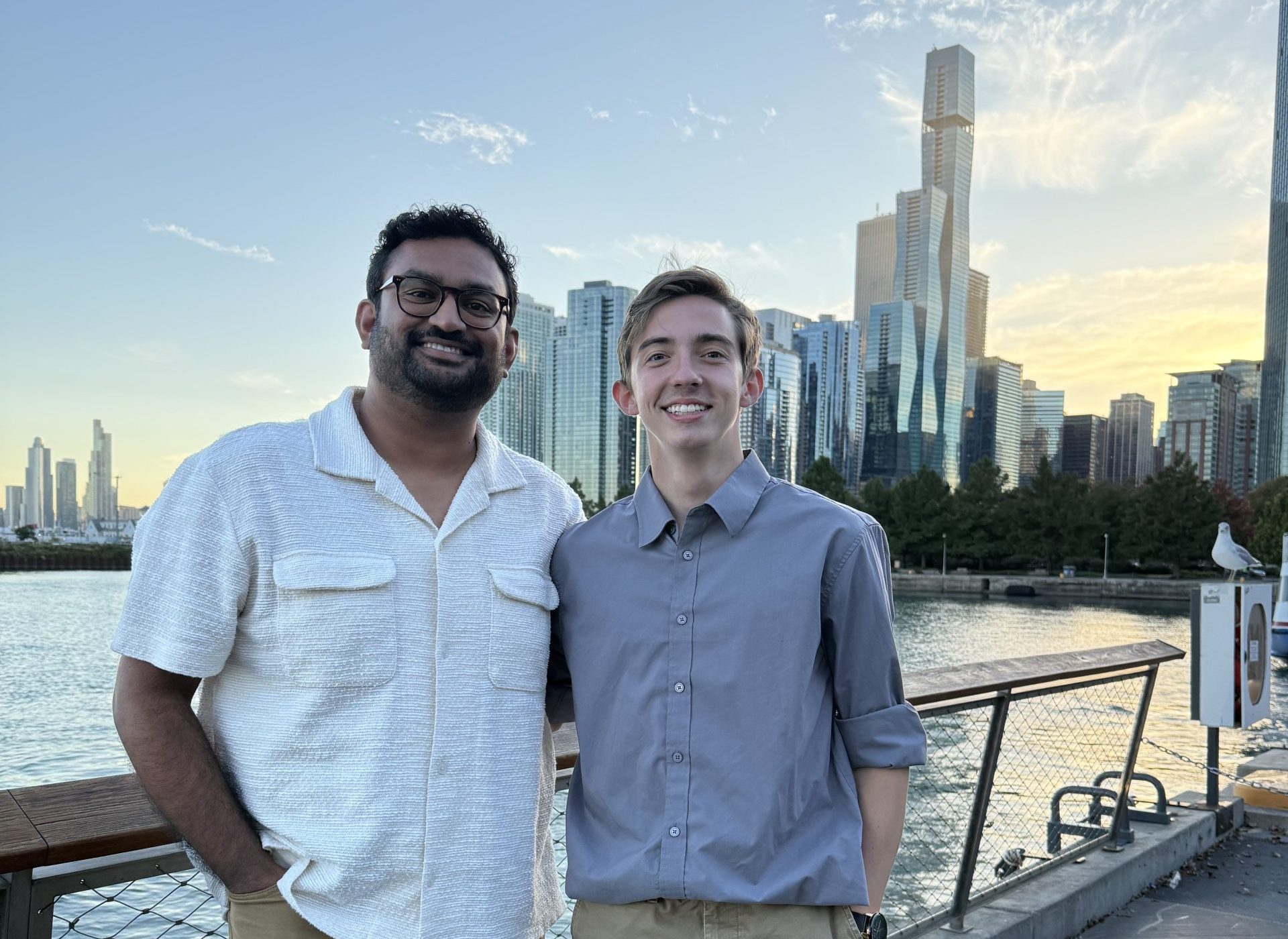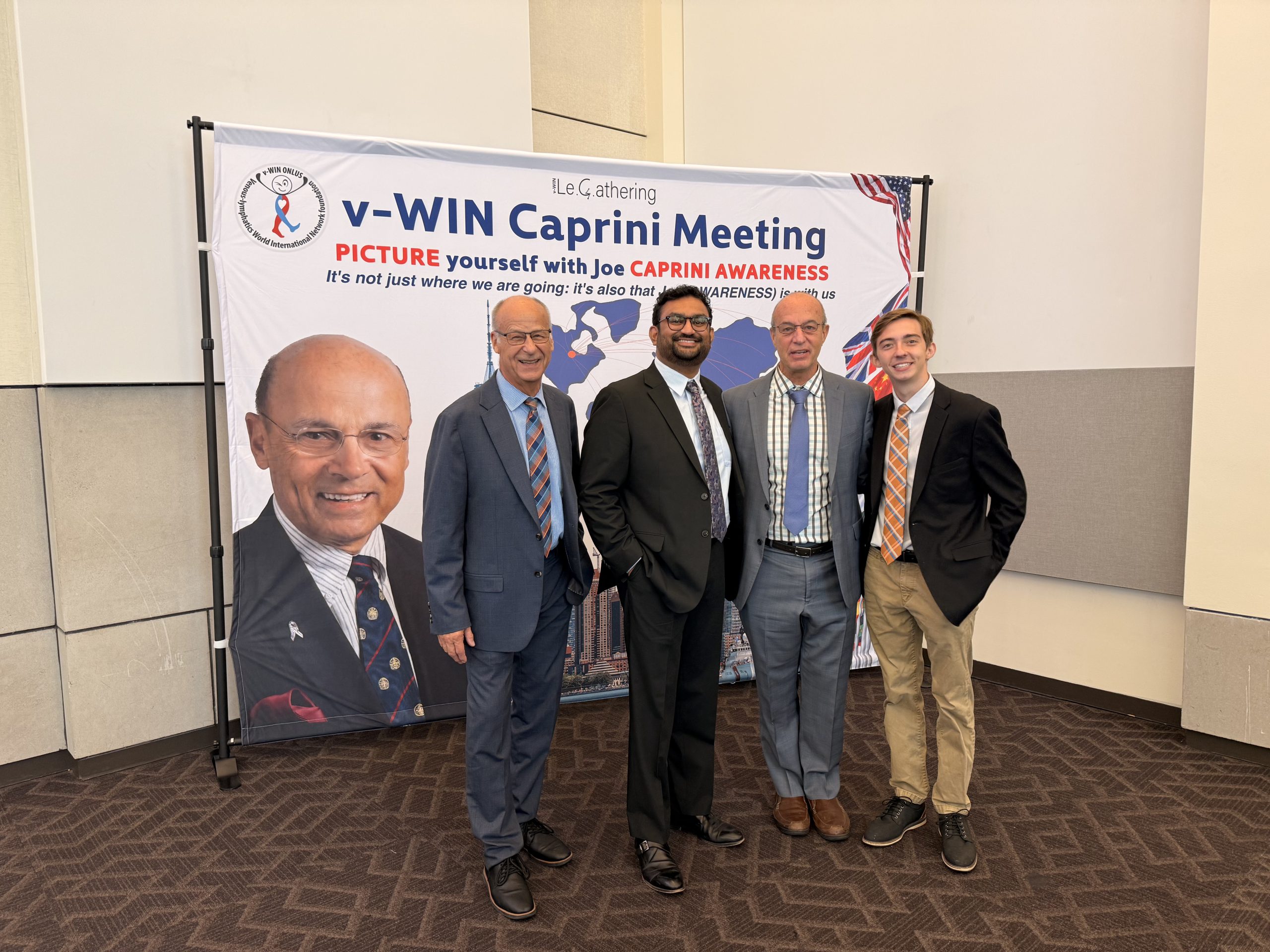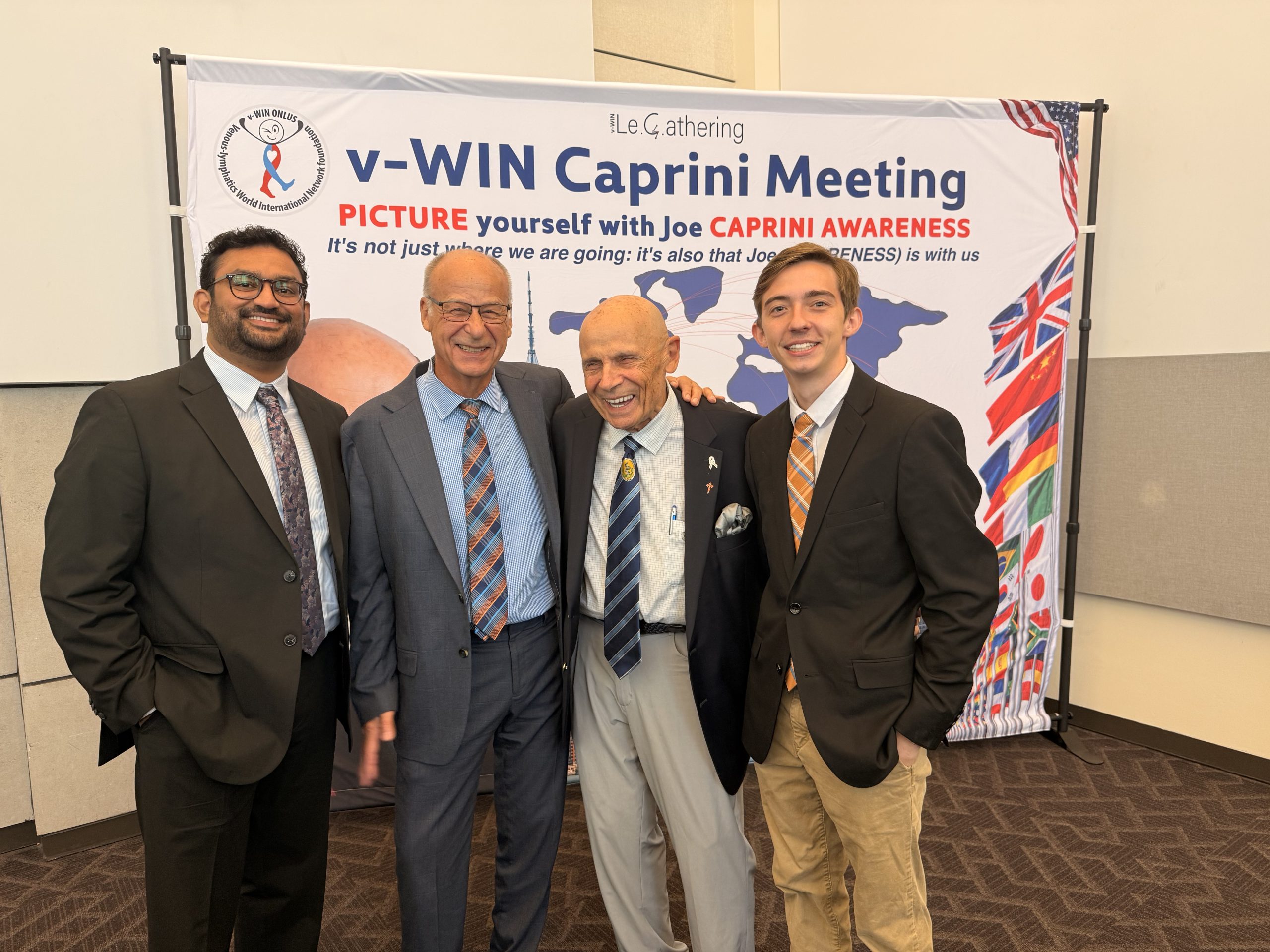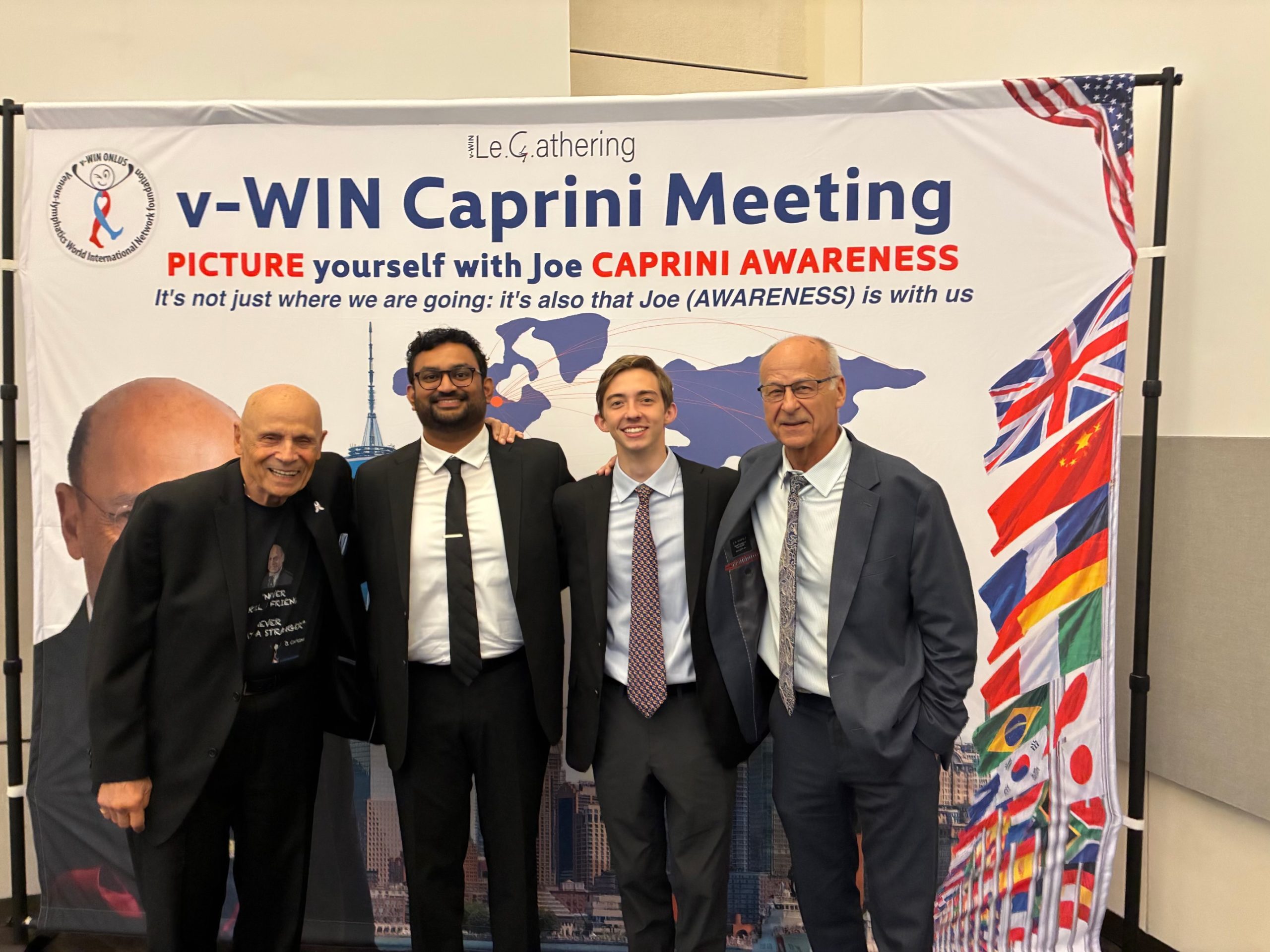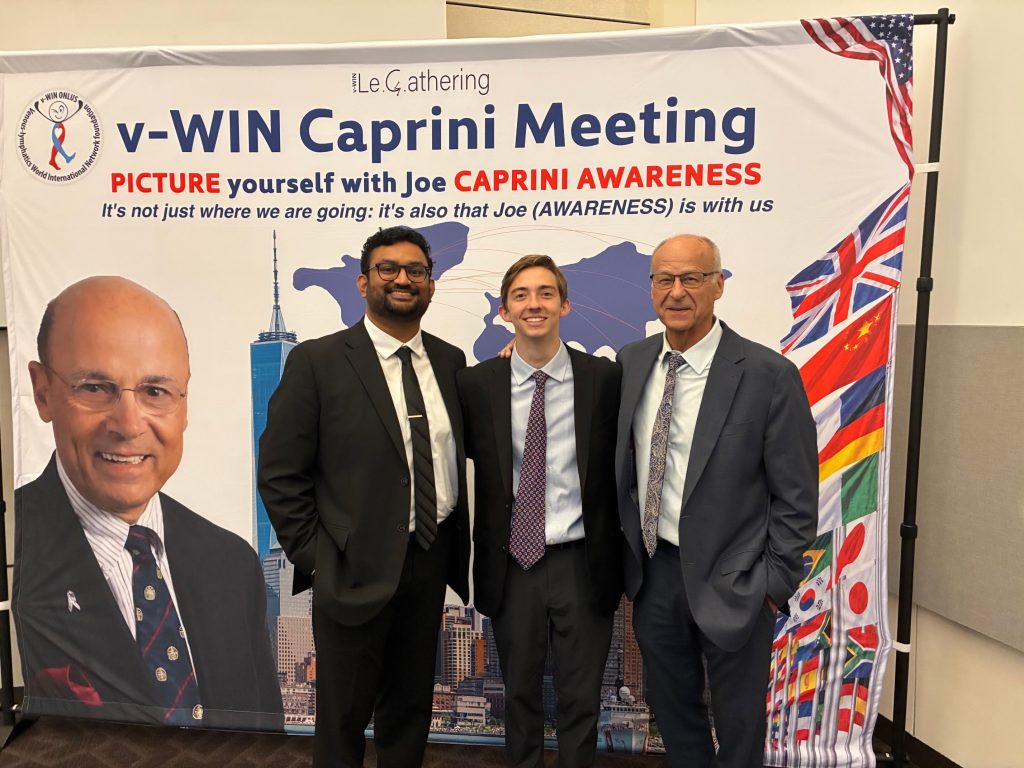

Two Campbell University pharmacy students had an opportunity to share their research with internationally recognized experts in blood clot prevention and treatment, thanks to the professional connections and faculty mentorship that helped take their work from the classroom to an international congress.
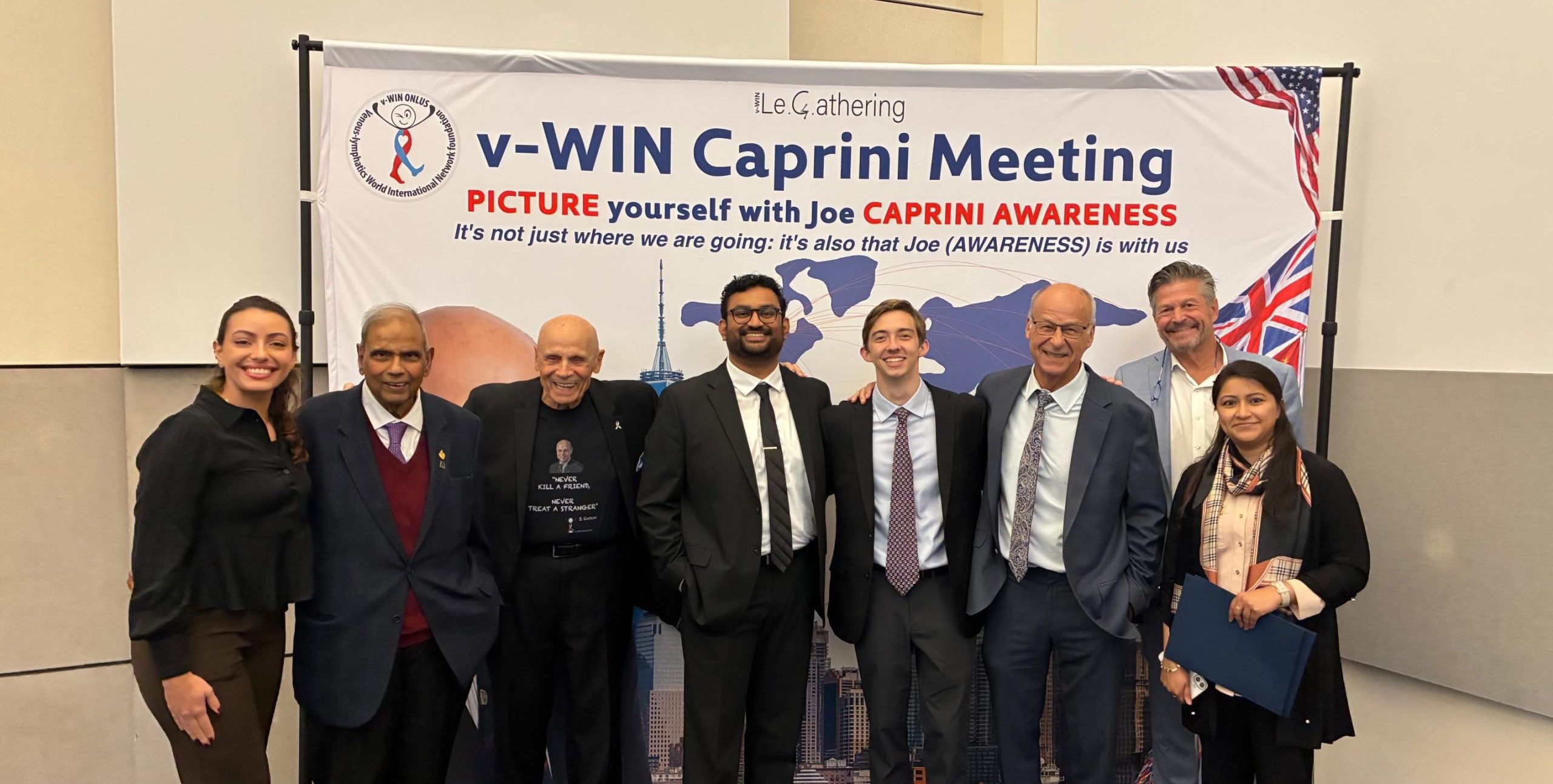
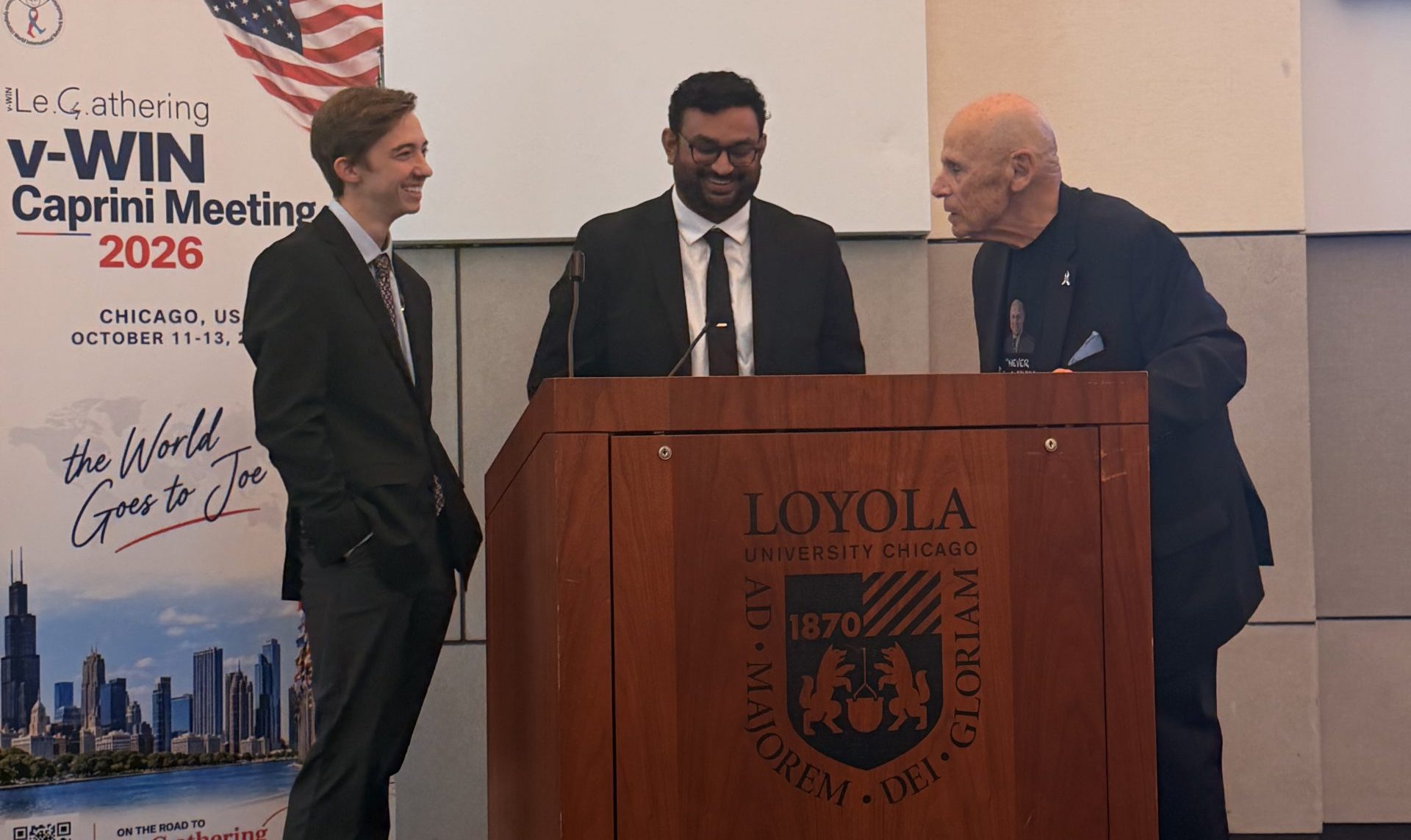
Third-year Doctor of Pharmacy students Trent Almond and Yash Patel presented their research, “Glucagon-Like Peptide-1 Receptor Agonists and Venous Thromboembolism,” at the v-WIN Caprini Meeting at Loyola University in Chicago. The meeting honored Professor Joseph Caprini and his contributions to the field of thrombosis and took place during the week of World Thrombosis Day.
The students attended alongside their faculty mentor, Dr. Charles Carter, following an invitation from Dr. Tafur. Their audience included researchers and clinicians whose work helps shape the studies and clinical guidelines taught in pharmacy classrooms.
For Almond and Patel, the opportunity began with a shared interest in research. Almond reached out to Carter about getting involved in a project and later invited Patel to join them. Through an independent research course that began earlier in the year and continued through the summer and fall, the students examined an emerging question involving medications used to treat diabetes and obesity.
Their project explored whether glucagon-like peptide-1 receptor agonists, commonly known as GLP-1 medications, affect the risk of venous thromboembolism, a condition involving blood clots in the veins. The students reviewed existing research and found conflicting results, highlighting the need for continued study. Their findings have been submitted for publication.
The experience gave both students a closer look at how healthcare professionals interpret evidence when answers are not always clear.
“As Dr. Carter often says, pharmacy practice is in the gray zone,” Almond said. “I didn’t realize before this that many parts of the medical field involve conflicting information and require review and expertise to create a positive outcome for our patients.”
Connections that open doors
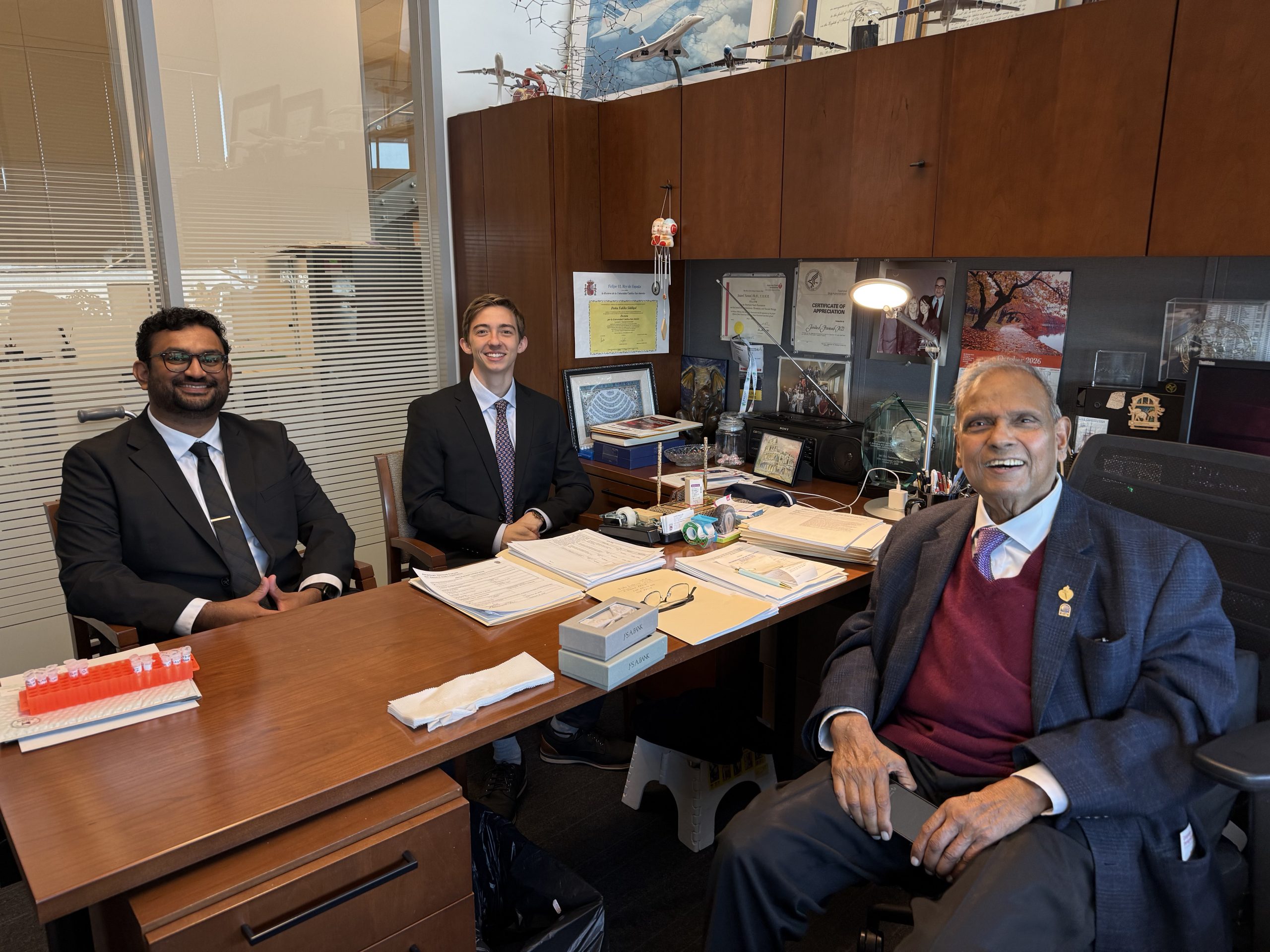
Carter’s professional relationships helped create the opportunity for Almond and Patel to present at the international meeting and interact with leaders in the field. The students also had the chance to meet individually with several experts at Loyola and discuss their research, career paths and the role pharmacists can play in clinical research.
“Dr. Carter’s connections allowed us to get this opportunity in the first place,” Almond said. “He guided us in the right direction throughout the project. Without him, I don’t believe we would have been able to get this far.”
Patel said the experts’ willingness to listen and encourage the students made a lasting impression.
“They truly respected us and what we had to bring to the table,” Patel said. “They encouraged us to continue this research and never stop, because our patients need us.”
The opportunity also showed the students the value of a professional community that supports shared learning and discovery. Patel described the researchers’ support for one another and their passion for the field as two of the most meaningful things he observed.
Prepared to present
Almond and Patel spent weeks preparing to share their work, practicing how to explain their research question, methods and findings in a concise presentation for an audience of experienced physicians and researchers.
As the students prepared to present their research at the conference, they shared a meaningful moment of prayer and reflection with Dr. Carter. “We were able to come together, though from different religious backgrounds, and Dr. Carter led us in prayer before the presentation. I think that was one of the best moments,” said Patel.
While presenting to leaders in the field was initially intimidating, Patel said conversations with attendees throughout the day helped him feel more comfortable. Carter reminded the students that they were among people who wanted them to succeed.
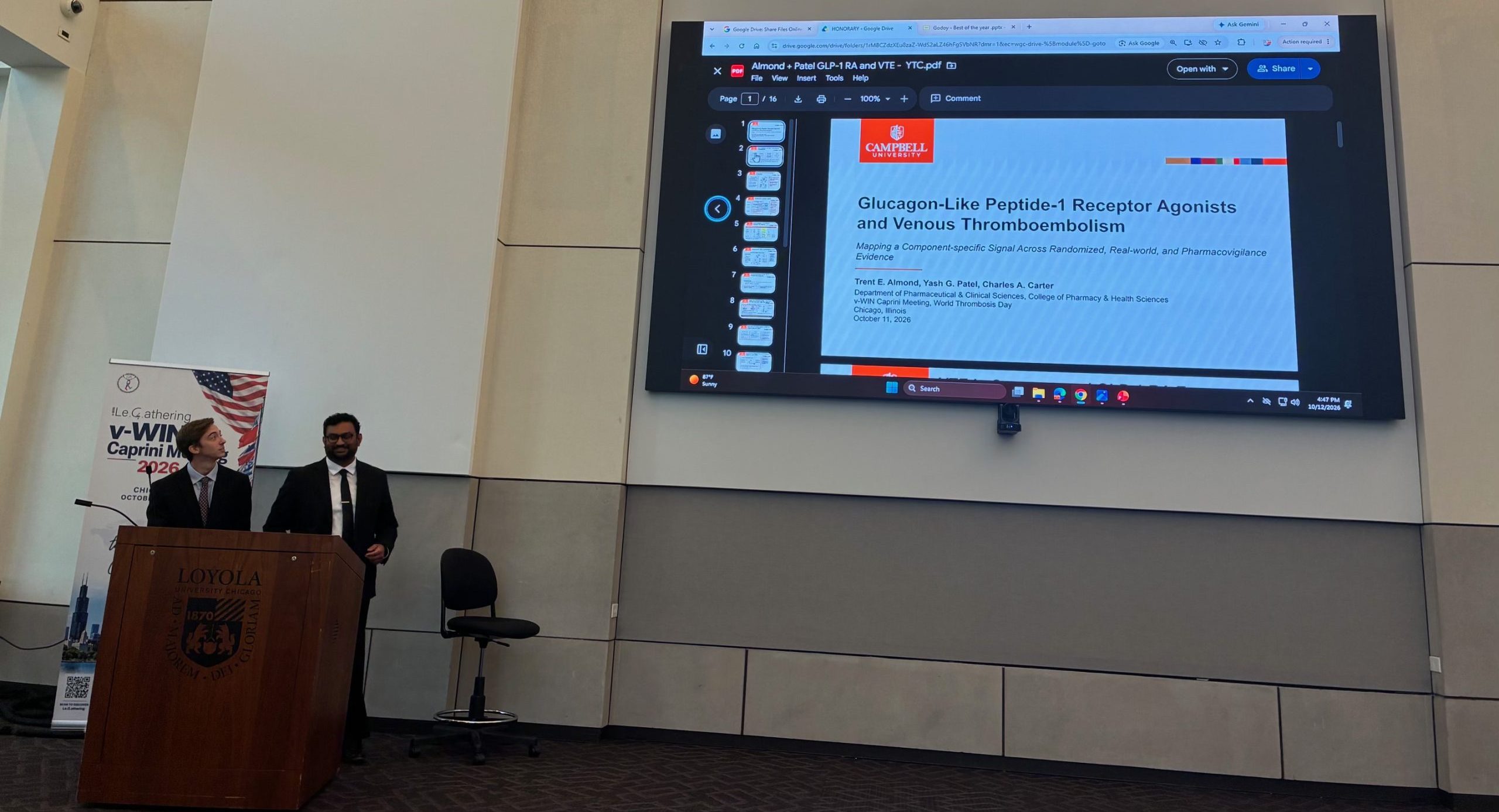
“They presented their study, results and conclusions with real confidence and conviction,” Carter said. “The organizers and attendees were impressed, and Trent and Yash were described as professional, composed, knowledgeable and ‘the future.’ I could not be prouder of them and how they represented themselves and CPHS.”
Their trip was not without challenges. Flights in both directions were significantly delayed, and the group returned to North Carolina in the early hours of the morning. Even so, the students made time to reflect on the experience and the relationships they had built along the way.
“Despite the pace and stress of the trip, they both told me repeatedly, ‘We are pumped, Dr. Carter,’” Carter said.
The experience has encouraged both students to think about how research might fit into their futures. Almond, who is interested in pediatric or oncology pharmacy, said the presentation strengthened his confidence and sparked an interest in staying connected to research. Patel, who is also pursuing graduate studies in public health and business administration, said he gained a new appreciation for research and its potential to advance medicine and create opportunities for those who follow.
Their experience reflects the opportunities that can grow from a student’s curiosity, a faculty mentor’s support and a network of professionals willing to welcome the next generation.