

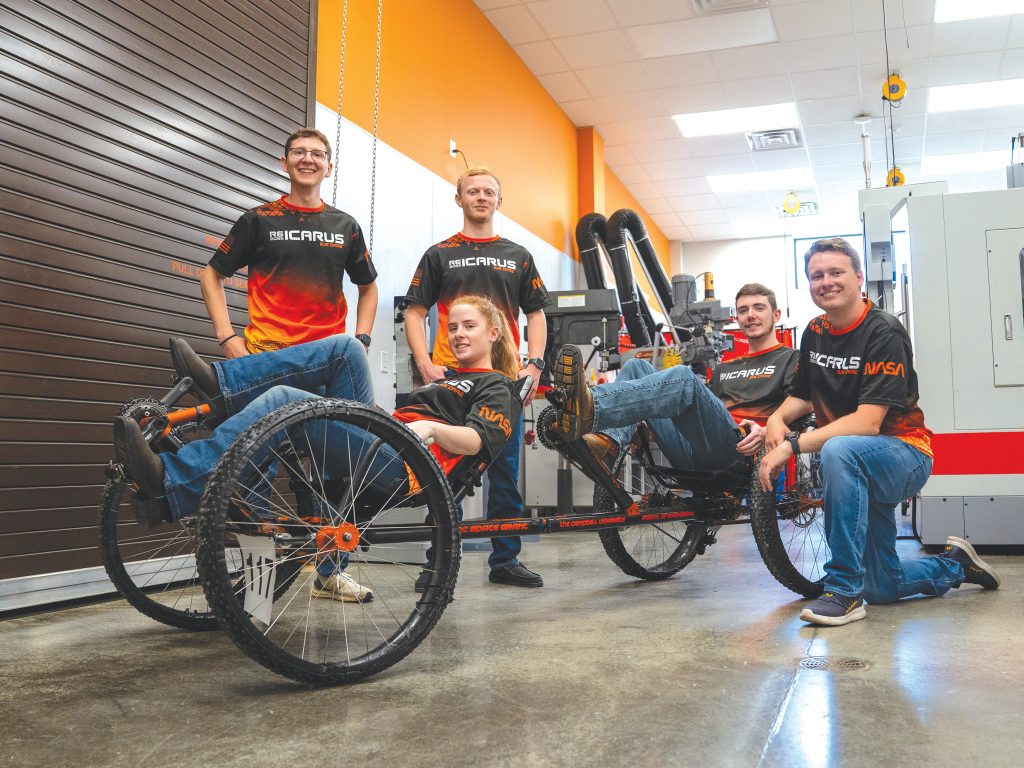

Campbell Engineering’s Mars rover team has grown from new kids on the block to one of the nation’s best in a short time
Editor’s Note: This story appears in the Fall 2025 edition of Campbell Magazine, coming soon. More information on Campbell’s remote control HERO team will be included on the magazine’s website.
Much like their athletics counterparts, the engineering students in Campbell University’s NASA Human Exploration Rover Challenge team found a rival heading into the 2025 competition last spring.
The University of Alabama Huntsville is located just three minutes from the U.S. Space & Rocket Center, which hosts the annual NASA HERC event, and the home team had won the competition five times since 1996 — including back-to-back wins in 2023-2024 — and was the favorite yet again to three-peat this year. Campbell’s team, meanwhile, didn’t form a team until 2019 (the school itself is just now turning 10), and 2024 was its best showing ever — a third-place overall finish and a Pit Crew Award for its repair work after a somewhat rocky start.
Campbell viewed UAH as the Michigan to its Ohio State. The Duke to its UNC.
A Goliath to its team of Davids.
“They’re the home team. A lot of their parents work at NASA, and they’ve had close contact with them over the years,” says Dr. Lee Rynearson, associate professor of engineering and the faculty sponsor for Campbell’s HERC squad.
“They’re the model team. They’re what our team strived to become.”
Huntsville’s winning rover in 2024 was named Theseus, a name that Campbell’s team found motivation in. While Theseus, in Greek mythology, was a hero known for slaying the Minotaur, there’s also a philosophical thought experiment called the Ship of Theseus, which questions whether an object remains the same if all of its original components are gradually replaced over time.
“There are many reasons why you might name your rover Theseus, but our students saw it as their team taking minimal risks and rebuilding the same rover,” Rynearson says with a smile. “So heading into this year, our team went with Icarus.”
Icarus, another famous figure in Greek myth, was the son of the inventor Daedalus, who made Icarus artificial wings made of features and wax. Icarus flew too close to the sun with his new wings, and the melting wax eventually led to his downfall. Icarus’ story is a cautionary tale against hubris and ignoring wise advice.
“The name also signaled that we were willing to take technical risks,” Rynearson says. “We were going to fly close to the sun.”
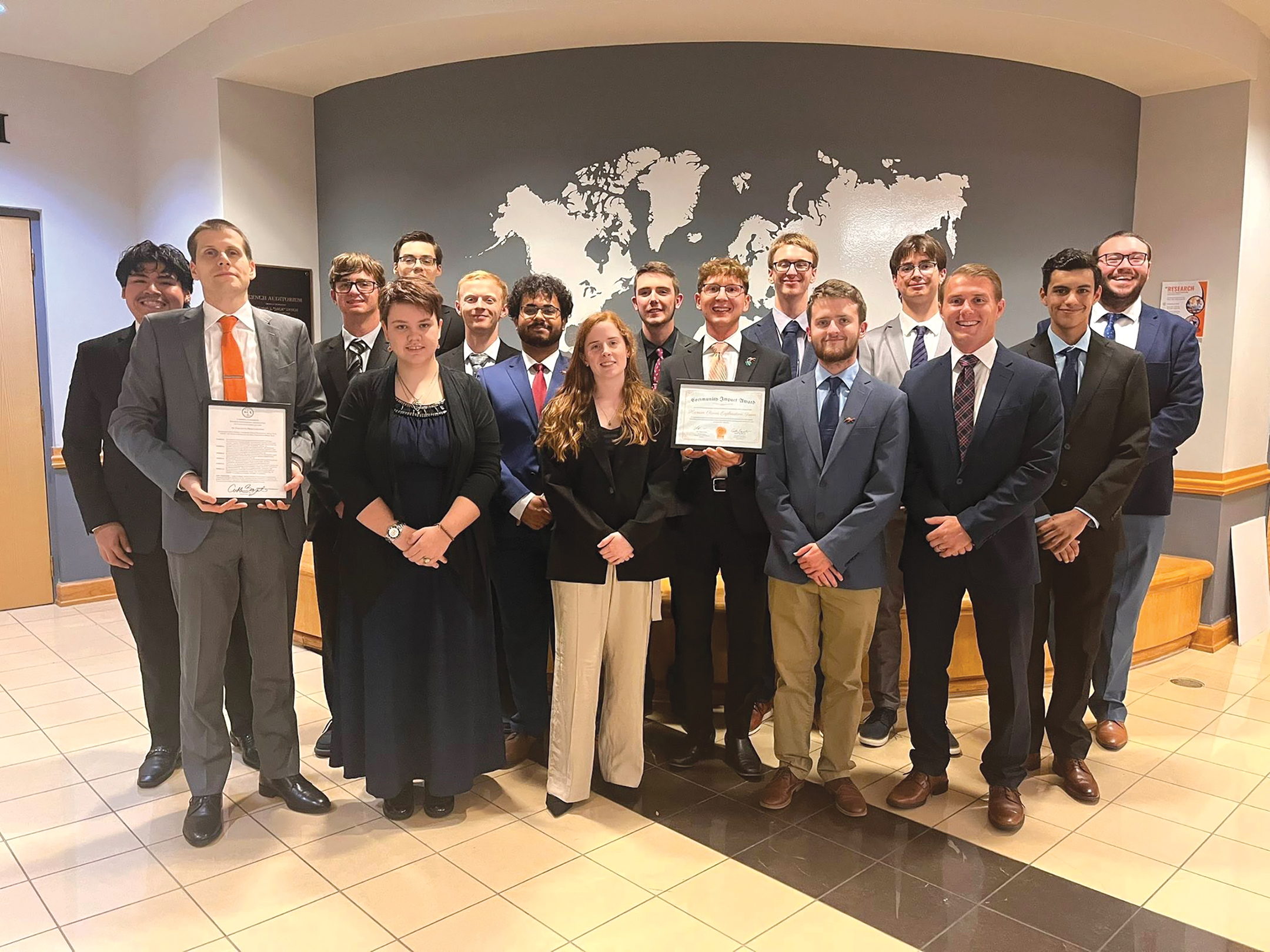
The name was a burn — pardon the pun — to their rivals. The extra motivation (and the carbon fiber “wings” used for their rover’s carbon leaf suspension) pushed Campbell’s team over the top. On April 12, Campbell took home the top prize — first place overall in the Collegiate Division (their rivals finished third). And the program’s new HERO team placed second overall in NASA’s new remote-control rover competition.
It was a banner day for a team competing for just the seventh time since 2019 (a few of those years were virtual due to the pandemic) and for a School of Engineering still less than a decade old. The HERC competition draws more than 500 students from 35 colleges and universities and 40 high schools from 20 states, Puerto Rico and 16 other countries. Teams are given instructions each December and are tasked with building a machine that can navigate a half-mile obstacle course — built to simulate the surface of Mars — while conducting mission-specific task challenges and completing multiple safety and design reviews with NASA engineers. NASA expanded the competition this year to include a remote-control division and invited middle school students to participate.
The rover challenge is one of NASA’s eight Artemis Student Challenges reflecting the goals of the Artemis campaign, which will land Americans on the Moon while establishing a long-term presence for science and exploration, preparing for future human missions to Mars. Last spring, the competition added a HERO competition, tasking teams with creating a model-sized rover that can be controlled remotely.
A separate team from Campbell placed second overall in that competition and won a “Most Improved” award for best score increases between the first and second runs.
The University’s performance in Alabama was huge for Campbell’s engineering program, says founding Dean Dr. Jenna Carpenter, who called both groups’ performance “a tremendous accomplishment.”
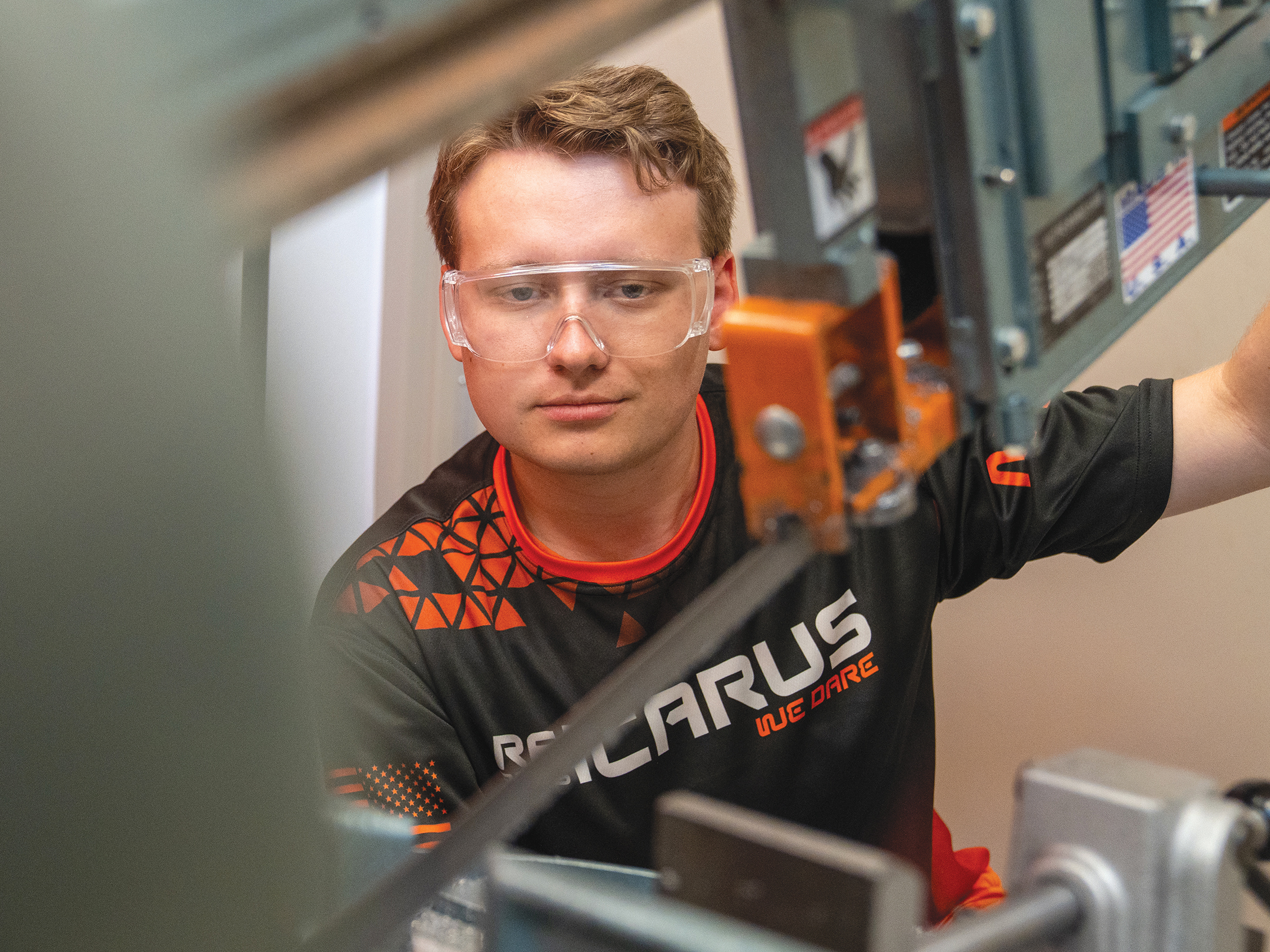
“Our students have literally spent hundreds of hours designing and building the rovers, as well as completing the required documentation, oral presentation, STEM outreach activities and social media campaigns,” Carpenter said. “The technical and professional skills and expertise they’ve gained is immeasurable.”
Ethan Kessler, last spring’s lead engineer who will enter his fourth year in the team this fall, says the HERC experience offers an educational experience you can’t usually find in the classroom.
“Going into the workforce, if you want to become a manager at any level, it helps that you’ve had experience interacting with a team like this. You learn here that being a leader isn’t bossing people around. It’s working with them toward a shared goal,” Kessler says. “And I’m studying electrical engineering, but the mechanical engineering experience I’ve received from being a part of this is invaluable.”
It’s not just building and teamwork, both competitions also teach another valuable lesson for future engineers — documentation. According to last spring’s flight surgeon and recent Campbell graduate Julian Brickhouse, documentation matters big to NASA engineers.
“NASA requires not only for us to do the entire physical competition, but for us to write about everything that we’re building as well,” he says. “If you can’t prove that it’s going to work and you can’t prove that you did the work to do it, then you can’t really claim it’s your work. Documentation was the reason that we got as close as we did to be able to get first place. It felt awesome knowing that we were able to finally figure out what NASA was looking for in the reporting. Some of our reports were more than 100 pages long.”
Going forward, Campbell’s program hopes to build a “blue chip program” like the one in Huntsville, and Rynearson hopes future teams see orange and black and associate that with engineering success. More importantly, he hopes students continue to compete for spots on the HERC and HERO teams, because of the value of the experience.
“This competition teaches you how to coach others and how to be coached,” says Rachel Stokes, who piloted the winning rover in April. “It teaches you how to use the skills you have but also acknowledge the skills of your teammates and work together. We’re getting so much more out of being a part of this.”
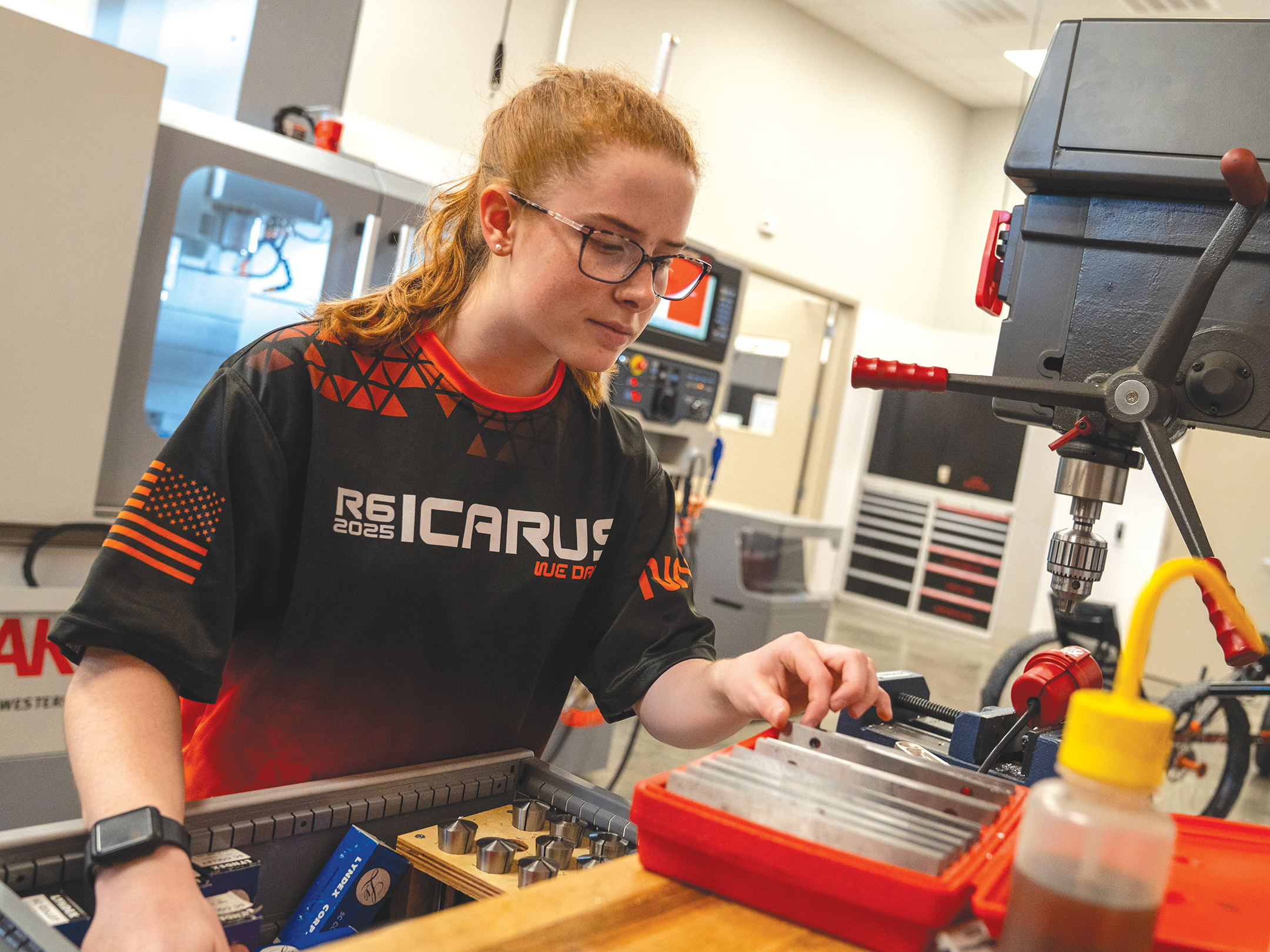
Rachel Stokes | Co-Pilot
“The biggest thing I’ll take away from this experience is the
hands-on experience and learning to persevere even when there are stumbles along the way. This competition teaches you how to coach others and how to be coached — how to use the skills you have but also acknowledge the skills of your teammates and work together.”
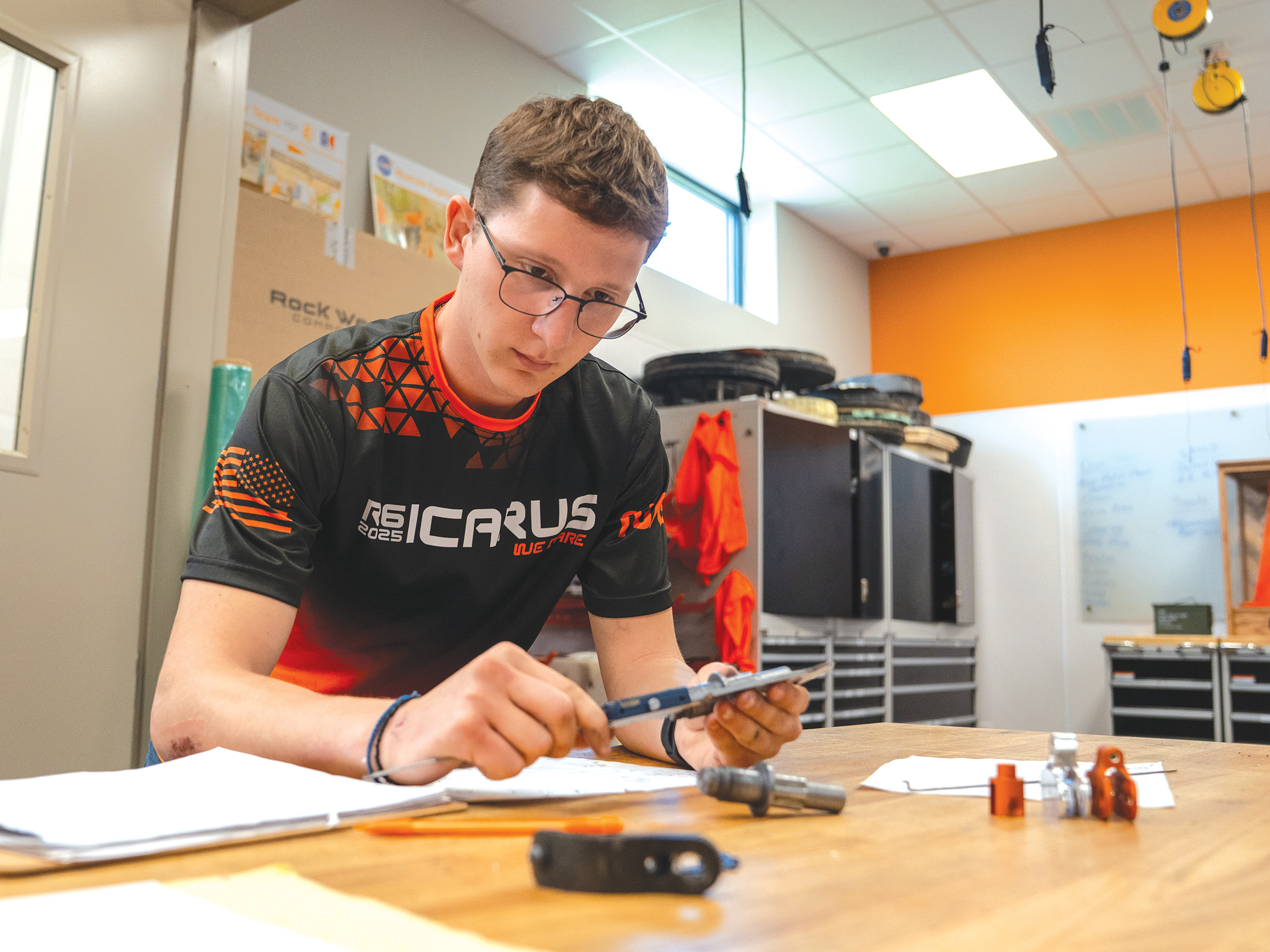
Ethan Kessler | Lead Engineer
“My biggest takeaway from being a part of this team is leadership. They put me in a lead role in just my second year, and I learned a lot about skills delegation. I got to learn about working with others, knowing what people are capable of and then being able to break down our approach, assess our needs and just execute.”
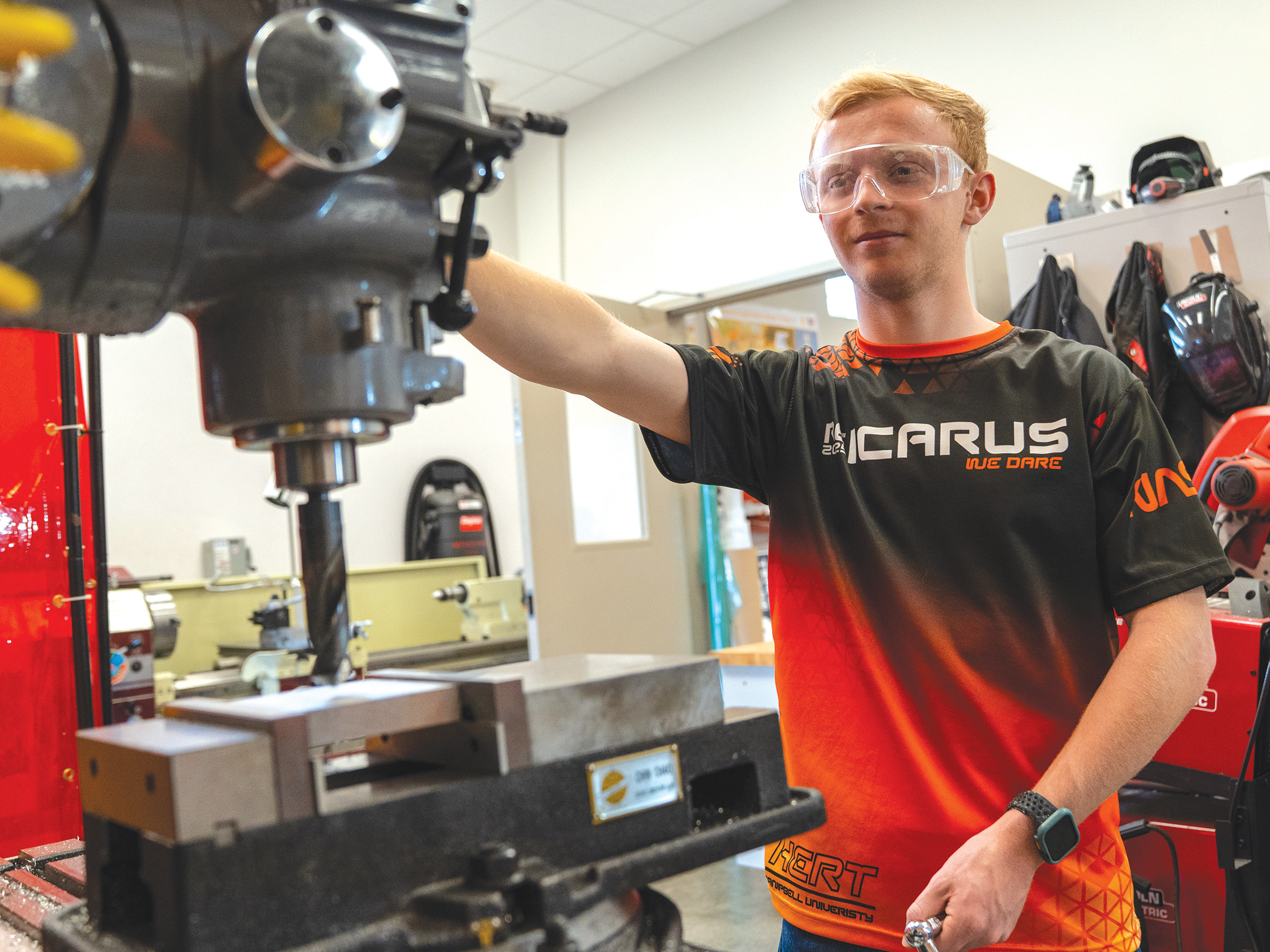
Austin Pearce | Team Member
“Coming in as a freshman, I’d seen pictures and videos of patch rovers, but I had no idea all that went into a project like this. Just seeing the teamwork that goes into building a rover, I learned so much. Next year, I hope I can move into a leadership role and keep this success going.”
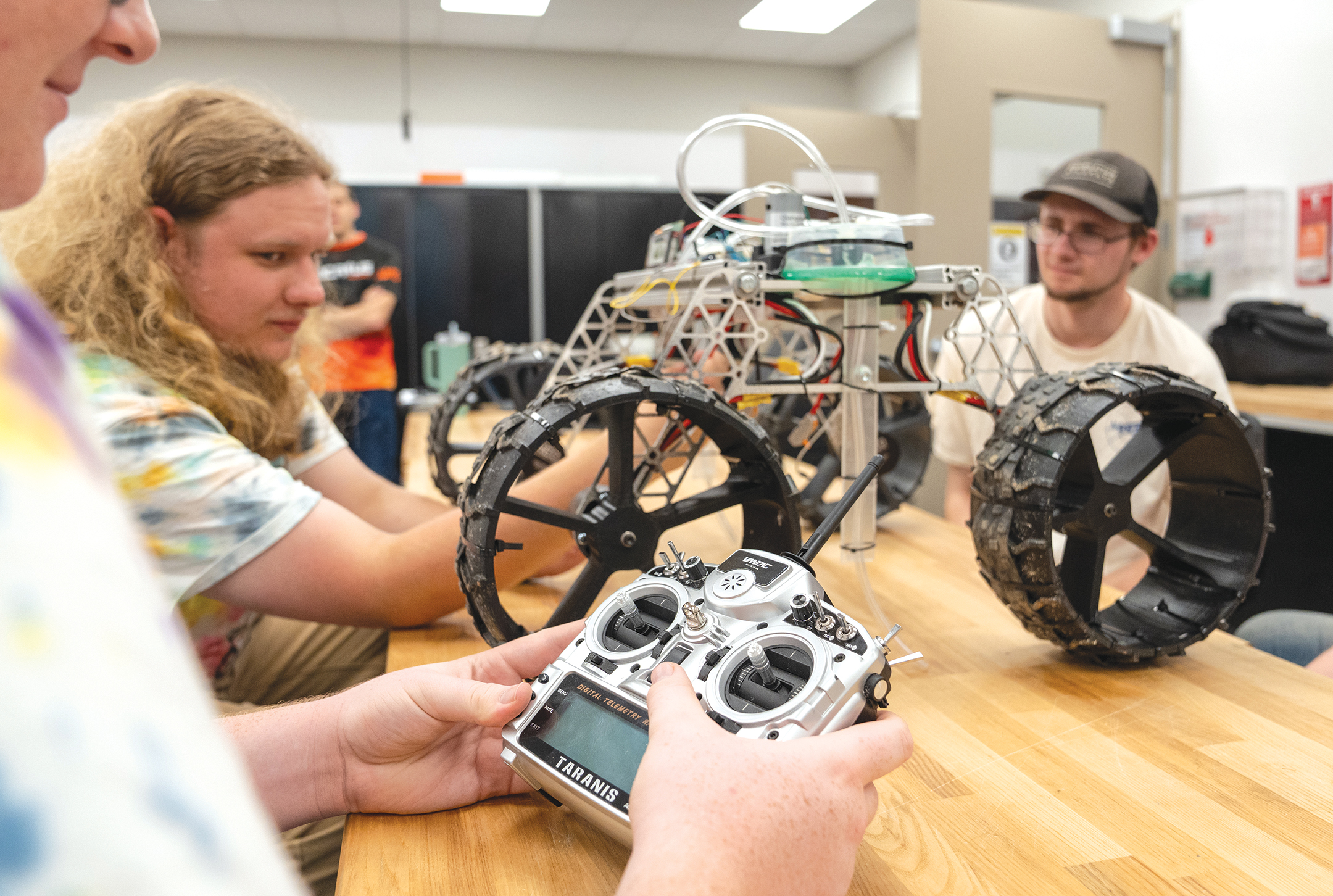
The HERO team
This story appears in the Fall 2025 edition of Campbell Magazine. The online version of this story (coming soon) will include more on Campbell’s HERO team, which placed second in NASA’s first remote-control rover competition last spring.